Why I started Tree Story
I was twenty-four, kneeling in the dirt of my grandfather’s backyard, trying to coax a stubborn tomato plant into producing anything but leaves.
The soil was too dry, the sun too harsh, and no matter how much I watered it, the vines just kept stretching upward like they were reaching for something I couldn’t give them.
My grandfather, who’d been watching me struggle, finally knelt beside me and said, *‘You’re treating it like a science project, not a conversation.’* That stuck with me.
So I started writing down what worked—and what didn’t—in a notebook. No fancy language, just dirt under the nails and the truth about what grew, what withered, and why. This site is for anyone who’s ever stared at a wilting plant and wondered if they were doing it wrong.
It’s for the people who want to grow things without the guesswork, the frustration, or the feeling that gardening is some kind of secret club. Here, you’ll find no jargon, no ‘foolproof’ promises, just the real story of what happens when you put a seed in the ground.
Meet the founder

I learned to garden the way most people learn to cook: by burning things. My first attempt at a raised bed was a disaster. The soil was too sandy, the sun too direct, and within a week, my basil plants looked like they’d been sunbathing in a sauna.
My grandfather—who’d been growing tomatoes since before I was born—watched me pull up the wilted stems and said, *‘You watered them like they were thirsty, not like they were talking to you.’* That’s when I realized gardening wasn’t about following instructions; it was about listening.
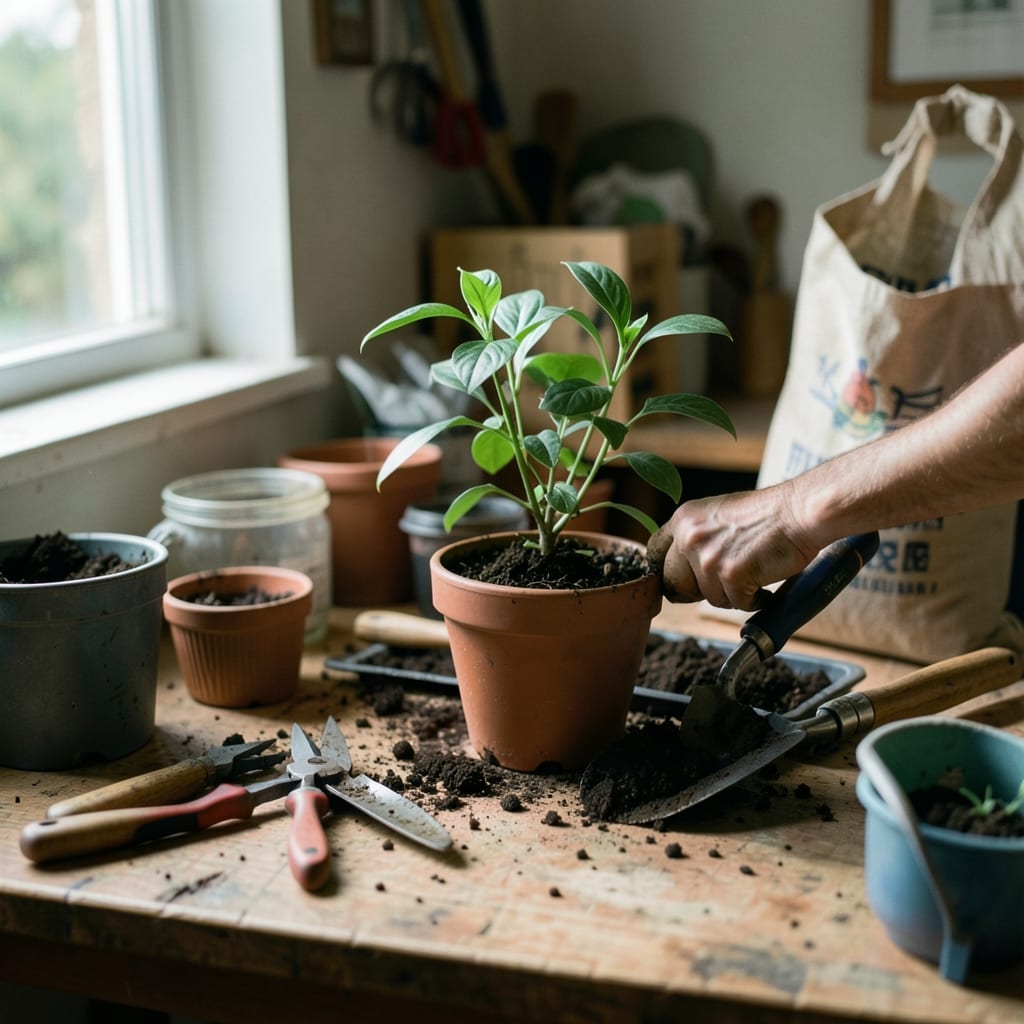
The only tool I still use from that first failed bed is a rusted trowel I ‘borrowed’ from his shed. It’s missing a chunk of the blade, the handle is splintered, and the wood has turned silver with age.
But it’s the one I use when I’m teaching someone how to plant seeds, because it’s the one that’s seen the most mistakes—and the most comebacks. My grandfather gave it to me the day I finally grew something that didn’t die within a week.
I keep it on a hook by the back door, next to the pruners and the half-empty bag of compost.
The failure that changed everything was my attempt at growing peppers from seed. I read every guide, followed every tip, and still ended up with a tray of leggy, pale seedlings that collapsed when I tried to transplant them.
What I didn’t realize was that my windowsill was too cold at night. The second time, I moved them under a heat mat, and within days, they were thick and green.
That’s when I started writing down not just *what* I did, but *why* it failed—and how to fix it next time.
I still do this, every time: I talk to the plants. Not in some poetic way—just out loud, like I’m explaining to them why the soil is too wet or the light isn’t right. My neighbors think I’m crazy.
My grandfather just nods and says, *‘They hear you more than you think.’* I don’t know if it’s true, but it’s the only habit I can’t shake. And honestly? It’s the part of gardening that makes it feel like less of a chore and more of a conversation.
‘A garden isn’t just dirt and plants—it’s the only place where failure looks like growth.’
My grandfather, age 82, explaining why he let me dig up his prize-winning dahlias.
Meet the mascot

The first sketch of what would become the mascot was drawn on a napkin at a café in Portland, where I was waiting for a friend who was late—again.
I’d been staring at a potted basil plant on the windowsill, watching how the light made the leaves glow green in patches.
The napkin scribble was supposed to be a quick doodle of a seedling, but the first attempt had too many leaves and looked like it was drowning in soil.
I crumpled it up and started over, this time focusing on just the stem and one leaf, like a seedling that’s only just breaking through.
The proper drawn version came later, on a yellow legal pad at my kitchen table. I traced the napkin sketch with a fine-liner, then simplified it to just three lines for the stem and a single leaf with a jagged edge—because that’s how real seedlings look when they’re still fragile.
The eyes were added last, not because it needed them, but because I wanted it to look like it was *watching* what was happening in the garden. My friend, who’d finally shown up, called it *‘the most optimistic plant ever drawn.’* I liked that.
The final version had to be simple enough to read at the size of a browser tab, so I erased everything that wasn’t essential: no soil, no pot, no extra leaves. Just the stem, the leaf, and a tiny hint of roots peeking out.
I named it *Sprout*—not because it’s fancy, but because it’s exactly what it is: a plant that’s just starting to grow. And like any good seedling, it’s stubborn, curious, and always ready for its next lesson.
What I promise you
This site is built on one rule: if I can’t explain *why* something grows—or doesn’t—I don’t write about it. No vague advice, no ‘trust me’ moments. Just the facts, the failures, and the small victories that turn a patch of dirt into something alive.
What you can hold me to
- Every ‘tip’ here has been tried at least twice—once by me, and once by someone who’s not a gardener (because if it doesn’t work for a beginner, it doesn’t work at all).
- If a plant dies in these pages, I tell you exactly why—and how to fix it next time. No sugarcoating, no ‘maybe it was the weather.’
- The focus is on what you can *see* and *touch*: the color of healthy soil, the way a leaf changes when it’s thirsty, the difference between ‘good enough’ compost and the real stuff.
- You’ll never find a list of ‘best’ plants or ‘perfect’ conditions. Gardens are messy, unpredictable, and full of surprises—and that’s the part I love most.
How I create a recipe
A recipe here doesn’t start with a seed packet or a gardening book—it starts with a question. *Why* does this plant grow better in shade? *How* do you tell if soil is too wet? *What* happens if you forget to prune?
The answers come from watching, from making mistakes, and from asking people who’ve been doing this longer than I have.
Some of the best advice I’ve gotten came from a teenager who’d spent the summer weeding her grandmother’s garden, or a retired mechanic who grew roses in his driveway just because he liked the way they smelled.
The first stage: watching the soil
The first step is always the same: I dig my fingers into the soil and squeeze. If it crumbles easily, it’s dry. If it sticks together like clay, it’s too wet. The goal isn’t ‘perfect’ soil—it’s soil that tells you what’s happening.
I check the moisture every morning for the first week, always at the same time, because plants don’t lie: if the top inch is dry, it’s thirsty. If it’s cold to the touch, it’s struggling. And if it smells sour? That’s a sign of rot before you even see it.
I never water on a schedule. Instead, I wait until the soil pulls away from the sides of the pot—or, in the garden, until the leaves start to droop just a little at the edges.
Overwatering is the silent killer of new plants, and I’ve learned the hard way that a ‘light misting’ can turn into a swamp in twenty-four hours. The rule I follow now is simple: if you’re not sure, wait another day. The soil will tell you when it’s ready.
The second stage: fixing what’s wrong
When something goes wrong, I don’t guess—I look for patterns. Yellow leaves? Too much water or not enough sun. Stunted growth? Maybe the roots are bound in the pot. Wilting in the heat?
Could be thirst, or it could be the plant’s way of saying, *‘I need shade.’* The fix isn’t always obvious. Once, I had a row of basil that kept turning brown at the edges.
I blamed the water, then the soil, then the sun—until I realized the pot was made of unglazed clay, and the salt from the tap water was burning the roots.
The second stage is about adjustments, not rules. If a plant isn’t thriving, I change one thing at a time: more light, less water, a different kind of soil. I keep a notebook by the garden with dates, conditions, and what I did to fix it.
Some problems take weeks to solve. Others are fixed in a single afternoon. But the key is never giving up on the plant—just on the method that isn’t working.
How a page gets onto this site
Every page starts as a scribbled note on the back of an old seed catalog or a napkin from the farmers’ market. If it’s worth writing down, it’s worth testing again—and then writing down *why* it worked the second time.
The first draft is always messy: too many details, too much jargon, or a method that sounds good in theory but falls apart in practice. I cut at least half of it on the second read, because the point isn’t to impress, it’s to help.
Some pages get rewritten months later because the garden changes. What worked in June might fail in August, or a trick that saved a dying fern in my apartment won’t work in a neighbor’s greenhouse.
I update those pages with new photos, new warnings, and the real story of what happened when I tried it again. The goal isn’t perfection—it’s honesty. If a method fails, it stays here, because the next person might need to know *why*.
Write to me
I love hearing about the plants that surprise you—the ones that grow where you didn’t expect them, or the failures that turned into something unexpected. Send me a photo of your weirdest garden success (or disaster) and I’ll add it to the ‘lessons learned’ section.
Or tell me about the one tool you can’t live without, the soil trick that saved your plants, or the time you swore you were doing everything right and still ended up with nothing but weeds.
If you’ve got a question about what’s growing—or not growing—in your garden, ask it. No topic is too small, no plant too obscure. The contact page is where I answer them all. And if you’re just here because you love watching things grow as much as I do? That’s enough.
The guides are grouped by category: Blooming, Companion Plants, Container Gardens, Diseases, Fertilization and Flowers.