
Pruning
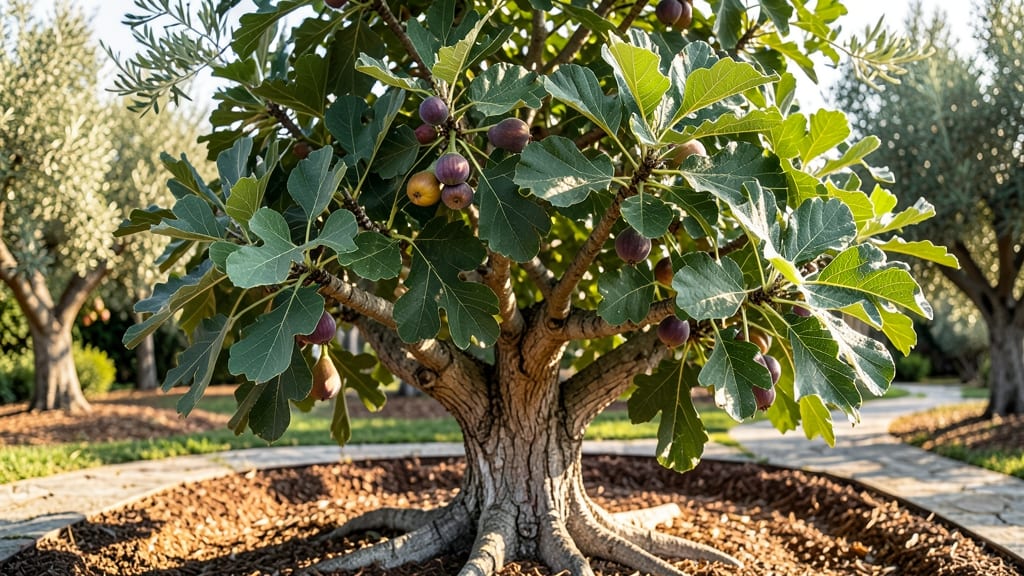
The fig tree timeline starts with spring planting when roots wake from dormancy, and every season after that transforms your yard into a sweet, velvety harvest zone. 🌿 I learned the hard way that skipping winter prep means brittle branches and missed fruit—now my tree thrives through all four seasons with just a few strategic cuts and care moments.
Spring is all about new growth: prune right after buds swell but before leaves unfurl, and you’ll encourage strong limbs that support heavy summer fruit.
Summer’s the payoff—warmth turns tiny green figs into glossy purple orbs within 8-12 weeks, but watch for birds and wasps stealing your harvest before you do. Fall’s your chance to clean up: remove dead wood and thin crowded branches to let sunlight reach next year’s fruit.
In colder zones, mulch heavily to protect roots—my tree in Zone 6 survives winters unscathed this way, while Mediterranean climates keep figs growing nearly year-round. Whether you’re in a warm zone or a frost-prone area, this schedule keeps your fig tree productive, pest-free, and picturesque through every season.
Let’s break it down month by month!
📚 In This Guide
- What you need
- Instructions
- Tips and common mistakes
- Wrapping up and next steps
What you need
- ● Pruning shears: Bypass pruners (for clean cuts on smaller branches) or loppers (for thicker branches, 1–2 inches in diameter). Quantity: 1–2 pairs (one for you, one backup!).
- ● Hand saw: Pruning saw with a curved blade (for branches thicker than 2 inches). Quantity: 1.
- ● Disinfectant: Rubbing alcohol (70%+) or household bleach (1 part bleach to 9 parts water) to sterilize tools between cuts. Quantity: Small bottle or spray.
- ● Gloves: Heavy-duty gardening gloves (cut-resistant for safety). Quantity: 1 pair.
- ○ Sealing compound: Pruning sealant (optional but recommended for large cuts to prevent disease). Quantity: Small tube.
- ● Trash bags: Heavy-duty contractor bags (for debris disposal). Quantity: 2–3 bags.
- ● Extension pole saw (for high branches—save your back!).
- ● Labeling tags (to mark pruned areas if training the tree).
- ● Knee pad or stool (for comfort during long sessions).
- ● Notebook & pen (to track pruning notes by season).
Step-by-Step seasonal pruning schedule for fig trees
Here's the year-round routine I follow to keep my fig trees thriving—no guesswork, just proven timing.
✂️ Step 1: Late Winter Dormancy Pruning (January-February)
This is your biggest pruning window—wait until after the last frost when the tree is fully dormant. I cut back 1/3 of the oldest canes to the ground, removing any dead, diseased, or crossing branches first. Figs grow from old wood, so never remove more than 20% of the tree's total growth in one season.
Make cuts just above a bud or leaf node at a 45-degree angle to prevent water pooling. You'll see the tree's structure more clearly now without leaves, so take your time. I always wear gloves—fig tree sap can irritate skin, and the thorns are sharp!
☀️ Step 2: Early Spring Growth Stimulation (March-April)
After new growth begins (look for swollen buds or first green shoots), do a light shaping prune to open the center and improve airflow. Remove any suckers (shoots growing from the base or roots) immediately—they drain energy from your main tree.
This is when I also thin out crowded branches to let sunlight reach the center. Figs need 6-8 hours of sun daily, so don't over-prune now. Stop when you see new leaves unfurling—that's your signal to pause.
🌱 Step 3: Summer Fruit Management (June-July)
Once figs form (you'll spot small green bumps on branches), never prune—this stresses the tree when it's already fruiting. Instead, I remove only dead or diseased wood with sterilized pruners (wipe with rubbing alcohol between cuts).
Here's the thing—figs produce two crops in warm climates. After the first harvest, watch for new growth on last year's wood. This signals the second crop is forming, so avoid any major cuts until fall.
🍂 Step 4: Fall Cleanup (October-November)
After your second harvest (or first in cooler zones), do a light maintenance prune to remove any weak, crossing, or diseased branches. This keeps the tree tidy before winter but doesn't stress it like heavy pruning would.
I also remove all fallen leaves and fruit from the base—this prevents pests and diseases from overwintering. If you live in a cold climate, wrap the trunk with burlap after pruning to protect it from temperature swings.
⏰ Step 5: Winter Monitoring (December)
This is the low-maintenance month. Just check for dead branches (they'll be dry and brittle) and remove them. Figs are hardy but not frost-proof—if you're in Zone 7 or colder, mulch heavily (3-4 inches) around the base to insulate roots.
I also plan next year's shape during winter. Sketch a rough outline of where I want branches to grow—this helps me visualize the late-winter pruning I'll do in January. No cutting yet, just mental prep!
Tips & tricks for perfect seasonal fig tree care
These simple tricks will help you keep your fig tree thriving through every season without the guesswork.
Pruning Angle Matters: When making cuts in Step 1, that 45-degree angle above the bud isn't just for looks—it prevents water from pooling in the wound, which can cause rot. Use sharp pruners to make clean cuts, and always cut just above a bud or leaf node. I've seen so many trees suffer from improper cuts that led to infections, so take your time here. The extra 30 seconds per cut pays off in healthier growth.
Sucker Removal Strategy: In Step 2, those suckers growing from the base might look harmless, but they're energy vampires. Remove them as soon as you spot them—don't wait until they're established. I pull mine with my hands (they're easy to remove when small) rather than cutting, which helps prevent damage to the main trunk. This simple habit keeps your tree focused on producing fruit rather than supporting unwanted growth.
Summer Pruning Taboo: The instructions say it clearly, but I can't emphasize enough—never prune during the fruiting season (Step 3). I've seen gardeners accidentally trim branches with developing figs, and it's heartbreaking to watch them drop. Even a small cut can stress the tree when it's already working hard to produce fruit. If you must remove something, wait until after the second harvest in fall.
Winter Planning Pays Off: That December sketch I mentioned in Step 5 isn't just busywork—it's your roadmap for next year's pruning. I've found that visualizing the tree's shape while it's dormant helps me make more confident cuts in January. Take photos of your tree's current structure before pruning, and compare them to your sketch. This simple habit has helped me avoid over-pruning and maintain a balanced tree year after year.
Pro Tips for Fig Tree Timeline
- These simple tricks will help you keep your fig tree thriving through every season without the guesswork.
- Pruning Angle Matters: When making cuts in Step 1, that 45-degree angle above the bud isn't just for looks—it prevents water from pooling in the wound, which can cause rot.
- Sucker Removal Strategy: In Step 2, those suckers growing from the base might look harmless, but they're energy vampires.
Frequently asked questions
Got questions about your fig tree’s growth cycle? You’re not alone!
Whether you’re a first-time pruner or a seasoned gardener, timing, techniques, and troubleshooting can feel tricky. Below, we’ve answered the most common questions to keep your fig tree thriving year-round.
When is the best time to prune a fig tree for maximum fruit production?
The ideal window is late winter or early spring (just before new growth starts, around February–March in most climates). For tropical figs in warmer zones, prune after harvest (summer/fall) to avoid frost damage. Never prune in fall—it stunts winter hardiness!
How long does it take for a fig tree to recover after heavy pruning?
Recovery depends on the cut’s severity, but most fig trees bounce back within 4–6 weeks. You’ll see fresh buds sprout in 2–3 weeks if pruned correctly. Over-pruning (removing >30% of the canopy) may delay recovery by a month. Patience is key!
Why aren’t my figs ripening, even after pruning?
Common culprits: insufficient sunlight (figs need 6+ hours daily), over-fertilizing with nitrogen (prioritize potassium/phosphorus), or immature trees (young figs take 2–3 years to fruit). Check for pests (like spider mites) or root stress too!
Can I prune a fig tree in winter? What about frost-prone areas?
Prune only in mild winters (temperatures above 40°F/4°C). In frost zones, wait until after the last frost (spring) or use row covers to protect cuts. Hard prune after frost damage occurs—never before!
What’s the difference between “hard” and “light” pruning for fig trees?
| Type | When to Use | What to Cut |
|---|---|---|
| Hard Pruning | Late winter (revitalizing old trees) | Remove 1/3–1/2 of old wood down to the main trunk or large branches. |
| Light Pruning | Spring/fall (maintenance) | Trim dead, crossing, or weak branches (no more than 10–20% of foliage). |
Pro tip:
Hard prune every 2–3 years; light prune annually for air flow.
Wrapping up and next steps
From ancient traditions to modern orchards, understanding your fig tree timeline ensures a thriving, fruit-bearing tree year after year. Whether you’re trimming for shape, health, or harvest, timing is everything—and now you’ve got the seasonal schedule to make it effortless! 🌿
Ready to put your newfound knowledge into action? Start by marking your calendar with the key pruning dates, then grab your tools and get pruning! Your fig tree—and your future harvest—will thank you.