
Pests and Diseases
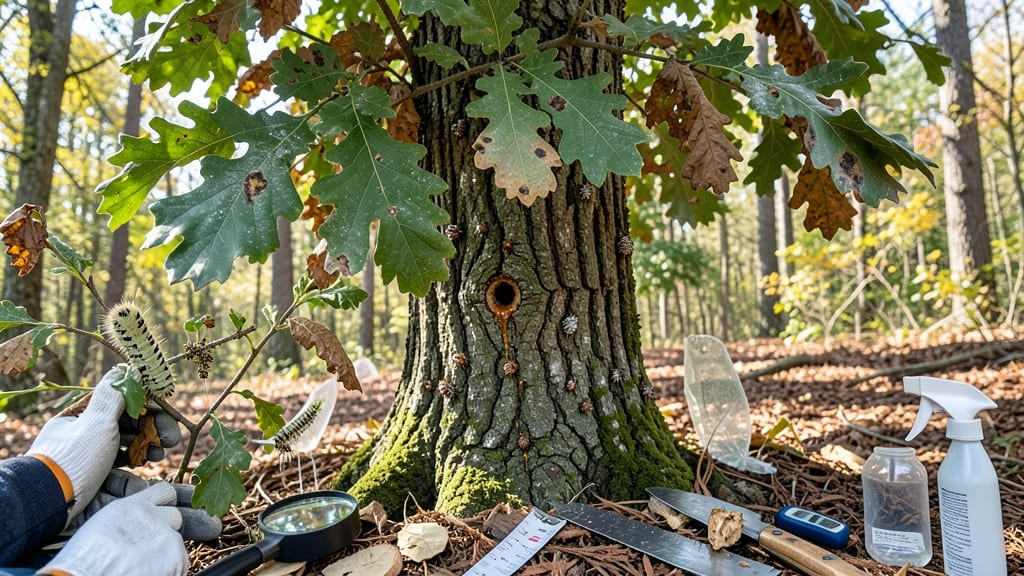
Your tree’s sudden yellow leaves might not be drought—it could be tree pests and diseases silently stealing its strength. 🌳 I’ve seen healthy oaks turn skeletal overnight from borers, and maples with black streaks that were actually canker.
The good news? Spotting these early means you can save your tree without harsh chemicals.
Most problems start small: tiny webs on branches (spider mites), sticky residue on leaves (aphids), or mushrooms sprouting at the base (root rot).
I learned the hard way that waiting until the tree looks "sick" means it’s often too late—so I check for these three red flags every spring and fall. The fixes are simpler than you’d think: pruning, neem oil sprays, or even just removing infected branches before they spread.
By the time you finish this, you’ll know exactly what’s wrong with your tree—and how to stop it. No more guessing whether those holes are from beetles or birds.
You’ll also get my go-to organic treatments that work faster than waiting for next season. Your tree’s survival depends on acting now, not later.
Works for any tree in your yard, from young saplings to century-old giants. Let’s get your trees back to thriving before the pests win another round.
Root Causes Behind Tree Struggles
Tree pests and diseases don’t strike at random—they exploit weaknesses, thrive in ideal conditions, and spread when trees are already stressed. Understanding why these problems occur is the first step to preventing them. Below, we break down the key factors that turn healthy trees into vulnerable targets.
Trees are resilient, but extreme weather and poor growing conditions weaken their defenses, making them prime targets for pests and pathogens.
- Drought and Heat:
Prolonged dry spells reduce a tree’s ability to produce resin (a natural pest repellent) and sap, which transports nutrients and immune signals. Without moisture, bark becomes brittle, inviting bark beetles and fungal infections like hypoxylon canker.
Actionable fix: Deep watering during dry spells (1–2 inches per week) and mulching to retain soil moisture.
- Flooding and Waterlogging:
Excess water cuts off oxygen to roots, starving the tree and creating soggy soil—perfect for root rot fungi (e.g., Phytophthora) and sap-sucking insects like spittlebugs. Weak roots can’t support the canopy, making trees more susceptible to windthrow and secondary pests.
Actionable fix: Improve drainage with raised beds or sand amendments; avoid overwatering.
- Temperature Swings:
Freeze-thaw cycles crack bark, creating entry points for bacterial canker (e.g., Pseudomonas syringae) and borers. Sudden heat waves also accelerate pest life cycles, like the emerald ash borer, which thrives in warm climates.
Actionable fix: Protect young trees with burlap wraps in winter; monitor for pests during heatwaves.
Malnourished or injured trees have compromised immune systems, making them easy prey. Nutritional deficiencies and physical damage create perfect entry points for invaders.
- Nutrient Deficiencies:
Lack of nitrogen, phosphorus, or potassium weakens cell walls, while magnesium or iron deficiencies (seen as yellowing leaves) reduce chlorophyll production, stunting growth. Weak trees attract sap-feeding pests like scale insects and aphids, which thrive on stressed sap.
Actionable fix: Conduct a soil test and amend with organic compost or slow-release fertilizers (e.g., fish emulsion for nitrogen).
- Physical Damage:
Cuts from pruning, lawnmower wounds, or storm damage expose xylem tissue, inviting wood-boring beetles (e.g., anobiid beetles) and fungal infections like cytospora canker. Even minor wounds can become gateways for pathogens.
Actionable fix: Prune in dormant season (late winter/early spring) with sterile tools; seal large wounds with pruning paint (optional for minor cuts).
- Competition for Resources:
Grass, weeds, or neighboring trees competing for water and nutrients stress your tree. This weakness attracts root-feeding grubs (e.g., Japanese beetle larvae) and foliar diseases like powdery mildew.
Actionable fix: Create a 3–4 inch mulch ring (keep mulch away from the trunk) and remove invasive ground covers.
Many tree pests and diseases follow predictable patterns—some are seasonal, while others hitchhike on human activity or wildlife. Their success depends on timing, mobility, and host availability.
- Seasonal Outbreaks:
Pests like tent caterpillars or gypsy moths emerge in spring/summer when new leaves are tender. Fungi like anthracnose spread via rain splash during wet springs, while oak wilt fungus is transmitted by nitidulid beetles in early summer.
Actionable fix: Monitor phenology calendars for local pest emergence; apply neem oil or kaolin clay as a barrier.
- Human and Animal Spread:
Firewood, nursery stock, or even hiking boots can transport invasive species like the sudden oak death pathogen (Phytophthora ramorum) or spotted lanternfly. Wildlife (e.g., birds, deer) may spread seeds of infected trees or pest eggs.
Actionable fix: Buy locally sourced, disease-resistant trees; inspect firewood for pests before moving it.
- Overpopulation of Pests:
When natural predators (e.g., parasitic wasps) are absent or pesticides are overused, pests like aphids or borers explode in numbers. A single emerald ash borer can lay up to 90 eggs in bark crevices, ensuring a rapid infestation.
Actionable fix: Encourage beneficial insects (e.g., ladybugs, lacewings) with native plants; use targeted organic sprays like spinosad.
Not all trees are equally vulnerable—genetics, age, and species play a huge role in how easily they fall prey to pests and diseases.
- Genetic Weaknesses:
Some tree species (e.g., American elms to Dutch elm disease, chestnuts to blight) lack natural resistance to specific pathogens. Even hybrid trees can inherit susceptibility if one parent is weak.
Actionable fix: Choose disease-resistant cultivars (e.g., Serviceberry over vulnerable ash species).
- Age-Related Vulnerabilities:
Young trees have underdeveloped root systems and thin bark, making them easy targets for root weevils or canker diseases. Mature trees, however, may succumb to heart rot fungi (e.g., Fomes fomentarius) that take years to manifest.
Actionable fix: Stake young trees for support; monitor mature trees for conks (shelf fungi) on trunks.
- Species-Specific Attractants:
Some pests are chemically drawn to certain trees. For example, pine bark beetles detect monoterpenes (scent compounds) in stressed pines, while Japanese beetles
Quick Fixes for Tree Troubles
When your trees show signs of stress, acting fast can mean the difference between a full recovery and permanent damage. Below, we’ve mapped out practical, organic solutions for common tree pests and diseases—plus prevention tips to keep your greenery thriving. No harsh chemicals required!
Signs: Sunken, oozing sores on bark; dead branches; fungal growth. Fix: Prune infected branches 6 inches below the lesion (use sterilized tools!) and dispose of them in sealed bags. Apply a copper fungicide spray (like Bordeaux mixture) to healthy bark to prevent spread.
Prevention Tips:
- 💡 Improve airflow by thinning dense foliage.
- 🌡️ Water at the base (avoid wetting leaves) to reduce moisture for fungal growth.
- ✨ Sterilize pruners between cuts with rubbing alcohol.
Signs: Sticky residue (honeydew), curled leaves, tiny crawling pests. Fix:
- 👨🍳 Blast them off with a strong spray of soapy water (1 tbsp mild soap per gallon).
- 🥘 Introduce predators: Ladybugs and lacewings devour aphids—buy them online or attract them with neem oil sprays.
- 🔪 Scrape off scale with a plastic scraper (avoid damaging bark).
Prevention Tips:
- 🎯 Plant companion flowers like marigolds to repel pests.
- 🌿 Encourage beneficial insects with native plants.
Signs: Mushrooms at the base, wilting leaves, soft/brown roots. Fix:
- ⏰ Drain the soil: Dig a trench around the tree to improve water flow.
- 💡 Replace soggy mulch with wood chips (keep 3–4 inches away from the trunk).
- 🌱 Transplant if severe—dig up the tree, trim rotted roots, and replant in well-draining soil.
Prevention Tips:
- 📊 Test soil drainage before planting—amend with sand or compost if needed.
- 🌧️ Avoid overwatering—stick your finger in the soil; water only if dry 2 inches down.
Signs: Sawdust-like frass, tiny holes, wilted branches. Fix:
- 🔪 Remove infested branches immediately (beetles spread fast!).
- 🌡️ Use pheromone traps to catch adults before they bore in.
- 💡 Apply neem oil to disrupt their life cycle.
Prevention Tips:
- 🌿 Keep trees healthy—stressed trees attract beetles.
- 🌲 Prune for sunlight to boost natural defenses.
Pro Tip: Always monitor trees regularly—catching issues early saves time and money! For severe cases, consult an arborist for expert care.
Frequently asked questions about tree pests and diseases
How do I tell if my tree has pests or just normal seasonal changes?
Look for unusual damage beyond normal leaf drop or color shifts. Pests often leave telltale signs: tiny holes in bark (borers), sticky residue (aphids), or webs (spider mites). Seasonal changes usually affect leaves evenly, while pests create irregular patterns or clusters of damage.
Can I use the same treatment for all tree pests and diseases?
No—different problems need different solutions. Fungal diseases often require copper-based sprays, while insect pests respond better to neem oil or insecticidal soap. Always identify the specific issue first (check bark, leaves, and soil) before treating. Overusing broad-spectrum pesticides can harm beneficial insects and worsen the problem.
How often should I inspect my trees for early signs of trouble?
Check your trees every 4-6 weeks during growing seasons (spring through fall). Focus on new growth, bark, and leaf undersides—these are prime hiding spots for pests. Early detection is key, especially for fast-spreading issues like emerald ash borers or fungal cankers. Keep a simple log of changes to track patterns.
Are there any natural predators that can help control tree pests?
Ladybugs eat aphids, parasitic wasps attack borers, and birds control caterpillars. Plant native flowers (like dill or yarrow) to attract these helpers. Avoid pesticides that kill beneficial insects—your tree's natural defense system is often the most effective (and free) solution when properly supported.
What should I do if my tree is already dead or dying from pests?
Remove it immediately to prevent spreading diseases or attracting more pests. Cut the tree at the base and dispose of it in sealed bags (don't chip or burn infected wood). For valuable trees, consult an arborist about potential salvage pruning. Always sterilize tools between cuts to prevent cross-contamination with healthy trees.