
Pruning
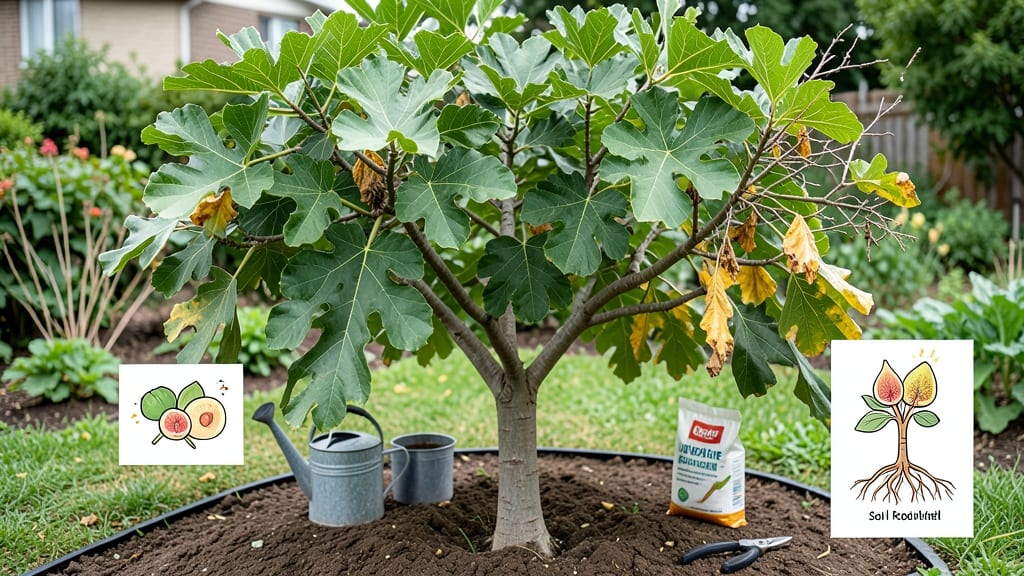
Why is my fig tree not producing fruit?—the answer might be hiding in plain sight: starving for sunlight. 🌞 I’ve watched figs go from lush leaves to zero fruit just by moving a few feet in the shade, and the fix is often as simple as relocating the tree to at least 6-8 hours of direct sun daily. Figs are sun-worshippers, and without it, they prioritize foliage over fruit production.
Age matters too—most figs need 3-5 years to mature before fruiting, and even then, they might need a late-winter pruning to encourage new growth where fruit forms. Overwatering can also stall fruit set, so let the top 2-3 inches of soil dry out between waterings.
And if your tree’s leaves look pale or stunted, it might need a balanced fertilizer in early spring.
Once you adjust light, water, and pruning, you’ll start seeing tiny green figs forming within 4-6 weeks—and by summer, you’ll have a harvest that rivals the grocery store. The key is patience: figs reward consistent care with sweet, juicy rewards that keep coming back every season.
If your tree is still struggling after these fixes, check for pests like aphids or spider mites (they sap energy from the tree) or signs of disease (like brown spots on leaves).
Most figs fruit reliably once their basic needs are met—so don’t give up! The first harvest is the sweetest payoff.
Root Causes Of No Figs
If your fig tree is refusing to bear fruit, the issue likely stems from one—or several—key environmental or care-related factors. Figs are finicky but rewarding, and understanding why they’re skipping the fruit stage is half the battle.
Below, we break down the most common culprits, backed by science, so you can diagnose and fix the problem before next season.
Figs are notoriously slow to mature, and some varieties simply aren’t suited for your climate or growing conditions. Here’s what’s happening:
- Age matters: Most fig trees take 2–5 years to produce fruit, depending on the variety. Ficus carica (common figs) often fruit earlier than Ficus carica 'Celeste' or Ficus carica 'Brown Turkey', which may take longer. Check your tree’s tag or consult a local nursery to confirm its expected fruiting timeline.
- Variety mismatch: Some figs are bred for ornamental purposes (like Ficus carica 'Chicago Hardy') and produce minimal or no fruit. Others, like Ficus carica 'Black Mission', are heavy producers but need full sun and warm winters to thrive. If you’re in USDA Zones 7–9, opt for cold-hardy varieties like 'Osborn Prolific' or 'Desert King'.
- Pollination issues (for non-self-pollinating types): While most common figs are self-pollinating, smoke figs (like 'Violette de Bordeaux') require cross-pollination by fig wasps (Blastophaga psenes). Without these tiny pollinators, they won’t set fruit. Solution: Plant a second smoke fig variety nearby or hand-pollinate with a soft brush.
Figs are sun-worshippers, and without enough light or heat, they’ll prioritize leaf growth over fruit production. Here’s the science:
- Light requirement: Figs need 6–8+ hours of direct sunlight daily to produce fruit. In partial shade (e.g., under a deciduous tree), they’ll grow leaves but skip flowering entirely. Photosynthesis slowdown in low light reduces energy for fruit development.
- Heat threshold: Figs enter dormancy in cold climates but need warmth to break dormancy and flower. If your area has cool springs (below 60°F/15°C for extended periods), figs may fail to bloom. Solution: Use row covers in early spring to trap heat or choose heat-tolerant varieties like 'Celeste'.
- Overhead irrigation: Wet leaves + sunlight = sunburn. Figs in hot climates (Zones 9–11) with midday watering can develop leaf scorch, which weakens the tree and reduces fruiting. Solution: Water deeply in the morning and avoid wetting foliage.
Figs are drought-tolerant but hate soggy roots—and both extremes can halt fruit production. Here’s how water affects flowering:
- Underwatering: Figs store water in their roots and trunk, but prolonged drought triggers stress hormones like abscisic acid, which suppresses flowering. Signs: Curling leaves, dry soil 2–3 inches deep, and no new growth in spring. Solution: Water deeply 1–2 times per week in dry spells (1–1.5 gallons per mature tree).
- Overwatering: Figs in poorly draining soil (e.g., clay) develop root rot (Phytophthora or Pythium fungi), which starves the tree of nutrients needed for fruit. Signs: Yellowing leaves, mushy roots, and moldy soil. Solution: Amend soil with compost + perlite and water only when the top 2 inches of soil are dry.
- Irregular watering: Figs hate inconsistency. Sudden drought after heavy watering (or vice versa) causes physiological stress, leading to aborted flower buds. Solution: Stick to a consistent schedule and mulch with 3–4 inches of wood chips to retain moisture.
Figs fruit on new wood (current season’s growth) and old wood (last year’s branches), but poor pruning can confuse the tree into focusing on leaves instead. Common pruning pitfalls:
- Over-pruning: Cutting back more than 25% of the canopy in one go removes fruit-bearing wood and reduces next year’s yield. Figs also hate aggressive winter pruning—they bloom on spring growth, so late-winter cuts can remove potential flower buds.
- Under-pruning: A dense, unpruned fig tree has poor air circulation, leading to disease (like fig rust) and fewer fruit clusters. Solution: Prune in late winter/early spring to open the canopy and remove dead or crossing branches.
- Wrong time: Pruning after fruit sets (summer/fall) can stress the tree and reduce next year’s crop. Best time: Dormant season (Dec–Feb) in cold climates; early spring in warm climates.
Figs are heat-loving Mediterranean natives, and if your climate doesn’t align with their needs, they’ll skip flowering or drop fruit early. Key issues:
- Cold winters (Zones 5–6): Most figs die back to the ground in freezing temps but regrow from the root crown. However, prolonged sub-20°F (-7°C) temps can kill the root system, halting fruit production. Solution: Choose hardy varieties like 'Chicago Hardy' or 'Panache' and mulch heavily in winter.
- Hot but dry summers (Zones 9–11): Figs need consistent warmth (70–90°F/21–32°C) to set fruit. If temps spike above 100°F (38°C) for weeks, they may abort flowers due to heat stress. Solution: Provide afternoon shade cloth (30–50%) during peak
Revitalize Your Fig Tree Now
If your fig tree is playing hard-to-get with fruit, don’t panic—there’s a fix for every issue! Below, we’ll break down practical, step-by-step solutions tailored to the root cause of your tree’s lack of harvest.
From tweaking sunlight exposure to mastering pruning techniques, these fixes will get your fig tree back on track. And the best part? Most can be done in under an hour!
Figs are sun-worshippers—they need 6–8 hours of direct sunlight daily to fruit. If your tree is shaded by buildings, taller plants, or even other trees, it’s time to act.
How to Fix It: 🔥 Relocate the Tree (Best Long-Term Fix)
If possible, transplant your fig tree to a sunnier spot in your yard.
Figs thrive in full sun, so even a slight improvement in light exposure can trigger fruiting. - Pro Tip: 🌡️ Morning sun is ideal—it warms the tree gently without scorching the leaves.
🍳 Thin Out Overhead Branches
- Use hand pruners or loppers to trim back any branches from nearby trees or structures casting shade.
- Aim to open up the canopy so sunlight can reach the inner branches where fruit forms.
👨🍳 Reflect Light with Mirrors or White Surfaces
- Place reflective surfaces (like white walls, mirrors, or even aluminum foil) near the tree to bounce extra light onto shaded areas.
- Bonus: This trick works well for container-grown figs on patios or balconies.
✨ Prevention Tip:
- When planting a new fig tree, choose a location with unobstructed southern or western exposure—these areas get the most sunlight.
Figs are drought-tolerant but hate soggy roots. Too much or too little water can stall fruit production.
How to Fix It:
🔥 Check the Soil Moisture
- Stick your finger 2–3 inches into the soil. If it’s dry, water deeply. If it’s muddy or waterlogged, hold off until it drains.
🍳 Water Deeply but Infrequently
- Water at the base (not the leaves) 1–2 times per week, depending on your climate. In summer, you may need weekly deep watering.
- Pro Tip: 💡 Use a moisture meter to avoid guesswork—figs prefer soil that’s slightly dry between waterings.
👨🍳 Improve Drainage
- If your fig is in a pot, add perlite or sand to the soil mix to prevent compaction.
- For in-ground trees, amend the soil with compost to help it drain better.
✨ Prevention Tip:
- Mulch around the base (but keep it 3–4 inches away from the trunk) to retain moisture and regulate temperature.
Figs fruit on new wood, so if your tree is overgrown or pruned at the wrong time, it may skip fruiting.
How to Fix It:
🔥 Prune at the Right Time
- Best time to prune: Late winter or early spring (before new growth starts).
- Avoid pruning in summer or fall—this can reduce next year’s fruit set.
🍳 Shape for Airflow & Light
- Remove dead, diseased, or crossing branches first.
- Cut back overly long branches to encourage bushier growth where fruit forms.
- Pro Tip: 🎯 Aim for an open, vase-like shape—this allows sunlight to penetrate and fruit to develop evenly.
👨🍳 Encourage New Growth
- If your tree is too old or leggy, do a rejuvenation prune—cut back 1/3 of the oldest branches to stimulate new, fruiting stems.
✨ Prevention Tip:
- Prune lightly each year (never more than 25% of the tree at once) to avoid stressing it.
Figs need balanced nutrients, especially potassium and phosphorus, to produce fruit.
How to Fix It:
🔥 Test Your Soil
- A simple soil test kit (available at garden centers) can tell you if your fig lacks nitrogen, phosphorus, or potassium.
🍳 Fertilize Correctly
- Use a balanced fertilizer (10-10-10) in early spring and a fruit-specific fertilizer (high in phosphorus, like 5-10-10) in late spring.
- Pro Tip: 💪 Avoid over-fertilizing with nitrogen—this promotes leafy growth but stops fruit production.
👨🍳 Add Organic Matter
- Mix compost or well-rotted manure into the soil around the base to improve nutrient availability.
✨ Prevention Tip:
- Feed in stages: Spring (growth), summer (fruit development), and early fall (root strengthening).
Pests like aphids, scale insects, or fungal diseases can weaken your fig tree, reducing its ability to fruit.
How to Fix It:
🔥 Inspect for Pests
- Look for sticky residue (honeydew), chewed leaves, or tiny bugs on stems.
- Common fig pests: Aphids, spider mites, and fig beetles.
🍳 Treat Naturally or Chemically
- Neem oil spray (mix 1 tbsp neem oil + 1 tsp mild soap + 1 quart water) works for soft-bodied pests.
- For severe infestations, use an insecticidal soap or horticultural oil.
- Pro Tip: 🔪 Prune and destroy heavily infested branches to stop the spread.
👨🍳 Prevent Fungal Diseases
- Water at the base (not overhead) to avoid root rot or leaf spot.
- Remove fallen leaves to reduce fungal spores.
✨ Prevention Tip:
- Monitor regularly and act fast—pests multiply quickly!
Some fig varieties take years to fruit, while others are less productive in certain climates.
How to Fix It:
🔥 Know Your Fig’s Needs
- Young trees (under 3 years old) may not fruit yet—be patient!
- Cold-sensitive varieties (like ‘Brown Turkey’) need winter chill to fruit well.
🍳 Switch to a More Productive Variety
- If your fig is consistently underproducing, consider grafting or replacing it with a high-yielding variety like:
- ‘Celeste’ (disease-resistant, reliable)
- ‘Desert King’ (heat-tolerant, prolific)
👨🍳 Encourage Pollination (If Needed)
- While figs are self-pollinating, wasps help some varieties. If your area lacks wasps, hand-pollinate with a soft brush.
✨ Prevention Tip:
- Research your USDA zone—some figs thrive in Zones 7–10, while others need warmer climates.
Before you give up, run through this quick checklist: ✅ Sunlight: 6+ hours of direct sun? ✅ Water: Deep but infrequent, well-draining soil? ✅ Pruning: Done in late winter/early spring? ✅ Fertilizer: Balanced feed in spring/summer? ✅ Pests: No signs of infestation? ✅ Age/Variety: Is it mature and suitable for your climate?
If you’ve checked all these boxes and your fig still isn’t fruiting, it might be time to consult a local arborist or try grafting a new variety onto your existing tree.
Now grab your pruners, adjust that watering schedule, and watch your fig tree come back to life—you’ll be enjoying fresh figs in no time! 🍇✨
Frequently asked questions
How long does it take for a fig tree to start producing fruit?
Most fig trees need 3-5 years to mature enough for fruiting, though some varieties like 'Celeste' may produce fruit in just 2 years. Young trees focus on root and leaf growth first, so patience is key—especially if you planted from a cutting rather than a grafted nursery tree.
Can I force my fig tree to fruit faster?
Not reliably, but you can optimize conditions to encourage earlier fruiting. Provide full sun (6+ hours daily), use a balanced fertilizer in early spring, and prune in late winter to stimulate new growth where fruit forms. For container-grown trees, move them to a warmer microclimate during winter to break dormancy faster.
Why do my fig leaves look healthy but there's still no fruit?
This often means your tree is getting too much nitrogen (promoting leaves) or not enough phosphorus/potassium (needed for fruit). Switch to a low-nitrogen, high-phosphorus fertilizer like 5-10-10 and reduce watering slightly—figs fruit best when slightly water-stressed during summer.
What's the difference between old wood and new wood fruiting?
Figs produce fruit on both old wood (last year's branches) and new wood (current season's growth). Old wood bears fruit earlier in the season, while new wood produces later. Prune carefully in late winter to preserve both types—never cut back more than 25% of the canopy at once.
Could my fig tree be the wrong variety for my climate?
Some varieties like 'Brown Turkey' need winter chill hours (400-600 hours below 45°F) while others like 'Celeste' thrive in warmer climates (Zones 7-10). Check your USDA zone and choose cold-hardy varieties like 'Chicago Hardy' if you live in Zones 5-6.