
Trees
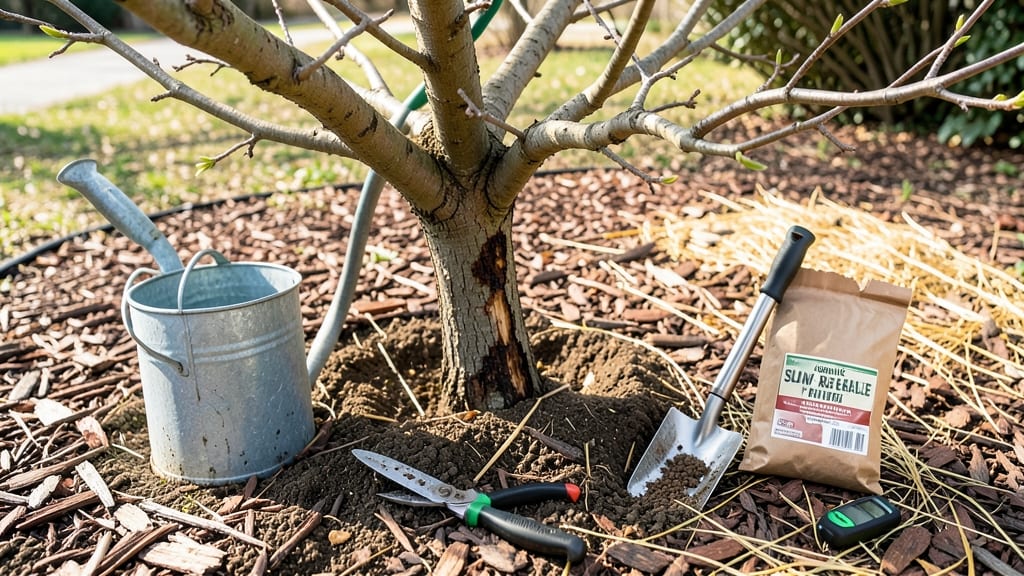
You can bring a dead tree back to life in some cases if its roots are still alive and the decline shows early warning signs like yellowing leaves or sparse foliage instead of cracked bark or fungal growth. Act immediately by removing dead branches, watering thoroughly, and adding mulch to replenish soil nutrients.
Reviving a seemingly lifeless tree hinges on catching the problem early. 🌱 The key is identifying whether the tree is suffering from reversible stress—like drought or nutrient deficiency—or irreversible damage, such as disease or root rot.
I always check for flexible bark (a sign of moisture) and fresh green growth at the tree’s base, which often indicates the roots are still active. Even if the canopy looks bare, new shoots can emerge with proper care, so don’t give up too soon!
Once you confirm the tree is salvageable, focus on three critical actions: pruning dead limbs to redirect energy, deep watering to rehydrate roots, and applying organic mulch to retain moisture and improve soil structure.
For example, a 3-inch layer of wood chips around the base can work wonders in retaining water while suppressing weeds. Timing matters too—spring and early summer are ideal for most trees, as they’re entering their growth phase.
💡 In This Article
- How to Diagnose a Tree’s True Condition Before Attempting Revival
- Step-by-Step Tree Revival Guide for Gardeners
How to diagnose a tree’s true condition before attempting revival
The first step in reviving a tree is determining whether it’s suffering from reversible stress or irreversible damage. Healthy roots are the foundation—if they’re still alive, recovery is possible.
Start by examining the bark: flexible bark that peels slightly when pulled indicates moisture retention, while hard, cracked bark signals severe dehydration or disease. Look for green growth at the base or fresh buds, which often mean the roots are still functional.
Leaf patterns reveal critical clues too. Yellowing leaves (chlorosis) typically indicate nutrient deficiencies like iron or nitrogen, while brown, crispy leaves suggest drought stress. 🌿 If you see new shoots emerging from the trunk or branches, the tree’s vascular system is still active.
However, if you spot mushrooms growing at the base or oozing sap, fungal decay or root rot has likely set in—these are signs the tree is beyond saving.
Root health is the ultimate litmus test. Gently scrape away soil near the base to check for white, firm roots (healthy) versus black, mushy roots (rotten). Use a soil probe to test moisture levels—if it’s bone-dry 12 inches deep, the roots may be starved.
For trees with girdling roots (roots circling the trunk), pruning these can restore airflow and prevent suffocation.
Seasonal timing also matters. Trees in dormancy (winter) may appear dead but are simply conserving energy. Wait until spring to assess—new leaves should appear within 4-6 weeks if the roots are viable. Avoid testing in extreme heat or drought, as these conditions mask true vitality.
For a deeper diagnosis, consider a soil test kit (costs $15-$25) to measure pH and nutrient levels. Trees need a pH between 6.0-7.0—outside this range, roots struggle to absorb water and nutrients.
If your soil is compacted, aeration with a manual core aerator ($30-$50) can improve root access to oxygen.
Remember: even if the canopy looks barren, roots can stay alive for years in some species like oaks or maples. I’ve seen trees with 90% dead branches sprout new growth after just 3 months of proper care.
The key is acting before the roots lose their ability to transport water and nutrients.