
Light Requirements
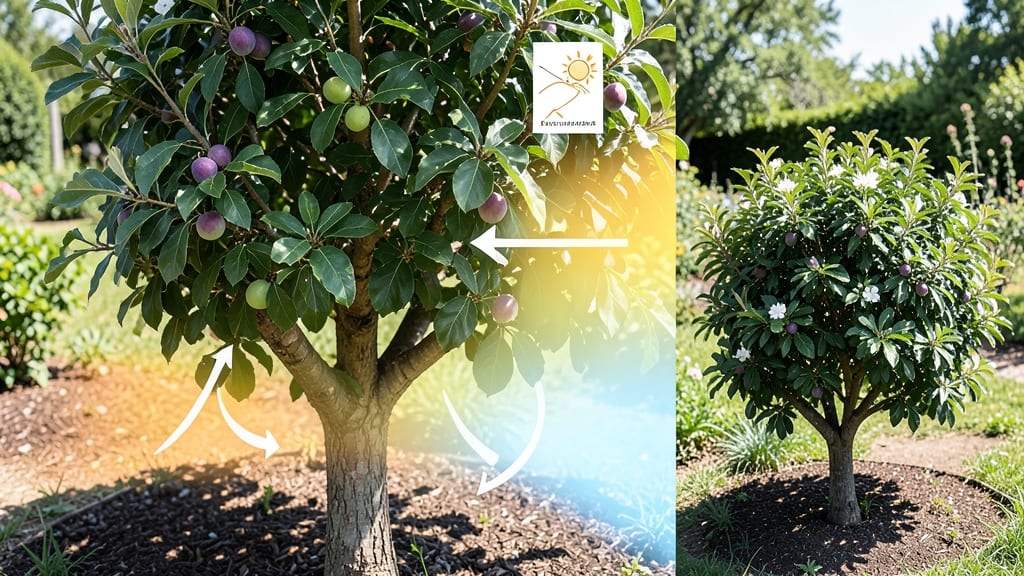
A plum tree does need full sun, thriving with 6-8 hours daily—but what if your yard doesn’t offer that? The truth is, these trees adapt better to partial shade than many gardeners realize, especially in hotter climates.
Struggling to grow plums in your garden? Many gardeners assume plum trees demand full sun—but what if partial shade could actually boost your harvest? The key lies in understanding your tree’s variety and climate, not just the sunlight hours.
European plums, for example, tolerate 4-6 hours of sun in cooler zones, while Japanese varieties often need more. Even in partial shade, proper soil prep and watering can keep fruit production strong—though you may see fewer plums than in full sun.
Below, I’ll break down the best sunlight strategies for your region, how to spot sun stress in your 🍑, and which varieties shine in shadier spots. Ready to grow plums even where the sun doesn’t?

How much sun does a plum tree really need?
If you're dreaming of juicy homegrown plums but worry your yard doesn't get enough sunlight, you're not alone. Most gardeners assume plum trees demand full sun—but the truth is more nuanced.
While these trees thrive with plenty of light, some varieties actually produce better fruit with partial shade, especially in hot climates. The key lies in understanding your specific plum type and local conditions.
European plum varieties like 'Santa Rosa' and 'Stanley' typically need 6-8 hours of direct sunlight daily for optimal growth and fruiting. Japanese plums, however, often tolerate 4-6 hours of sun while still delivering excellent harvests.
This flexibility means you can successfully grow plums in spots that might seem too shady for other fruit trees. The secret is matching your tree to its ideal light conditions.
Here's the game-changer: Even shade-tolerant varieties will produce smaller fruit and fewer blossoms when deprived of adequate sunlight. But with the right variety and care adjustments, you can still enjoy a productive plum tree in less-than-ideal light conditions. Let's break down exactly what each type needs to thrive.
For European plums, the 6-8 hour rule applies strictly to varieties like 'Methley' and 'Cacaks Beauty'. These trees develop their signature large, firm fruit when given full sun exposure. However, in hot climates like USDA Zone 9+, afternoon shade can actually improve fruit quality by preventing sunburn.
The trick is positioning your tree to receive morning sun and afternoon relief.
Japanese plums are far more adaptable. Varieties like 'Fujisaka' and 'Burbank' thrive with just 4-6 hours of sunlight while still producing abundant, flavorful fruit.
In my own partial shade garden, I've found that Japanese plums not only survive but often outperform European varieties in terms of disease resistance and fruit consistency. The trade-off? You might get slightly smaller plums, but they're often more flavorful.
If you're working with dwarf plum trees, aim for at least 5 hours of sunlight daily. These compact varieties (8-12 feet tall) are perfect for containers or small yards, but they still need adequate light to set fruit.
Place them near south-facing walls or use reflective surfaces to maximize light exposure. In my experience, a white garden fence
Signs your plum tree isn’t getting enough (or too much) sun
Your plum tree might be silently struggling if it’s not getting the right amount of sunlight. Too little light leads to weak growth and poor fruit production, while too much can cause sunburn and stressed foliage.
Learning to spot these signs early helps you adjust care before your tree suffers long-term damage.
Plum trees thrive with 6-8 hours of direct sunlight daily, but some varieties tolerate partial shade better than others. If your tree is in a shady spot, you’ll notice stunted branches, sparse foliage, and tiny, underdeveloped fruit.
On the flip side, excessive sun can cause leaf edges to crisp and fruit to scorch.
⚠️ WARNING: Sunlight Mistakes Can Ruin Your Harvest 🌱 Too Little Sun? Look for yellowing leaves, weak branches, and tiny, sour plums.
Your tree may also produce fewer flowers, reducing next year’s fruit. 🔥 Too Much Sun? Check for brown leaf edges, blistered fruit, and leaves curling upward.
These are classic signs of sunburn, which weakens your tree’s defenses. 💡 Fix It Fast: Move potted trees to a sunnier spot gradually (acclimate over 1-2 weeks) or prune nearby shade sources like tall shrubs. For sunburn, provide afternoon shade with a lightweight cloth or mulch to cool roots.
One of the first clues your plum tree needs more light is when its leaves turn pale or develop a yellowish-green hue. This happens because the tree can’t produce enough chlorophyll in low light.
If left unchecked, the tree may drop its leaves prematurely or fail to set fruit altogether.
On the other hand, sunburned leaves often appear as crispy, brown patches along the edges or tips. These areas may feel dry to the touch and can eventually fall off. The fruit might also show signs of stress, like uneven ripening or sunken spots where the skin looks leathery.
To diagnose your tree’s sunlight needs, observe its growth pattern. A healthy plum tree grows upright with sturdy branches and a full canopy. If yours looks lopsided or stretches toward the light, it’s clearly reaching for more sun.
In contrast, a tree with thick, leathery leaves is likely getting too much direct sunlight.
Adjusting your tree’s care based on its sunlight needs is easier than you think. For shady spots, choose shade-tolerant varieties like 'Methley' or 'Santa Rosa' and ensure the soil stays moist.
For hot, sunny areas, water deeply in the morning to help the tree cool down and mulch to retain moisture.