
Pruning
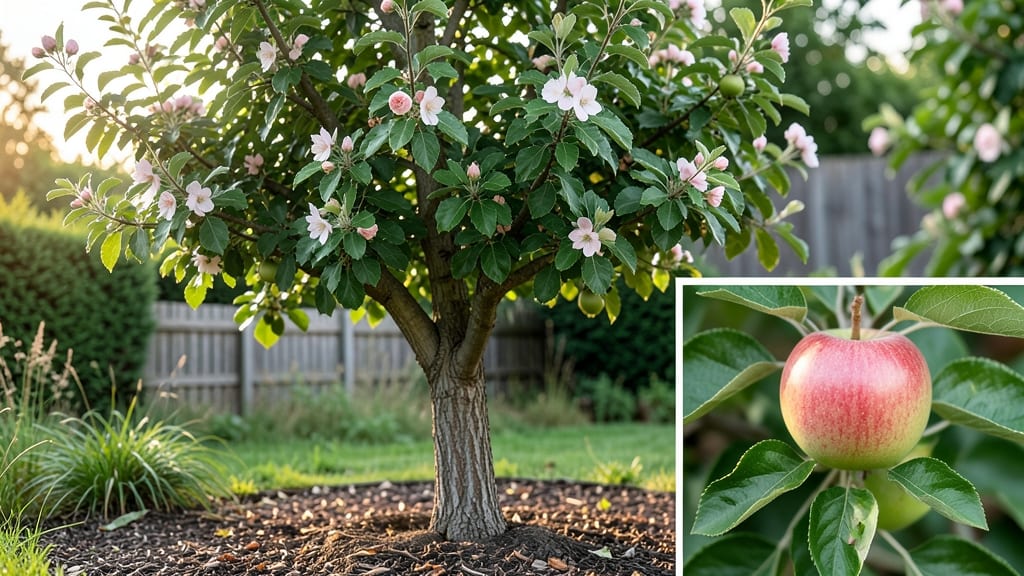
Apple trees usually take 3 to 5 years to bear fruit after planting, but dwarf varieties can produce fruit in as little as 2 years, while standard-sized trees may take up to 7 years, depending on the variety and growing conditions.
Patience is key when growing apple trees—timing varies dramatically based on the tree's size and growing conditions. 🍏 Dwarf varieties, like 'Columnar' or 'Patio' types, reach maturity faster due to their compact root systems, while full-sized trees need more time to establish strong roots and branches.
Climate also plays a role: cooler regions may delay fruiting, while warmer zones can accelerate it. Proper care, like consistent watering and pruning, helps trees focus energy on producing fruit rather than just growing leaves.
For home gardeners eager for quick results, choosing early-bearing varieties like 'Honeycrisp' or 'Gala' can be a game-changer. These varieties often fruit within 2-3 years, making them ideal for smaller spaces or impatient growers. Just remember, even the fastest varieties need consistent care to ensure healthy, abundant harvests.
💡 In This Article
- Factors Affecting Apple Tree Fruit Production Timeline
- Fastest-Bearing Apple Tree Varieties for Home Gardens
Factors affecting apple tree fruit production timeline
The rootstock—a term for the underlying tree onto which the desired apple variety is grafted—plays the biggest role in determining how quickly your tree bears fruit.
Dwarf rootstocks, like M.9 or B.9, force the tree to mature in 2-3 years because they restrict root growth, redirecting energy upward into the fruit-bearing canopy.
In contrast, semi-dwarf rootstocks (such as MM.106) take 3-4 years, while standard rootstocks (like seedling or Antonovka) can delay fruiting until 5-7 years due to their aggressive root systems.
Climate zones also drastically influence timing. Trees in USDA Zones 5-7—where winters are cold enough to break dormancy and summers provide adequate heat—often fruit faster than those in milder zones (like Zone 8), where inconsistent temperature swings can confuse the tree’s flowering cues.
Soil quality matters too: nutrient-rich, well-draining soil with a pH between 6.0 and 7.0 helps trees allocate energy to fruit production instead of struggling to absorb nutrients. Poor soil forces trees to prioritize root and leaf growth, delaying fruiting by 1-2 years.
Sunlight exposure is non-negotiable—apple trees need 6-8 hours of direct sun daily to produce fruit. Shade from buildings or other trees can stretch the fruiting timeline by up to 3 years because the tree diverts energy to photosynthesis rather than flowering.
Pruning techniques further accelerate fruiting: Open-center pruning (removing inward-growing branches) ensures sunlight penetrates the canopy, while thinning out water sprouts (vertical shoots) redirects energy to fruit-bearing limbs. Without proper pruning, trees may take an extra year or more to bear meaningful harvests.
Watering habits create another critical factor. Young apple trees need 1-2 inches of water weekly during their first 2 years to establish roots, but overwatering can lead to root rot, stalling growth.
Drought stress, on the other hand, forces trees to conserve water, delaying fruiting by up to 2 years as they prioritize survival.
Mulching with 3-4 inches of organic matter (like wood chips) helps retain moisture while protecting roots from temperature swings—both of which keep the tree on track for timely fruiting.
Finally, the tree’s genetic makeup matters. Some varieties, like 'Anna' or 'Dorsett Golden', are known for early fruiting (2-3 years) because they prioritize reproductive growth over vegetative growth. Others, like 'Granny Smith', may take 5-6 years due to their slower maturation rate.
Cross-pollination also plays a role: if your tree isn’t pollinated by another compatible variety within 50-100 feet, it may produce fewer (or no) fruits, extending the timeline until proper pollinators are introduced.
Here’s what most gardeners overlook: even with ideal conditions, apple trees often produce a light crop in their first year of fruiting before reaching full production.
This "biennial bearing" cycle—where trees alternate between heavy and light fruit years—is natural but can be mitigated with regular thinning of fruit clusters (leaving 6-8 apples per branch) to balance energy output. 🍎