
How To
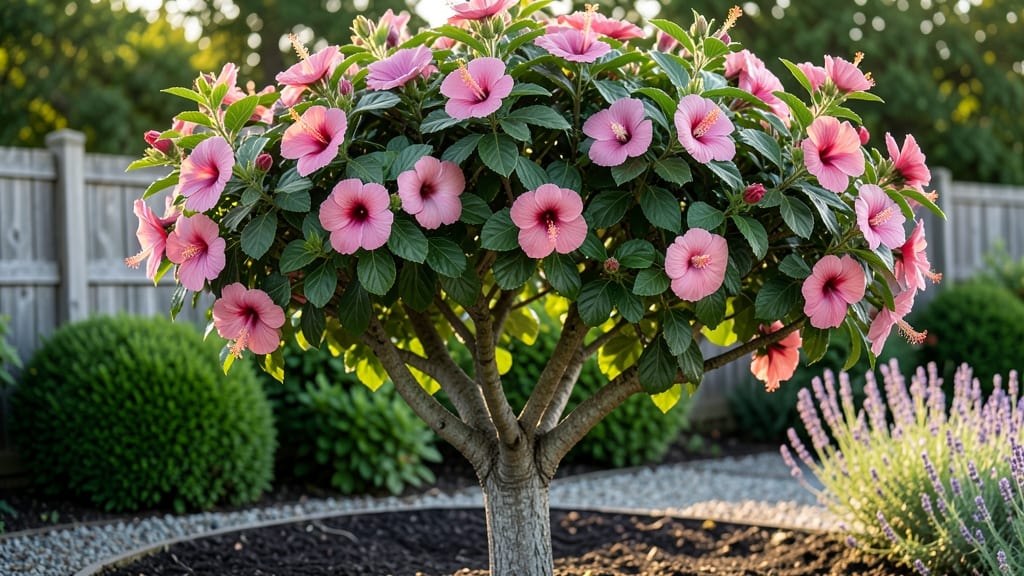
A hibiscus tree can grow anywhere from 6 feet to towering 20 feet tall, depending on the variety and care you give it 🌺—that’s the difference between a compact shrub and a small tree.
Wondering if your backyard can accommodate one? These tropical beauties range from dwarf varieties perfect for containers to giant specimens that need serious space. The right choice depends on your garden layout and how much vertical drama you’re willing to handle.
Fast-growing types like Hibiscus rosa-sinensis can shoot up 3–5 feet in their first year, while hardy hibiscus (Hibiscus syriacus) matures more slowly but lives longer. Pruning isn’t about stunting growth—it’s about shaping it to fit your space.
In this guide, I’ll break down the fastest-growing varieties, how to control height in small yards, and the key pruning tricks that keep hibiscus blooming without sacrificing size. Ready to plan your perfect hibiscus?


Hibiscus tree height by variety: from dwarf to giant sizes
Hibiscus trees are stunning additions to any garden, but their mature heights can vary dramatically—from compact shrubs perfect for containers to towering giants that need spacious backyards. Understanding these differences helps you choose the right hibiscus variety for your space and climate.
Tropical hibiscus (Hibiscus rosa-sinensis) and hardy hibiscus (Hibiscus syriacus) are the two main types, each offering a range of heights to suit different landscapes.
For garden planning, knowing a hibiscus's mature height isn't enough—you'll also want to consider its growth rate and spacing needs. A dwarf hibiscus might stay under 6 feet, while a standard variety can reach 15–20 feet tall.
Below, we break down the most popular varieties by size category, including their ideal spacing and growth habits to help you visualize their impact in your garden.
| Variety | Mature Height | Growth Rate | Ideal Spacing | Best For |
|---|---|---|---|---|
| Dwarf Varieties | 3–6 ft | Slow to moderate | 3–5 ft apart | Containers, small gardens, patios |
| Hibiscus rosa-sinensis 'Mini Maui' | 3–4 ft | 1–2 ft/year | 3 ft apart | Balconies, window boxes |
| Hibiscus rosa-sinensis 'Lil' Kim' | 4–5 ft | 1.5–2 ft/year | 4 ft apart | Small yards, urban gardens |
| Medium Varieties | 6–12 ft | Moderate to fast | 6–10 ft apart | Backyards, borders, privacy screens |
| Hibiscus rosa-sinensis 'Super Star' | 8–10 ft | 2–3 ft/year | 8 ft apart | Tropical landscapes, large pots |
| Hibiscus syriacus 'Blue Chiffon' | 6–8 ft | 1.5–2.5 ft/year | 6 ft apart | Cold-hardy gardens, hedges |
| Giant Varieties | 12–20+ ft | Fast | 10–15 ft apart | Large estates, privacy screens |
| Hibiscus rosa-sinensis 'Disco Belle' | 10–15 ft | 3+ ft/year | 10 ft apart | Tropical backdrops, large containers |
| Hibiscus syriacus 'Diana' | 12–15 ft | 2–3 ft/year | 12 ft apart | Privacy hedges, large gardens |
If you're working with limited space, dwarf varieties like 'Mini Maui' or 'Lil' Kim' are excellent choices. These stay under 5 feet tall, making them perfect for containers or small patios.
Their slower growth rate also means less maintenance, though they still thrive with regular pruning to encourage bushier growth and more blooms.
Medium-height hibiscus, such as 'Super Star' or 'Blue Chiffon', strike a balance between manageable size and dramatic impact. These varieties typically reach 6–12 feet tall, making them ideal for backyard borders or as focal points.
When planting, give them at least 6 feet of space to allow for airflow and prevent disease. In my own garden, I’ve found that spacing them 8 feet apart creates a stunning, low-maintenance hedge.
For those with ample space, giant hibiscus varieties like 'Disco Belle' or 'Diana' can become the stars of your landscape. These towering beauties can reach 15–20 feet tall, providing year-round interest with their vibrant blooms.
However, their rapid growth means you’ll need to plan for 10–15 feet of spacing to avoid overcrowding.
How to control hibiscus tree growth for small spaces
If your small garden dreams of hibiscus blooms, don't let their natural height hold you back! With the right techniques, you can keep these tropical stars at a manageable 3-6 feet—perfect for patios, balconies, or even indoor spaces.
The key lies in strategic pruning, root restriction, and smart container selection. I've trained my dwarf hibiscus to stay under 5 feet for years using these methods.
Hibiscus trees naturally grow 10-20 feet tall when unchecked, but their growth rate slows dramatically with proper management. The secret is timing—prune right after flowering to encourage bushier growth while maintaining height control. For container-grown hibiscus, root-bound conditions actually stimulate compact growth, making them ideal for small spaces.
- Prune in late winter - Cut back 1/3 of new growth to maintain shape and encourage blooms.
- Use 15-gallon containers - Limits root spread, keeping height under 6 feet even for standard varieties.
- Top-dress with mulch - Adds 1-2 inches annually to restrict root expansion naturally.
- Pinch young shoots - Remove top 2 inches of new growth in spring to promote branching.
- Fertilize lightly - Use half-strength balanced fertilizer to prevent rapid vertical growth.
For my balcony hibiscus, I combine container gardening with annual pruning to keep it at exactly 4 feet—ideal for my second-story railing. Start with a 15-gallon container and upgrade to 20-gallon only if needed. The smaller pot naturally restricts root growth, which translates to slower vertical expansion.
Seasonal maintenance is crucial for compact hibiscus. In spring, focus on pinching back new growth to encourage bushiness. During summer, prune spent blooms immediately to prevent leggy growth.
I schedule my major pruning for late winter when the plant is dormant, which helps maintain its shape without sacrificing blooms.
Don't overlook the power of root restriction techniques. My dwarf hibiscus thrives in containers because its roots can't spread freely. For in-ground plants, create a raised bed with 2-inch-high sides to contain roots. This simple trick reduces height by 30-40% compared to unrestricted growth.
Remember that hibiscus respond well to regular care—consistent watering, balanced fertilizer, and proper sunlight keep them healthy while making them easier to manage. With these techniques, you can enjoy vibrant hibiscus blooms even in the smallest of spaces without sacrificing their tropical beauty. 🌺