
Companion Plants
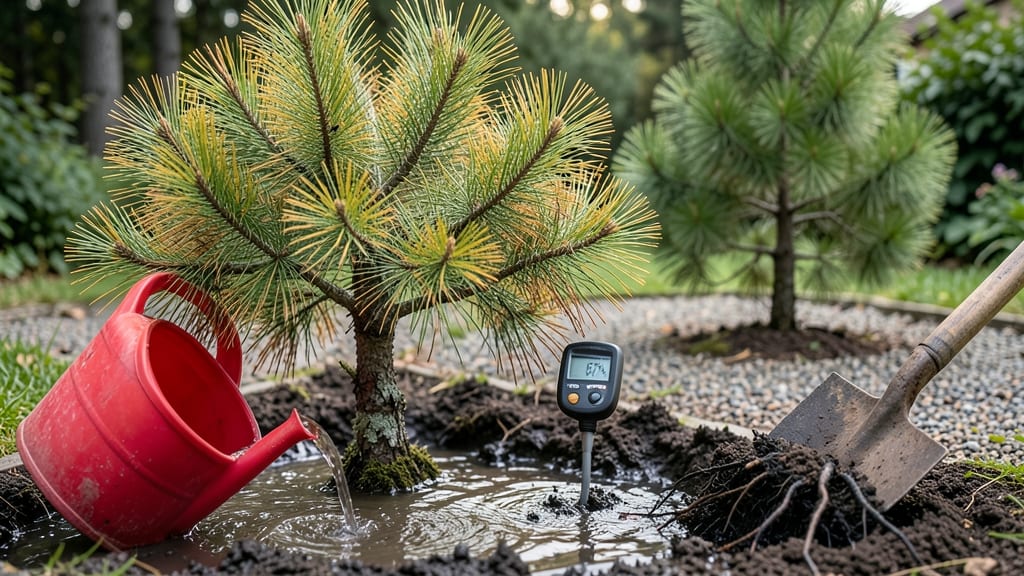
Overwatered pine trees reveal themselves through yellowing needles and a sad, drooping shape that makes them look like they’ve been crying all winter. 🌲 I’ve seen healthy pines turn into soggy messes when well-meaning gardeners overdo the watering—especially in containers or heavy clay soil where roots can’t breathe.
The first clue is bright yellow needles that start at the tips and spread inward, unlike the gradual browning of drought stress.
You’ll also spot needle drop (clusters of needles falling at once) and maybe even mushy, foul-smelling soil when you dig near the roots—classic signs of root rot taking hold. Once you catch it early, recovery is possible.
Drain the soggy soil, adjust your watering to once every 1-2 weeks (unless it’s scorching hot), and add organic matter to improve drainage. Pines hate "wet feet," so raised beds or containers with drainage holes become their lifesavers. The good news? Pines are tough once you fix the watering.
With proper care, they bounce back with deep green needles and that classic upright shape—proof that even the most neglected trees can make a comeback.
Root Causes Of Overwatering
Overwatering a pine tree isn’t just about dumping too much water—it’s a complex issue tied to soil science, plant biology, and even environmental factors. Understanding these root causes can help you diagnose and prevent the problem before it’s too late.
Let’s break down why your pine tree might be drowning in its own pot (or garden bed).
Pine trees thrive in well-draining, slightly acidic soil (pH 4.5–6.0). When soil fails to drain properly, excess water pools around the roots, cutting off oxygen—a critical ingredient for root health.
- Clay-heavy soils act like a sponge, holding moisture for days or weeks.
Even after rain, they stay soggy, suffocating roots. - Compacted soil (from foot traffic, construction, or heavy machinery) creates air pockets, but water still can’t escape efficiently. - Improper planting depth: If the root flare (where roots meet the trunk) is buried too deep, water pools around the base, encouraging rot.
💡 Pro Tip: Test your soil’s drainage by digging a 12-inch hole, filling it with water, and timing how long it takes to drain. If it’s still wet after 6 hours, amend with sand, perlite, or organic matter (like pine bark fines).
Pine trees are drought-tolerant once established—they evolved to survive in sandy, nutrient-poor soils with minimal moisture. Yet, many gardeners (and even professionals) overcorrect by watering on a rigid schedule, ignoring the tree’s actual needs.
- Automatic irrigation systems set to "daily cycles" can drown roots, especially in cooler months when evaporation slows.
- Mulch that’s too thick (over 3–4 inches) traps moisture against the soil, creating a wet, anaerobic zone.
- Watering in the evening delays evaporation but keeps roots saturated overnight, inviting fungal growth.
⏰ Actionable Fix: Water deeply but infrequently—aim for 1–1.5 inches per week (including rain) for young pines, and reduce to every 2–3 weeks for mature trees. Use a soil moisture meter to check before watering again.
Even the best-intentioned gardener can’t control the weather—but certain conditions amplify overwatering risks.
- High humidity + poor airflow: Pine trees in shady, enclosed spaces (like tight urban gardens or under dense canopies) struggle to dry out.
Fungal diseases like root rot thrive in these conditions. - Frequent, heavy rainfall: Native pines in wet climates (e.g., Pacific Northwest) may show signs of stress if planted in low-lying areas where water pools. - Cold, waterlogged soil: In winter, frozen ground prevents excess water from draining, leaving roots in a semi-drowned state until spring.
🌡️ Climate Hack: If you live in a humid region, raise planting beds slightly (6–12 inches) to improve drainage. For rainy seasons, install French drains or swales to redirect water away from the root zone.
Overwatering doesn’t just drown roots—it invites fungal pathogens that accelerate decay. The most common culprits:
| Fungus | Symptoms | How Overwatering Helps It Spread |
|---|---|---|
| Phytophthora | Brown, mushy roots; wilting needles | Thrives in waterlogged, anaerobic soil |
| Armillaria (Honey Fungus) | White fungal sheaths on roots; tree decline | Spreads via root contact in soggy soil |
| Fusarium | Yellowing needles; blackened roots | Exploits weakened, water-stressed roots |
🔥 Emergency Move: If you suspect fungal rot, prune affected roots (sterilize tools with 70% alcohol), reduce watering immediately, and apply fungicide (copper-based or phosphite-based) to the soil.
Potted pine trees are especially vulnerable to overwatering because their root systems are confined, and containers lack natural drainage pathways.
- Small pots with no drainage holes act like bathtubs—water has nowhere to go.
- Peat-based potting mixes retain moisture for weeks, even after watering stops.
- Overpotting (using a container too large for the root ball) keeps soil damp longer than the tree can use.
🏺 Container Fix: Use fast-draining mixes (50% pine bark, 30% perlite, 20% compost), elevate pots on feet to improve airflow, and check moisture daily in summer. Terracotta pots (which dry out faster) are ideal for pines.
Not all pine tree decline is from overwatering—underwatering, pests, or nutrient deficiencies can mimic the same symptoms. Common lookalikes:
- Needle browning from pests (e.g., pine bark beetles) often starts at the tips, while overwatering causes yellowing from the base up.
- Salt buildup (from tap water or fertilizers) leads to crusty soil and burned needle edges.
- Compacted roots (from construction or foot traffic) restrict growth, but the tree may still show wilting only in heatwaves.
🔍 Diagnostic Check: Gently scrape away soil near the roots. Healthy roots are tan or white; rotten roots are black, mushy, or smell like decay. If roots look fine but needles are yellow, the issue may be nutrient-related (e.g., iron deficiency).
Revive Your Pine Tree: Step-by-Step Fixes
Overwatering can stress your pine tree, but the good news is that with the right adjustments, you can nurse it back to health. Below are targeted solutions based on the root causes of overwatering—from soggy soil to poor drainage—and actionable steps to turn things around.
Let’s get your pine tree thriving again!
If your pine’s needles are turning yellow or brown (especially at the tips), it’s likely suffering from root rot or nutrient leaching due to overwatering.
Step 1: Stop Watering Immediately 🚰
- Pause all watering for at least 7–10 days to let the soil dry out.
- If the ground is mushy or smells sour, wait longer—roots need air to recover.
Step 2: Improve Soil Drainage 🏗️ Pine trees hate soggy roots.
Amend the soil with: - Coarse sand or perlite (mix 20–30% into the top 6–12 inches of soil). - Pine bark fines (for organic aeration). - Raised beds or mounds (if planting new pines, elevate the root zone).
Step 3: Prune Damaged Needles ✂️
- Trim dead or discolored needles with clean, sharp shears.
- Focus on lower branches first—they’re most affected by poor drainage.
- Pro Tip: 💡 Disinfect tools with rubbing alcohol to prevent fungal spread.
Step 4: Fertilize Lightly (If Needed) 🌿
- Wait 4–6 weeks after pruning before fertilizing.
- Use a slow-release, acidic fertilizer (like 10-10-10 or pine-specific formula).
- Avoid high-nitrogen fertilizers—they worsen moisture stress.
If your pine’s branches are limp, sparse, or shedding, it’s likely root-bound or suffocating from compacted, waterlogged soil.
Step 1: Check for Root Bound Conditions 🔍
- Gently loosen the top 2–3 inches of soil around the base.
- If roots are circling tightly or matted, it’s time to repot or transplant (for container pines).
Step 2: Aerate Compacted Soil 💨
- Use a garden fork to poke holes 6–12 inches deep around the tree.
- For lawn areas, core aerate in a grid pattern (rent a machine or hire a pro).
Step 3: Mulch Correctly 🍂
- Apply 2–3 inches of organic mulch (pine straw, wood chips) away from the trunk.
- Mistake to Avoid: ❌ Piling mulch against the trunk—this traps moisture and invites rot.
Step 4: Water Deeply but Infrequently 💦
- Water only when the top 2 inches of soil are dry (stick your finger in to test).
- Deep watering (1–2 inches per session) encourages deep root growth.
- Pro Tip: 🌡️ Water in the morning to reduce fungal risks from evening dampness.
If your pine’s trunk is soft, needles fall easily, or the tree leans, root rot may be advanced. Act fast:
Step 1: Dig Carefully & Assess Roots 🕵️♂️
- Gently expose roots (1–2 feet out from the trunk).
- Healthy roots are tan/brown and firm; rotten roots are black, mushy, and smell foul.
Step 2: Trim Rotten Roots ⚔️
- Cut away all black, slimy roots with sterilized pruners.
- Do not over-prune—leave as many healthy roots as possible.
Step 3: Apply Fungicide (If Needed) 🧴
- Spray copper-based fungicide (like Copper Sulfate) on exposed roots and soil.
- Alternative: 🌿 Hydrogen peroxide (3%) diluted to 10% strength (safe for soil).
Step 4: Repot or Transplant 🌳
- If in a container, move to a larger pot with fresh, well-draining mix.
- For ground pines, dig a new hole twice as wide as the root ball and amend with sand/perlite.
Once your pine recovers, keep it happy long-term with these habits:
✅ Test Soil Drainage 📊
- DIY Test: Fill a hole near the tree, add water, and time how long it drains.
- <1 hour? Soil is too dense—amend it.
- >4 hours? Risk of waterlogging—improve drainage.
✅ Choose the Right Spot 📍
- Pines need full sun (6+ hours/day) and well-draining soil.
- Avoid: Low spots where water pools.
✅ Mulch Smartly 🍃
- Keep mulch 3–4 inches deep and 6 inches away from the trunk.
- Replenish annually to maintain structure.
✅ Water Like a Pro 💧
- Drip irrigation (better than overhead watering).
- Use a moisture meter for accuracy (aim for 40–60% soil moisture).
✅ Monitor Year-Round 👀
- Winter: Reduce watering (pines need less in cold months).
- Summer: Increase watering only if soil is dry (heat dries soil faster).
| Symptom | Fix Done? | Next Steps |
|---|---|---|
| Yellow/brown needles | ✅ Stopped watering | Prune & fertilize |
| Drooping branches | ✅ Aerated soil | Mulch & deep water |
| Soft trunk/root rot | ✅ Trimmed roots | Repot & fungicide |
| Compacted soil | ✅ Amended mix | Monitor drainage |
With patience and the right care, your pine tree can bounce back stronger—just give it time to dry out and breathe! 🌲✨
Frequently asked questions
How can I tell if my pine tree is overwatered vs. underwatered?
Overwatered pines show bright yellow needles starting at the base, while underwatered trees have brown, crispy tips. Check the soil too: soggy, foul-smelling dirt means overwatering, while dry, cracked soil indicates thirst. Also, overwatered trees often have needle drop (clusters falling at once), whereas drought stress causes gradual browning.
Can I save a pine tree with root rot from overwatering?
Yes, but act fast! First, stop watering immediately and let the soil dry completely. Prune any black, mushy roots, then repot in fresh, fast-draining mix (50% pine bark, 30% perlite). Apply a copper-based fungicide to prevent further spread. Recovery takes 4-6 weeks—be patient and monitor soil moisture closely.
Why does my pine tree look sad after heavy rain?
Pines struggle with waterlogged soil after heavy rain, especially in clay-heavy or compacted ground. Look for yellowing needles or drooping branches—classic signs. Improve drainage by adding coarse sand or pine bark fines to the top 6 inches of soil, and avoid watering for 7-10 days to let roots recover.
Is it better to underwater or overwater a pine tree?
Pines are drought-tolerant once established, so slight underwatering is less harmful than overwatering. However, chronic underwatering causes needle browning and stunted growth. The key is deep, infrequent watering—1-1.5 inches per week (including rain) for young trees, and every 2-3 weeks for mature ones.
How do I fix compacted soil around my pine tree?
Use a garden fork to poke 6-inch-deep holes around the root zone in a grid pattern. Mix in 20-30% coarse sand or perlite with the top 12 inches of soil. For severe compaction, consider core aeration (rent a machine or hire a pro). Mulch with pine straw to prevent future soil compression.