
Pruning
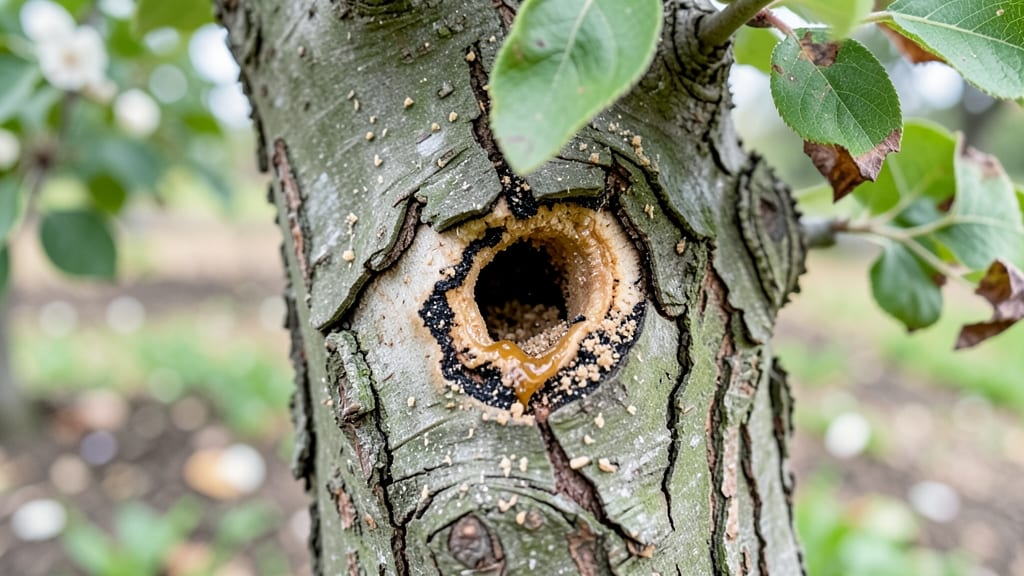
Apple tree borer damage turns your prized orchard into a sad, sawdust-spewing mess. 🌳 I’ve seen healthy trees go from lush canopies to skeletal branches in just a few months—this pest doesn’t wait.
The key is catching it early, before the larvae tunnel deep into the bark and sap starts oozing like syrup from a broken jug.
The damage starts small but escalates fast: frass (that telltale sawdust) piles up at the base of branches, leaves yellow and wilt, and sudden dieback signals a full-blown infestation. Borers thrive in stressed trees, so weak bark, poor pruning, or drought makes your apple tree a buffet.
The good news? You can stop it with the right tools and timing—no heavy chemicals required.
By the end of this, you’ll know how to spot the early signs, use organic sprays like neem oil or kaolin clay, and even attract natural predators to keep borers off your tree for good.
A few hours of work now saves you from losing an entire tree—or worse, watching your neighbors’ trees get hit next.
Whether you’re dealing with a single branch or a full-blown outbreak, this step-by-step approach works for any apple variety, from dwarf backyard trees to full-sized orchards. Let’s get your tree back to thriving before winter sets in.
Root Causes Of Apple Tree Borer Attacks
Apple tree borers—particularly the Saperda candida (apple tree borer) and Anobium pomorum (apple bark borer)—don’t just appear out of nowhere. Their destructive tunneling is the result of a perfect storm of environmental, biological, and human factors.
Understanding these triggers is the first step to outsmarting them before they wreak havoc on your orchard. Let’s break down the key reasons these pests target your trees.
Healthy trees are like fortresses—strong bark, vibrant foliage, and a robust immune system keep pests at bay. But when trees are stressed, borers see an open invitation. Here’s what makes your apple trees vulnerable:
- Nutrient Deficiencies: Trees lacking essential nutrients (like nitrogen, potassium, or calcium) produce thinner bark and weaker structural integrity. Borers exploit this by tunneling into soft, nutrient-rich layers beneath the surface.
- Drought Stress: Prolonged dry spells force trees to divert energy to survival, leaving their bark drier and more brittle. Cracked or peeling bark provides easy entry points for borer larvae.
- Root Damage: Compaction, poor drainage, or root diseases (like Armillaria) starve the tree of water and nutrients. A struggling root system can’t support thick bark, making the tree an easy target.
- Physical Injury: Sun scald, frost cracks, or even improper pruning create wounds that borers detect via pheromones. A single deep cut can become a gateway for infestation.
💡 Pro Tip: Conduct a soil test and canopy inspection annually. Healthy trees with thick bark (1/4 inch or more) are far less appealing to borers.
Borers are opportunistic, but they thrive under specific conditions. If your orchard checks these boxes, you’re rolling out the welcome mat:
| Factor | Why It Attracts Borers |
|---|---|
| Warm, Dry Climates | Adult borers emerge in late spring to early summer when temperatures hit 70–85°F. Dry conditions also weaken trees, making them easier to penetrate. |
| Old, Declining Trees | Mature trees (20+ years old) with dying branches or cankers are prime targets. Borers prefer decaying wood, which provides shelter and food for larvae. |
| Poor Airflow | Dense canopies or overcrowded orchards create humid microclimates, which borers love. High moisture levels soften bark and attract fungal partners that aid in tunneling. |
| Mulch Piles or Debris | Wood chips, fallen branches, or old stumps near trees harbor larvae overwintering. Borers emerge from these reservoirs to attack nearby healthy trees. |
✨ Actionable Fix: Thin canopies to improve airflow, remove all wood debris within 10 feet of trees, and avoid mulching directly against trunks (keep mulch 3–6 inches away).
Borers don’t act alone—they’re part of an ecosystem that includes other pests, fungi, and even beneficial insects. Here’s how they team up to cause damage:
- Secondary Pests: Trees already weakened by codling moths, apple maggots, or aphids are more susceptible. These pests stress the tree, making it easier for borers to establish colonies.
- Fungal Partners: Some borers (like Anobium) have a symbiotic relationship with blue-stain fungi. The fungi soften wood, while the borer tunnels provide entry. Together, they accelerate tree decline.
- Lack of Natural Predators: Birds, parasitic wasps, and woodpeckers (which eat borer larvae) may be absent due to pesticide overuse or habitat loss. Without checks, borer populations explode.
- Overwintering Success: If larvae survive winter in bark crevices or mulch, they emerge as adults the following spring, ready to lay eggs. Cold winters (below 20°F) can reduce populations, but mild winters preserve them.
🎯 Strategic Tip: Introduce woodpecker perches (rough-barked trees or posts) near orchards to encourage natural borer control. Avoid broad-spectrum insecticides that kill beneficial predators.
By addressing these root causes—whether through tree health management, environmental adjustments, or ecological balance—you can drastically reduce the risk of apple tree borer damage. The key is proactive prevention, not reactive treatment.
How to Fix Apple Tree Borer Issues
Once you’ve spotted the telltale signs of apple tree borer damage—sawdust-like frass, oozing sap, or wilting branches—it’s time to act. These pests can weaken or even kill your tree if left unchecked, but with the right approach, you can save your tree and prevent future infestations.
Below, we break down practical solutions tailored to the cause of the damage, from immediate fixes to long-term prevention.
Cause: Visible borer holes, fresh frass, or sap bleeding Fix: Act fast to stop the spread before larvae bore deeper.
- Prune Infested Branches 🪓
- Use sterilized pruning shears to cut off any branch with borer holes, oozing sap, or wilting signs—at least 6–12 inches below the damage.
- Dispose of infected wood in a sealed trash bag (do not compost it—borers can survive!).
- Seal the cuts with pruning paint or tree wound sealant to prevent secondary infections.
- Manual Borer Removal 🪰
- Use a screwdriver or ice pick to gently probe the borer holes (wear gloves!).
- If you feel resistance, you’ve likely found a larva. Hook and remove it with tweezers or a hooked tool.
- Drown the larvae in soapy water to kill them instantly.
- Apply Insecticide Directly 💊
- For active infestations, use a borer-specific insecticide like Bt (Bacillus thuringiensis) or spinosad (organic options).
- Drill small holes (¼-inch deep) into the borer tunnels and inject insecticide with a hand pump or syringe.
- Repeat every 2–4 weeks until no more frass appears.
Cause: Borers attacking roots or trunk, causing overall tree decline Fix: Strengthen the tree’s defenses and disrupt the borer’s life cycle.
- Systemic Insecticide Soak 🌊
- Mix imidacloprid or dinotefuran (systemic insecticides) with water and soak the root zone thoroughly.
- This moves through the tree’s vascular system, poisoning borers as they feed.
- Best done in early spring before borers become active.
- Beneficial Nematodes & Fungi 🦠
- Apply Steinernema carpocapsae nematodes or Beauveria bassiana fungus to the soil.
- These natural predators seek out borer larvae in the roots and kill them on contact.
- Reapply after rain to maintain effectiveness.
- Improve Tree Health 💪
- Water deeply (1–2 inches per week) to keep the tree hydrated—stressed trees attract borers.
- Fertilize with balanced NPK (e.g., 10-10-10) in early spring to boost vigor.
- Mulch around the base (2–3 inches deep) to retain moisture and deter borers.
Cause: Recurring borer issues due to weak tree defenses or poor maintenance Fix: Break the borer’s cycle with proactive care.
| Prevention Step | How to Do It | Best Time |
|---|---|---|
| Prune for Airflow | Remove dense, crossing branches to reduce hiding spots for borers. | Late winter/early spring |
| Monitor for Eggs | Check trunk cracks and bark crevices for white egg masses in spring. | April–May |
| Traps & Lures | Hang pheromone traps (for adult borers) near the tree in early summer. | June–July |
| Bark Inspections | Scrape small areas of bark to check for larvae twice a year (spring/fall). | March & September |
| Avoid Over-Fertilizing | Too much nitrogen weakens wood—stick to balanced fertilizer. | Early spring |
Some cases require expert intervention, especially if: ✅ The tree is large or mature (safety risk for DIY treatments). ✅ The infestation is severe (multiple borer species or widespread damage). ✅ You’re dealing with diseased wood (fungal infections from open wounds).
A certified arborist can:
- Inject systemic insecticides deep into the trunk.
- Assess structural risks (weak branches that may fall).
- Recommend tree removal if the damage is irreversible.
💡 Borers love weak trees—keep yours healthy with regular pruning and watering. 💡 Avoid wounding the trunk (e.g., rough pruning, string trimmers)—smooth bark deters egg-laying. 💡 Plant companion trees like cherry or plum to distract borers away from your apple tree. 💡 Check stored firewood—borers can hitchhike from infested wood to your tree!
By combining immediate fixes with long-term prevention, you can save your apple tree and enjoy years of healthy harvests. Start today—the sooner you act, the better the outcome! 🍏🌳
Frequently asked questions
What does apple tree borer frass look like, and how can I tell it apart from sawdust?
Borer frass appears as fine, tan or gray sawdust-like shavings (about 1/16-inch long) piled up at the base of branches or trunk. Unlike regular sawdust, it’s moist and sticky when fresh, often mixed with sap or resin. Look for tiny exit holes (about 1/8-inch wide) where larvae emerged—these are key identifiers.
Can I save an apple tree if borers have already tunneled deep into the trunk?
It depends on the extent of damage. If the borers have tunneled more than 1/3 of the way through the trunk, the tree may be beyond saving. However, if the damage is superficial or localized, you can still try systemic insecticides (like imidacloprid) or deep trunk injections of borer-specific treatments. For severe cases, consult an arborist—they may recommend cambial grafting or structural support to stabilize the tree.
Are there natural predators that can help control apple tree borers?
Yes! Woodpeckers (especially red-bellied and downy woodpeckers) are the best natural allies—they drill into bark to eat borer larvae. You can also attract parasitic wasps (like Sphecophaga vesparum) by avoiding broad-spectrum pesticides. Ground beetles and ants (like Formica species) also prey on borer eggs. Planting native wildflowers near your orchard creates habitats for these beneficial insects.
How often should I inspect my apple trees for borer damage?
Check your trees twice a year: once in early spring (March–April) to spot egg masses, and again in late summer (August–September) to catch larvae before they overwinter. For high-risk trees (old, stressed, or in dry climates), add a monthly quick scan during peak borer season (June–July). Focus on trunk cracks, branch junctions, and fresh pruning wounds—these are prime egg-laying spots.
Will pruning paint or wound sealant actually help prevent borers?
Not really—these products are mostly for preventing disease (like silver leaf fungus) and reducing water loss from pruning cuts. However, smooth, sealed cuts may deter adult borers from laying eggs. For true borer prevention, focus on sterilizing tools, pruning in late winter (when borers are dormant), and avoiding deep cuts that expose vulnerable wood. The best "sealant" is a healthy, vigorous tree!