
Size
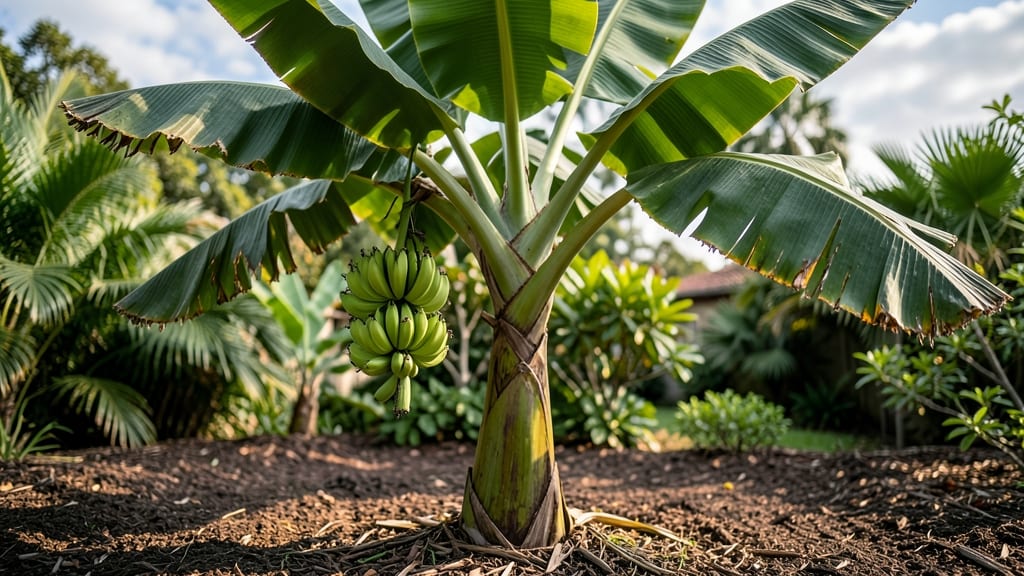
Banana trees grow to sizes that can dwarf your backyard or fit snugly in a container—depending on the variety and where you live 🍌.
Picture this: a 20-foot-tall giant in your tropical garden, or a 6-foot dwarf that thrives on your patio. The difference isn’t just luck—it’s climate, care, and the right species for your space.
Some varieties, like the Dwarf Cavendish, stay under 10 feet while others, like the Red Dacca, shoot up to 25 feet. Below, I’ll break down how height varies by type, how to control growth in small spaces, and what to expect in your hardiness zone.
You’ll also learn how to spot dwarf vs. standard varieties, why pruning matters, and how much room your banana tree will really need before it outgrows its welcome.


How tall do banana trees grow by popular varieties?
Banana trees are famous for their dramatic height, but not all varieties reach skyscraper proportions. The Dwarf Cavendish, for example, stays under 10 feet tall, while the Red Dacca can soar to 25 feet or more.
Your choice of variety determines whether you’ll need a large backyard or just a sunny patio for container growing. Let’s break down the height ranges of the most popular banana tree varieties, so you can pick the perfect fit for your space.
Most banana trees grow rapidly in warm climates, with some varieties gaining 3-6 feet per year under ideal conditions. However, their mature height depends on genetics, pruning habits, and environmental factors like sunlight and water.
For instance, the Lady Finger banana remains compact at 8-12 feet, making it ideal for small gardens or containers, while the Ice Cream banana can stretch up to 15 feet tall with broad, tropical leaves.
The Dwarf Cavendish is the most popular choice for container growing because it rarely exceeds 12 feet. Its compact size makes it perfect for balconies or small patios, but it still produces large, sweet bananas.
If you’re growing in USDA Zone 10 or warmer, this variety thrives with minimal care, provided it gets full sun and consistent moisture.
On the other end of the spectrum, the Red Dacca is a giant among banana trees, often reaching 20-25 feet tall in tropical climates.
Its bold red fruit and massive leaves make it a stunning focal point, but it requires ample space and regular pruning to manage its rapid growth. This variety is best suited for large backyards or agricultural settings where height isn’t a concern.
If you’re torn between compact and tall varieties, consider the Lady Finger banana. It stays under 12 feet tall but produces small, sweet bananas perfect for snacking. Its narrow growth habit makes it ideal for tight spaces or urban gardens, where taller varieties might struggle.
Plus, its delicate, ornamental leaves add a tropical touch without overwhelming your landscape.
The Ice Cream banana is another medium-height variety that grows 12-15 feet tall, making it a great compromise for medium-sized gardens. Its creamy, sweet fruit is a favorite among home growers, and its broad leaves provide excellent shade.
This variety does well in large containers if you’re not ready to commit to planting it in the ground.
For those in cooler climates (USDA Zone 9-10), the Bluggoe banana is a hardier option, reaching 12-18 feet tall. It tolerates slightly cooler temperatures than tropical varieties and produces large, flavorful bananas. However, it still requires
Climate zones that affect banana tree height and growth
Banana trees thrive in warm climates, but their height and growth vary dramatically based on your USDA hardiness zone. While tropical zones (10-12) allow them to reach their full 10-30 foot potential, cooler zones stunt growth or require container gardening.
Understanding these climate effects helps you choose the right variety for your space.
In USDA zones 10-12, banana trees grow aggressively, often reaching 20+ feet with proper care. However, in zones 9 or cooler, most varieties struggle to exceed 8-12 feet unless protected. Microclimates—like sunny south-facing walls—can extend their range by 2-5 degrees.
Cold snaps below 32°F kill most banana trees, but dwarf varieties like 'Dwarf Cavendish' survive brief dips to 28°F. In zones 8-9, mulching and windbreaks add 5-10°F protection. For zones 7 and below, container growing with winter indoor moves is your best bet—just expect stunted growth.
Subtropical climates (zones 9-10) produce semi-dwarf varieties like 'Lady Finger' that reach 12-18 feet with slower growth rates. These adapt better to mild winters than tropical giants. Always check a variety’s cold tolerance before planting—some labeled "hardy" still need winter wraps.
Container gardening lets you grow bananas in USDA zone 7 or cooler, but roots need 18+ inches of depth and 15-gallon pots for stability. Move pots indoors before 50°F nights to prevent shock. Even then, expect 30-50% smaller trees compared to in-ground tropical growth.
Microclimates near heat-retaining walls or patios can push zone limits by 1-3 zones. For example, a zone 8 garden with a south-facing brick wall might support a 12-foot Lady Finger where other areas fail. Test your microclimate with a minimum thermometer for 2 weeks before planting.