
Pruning
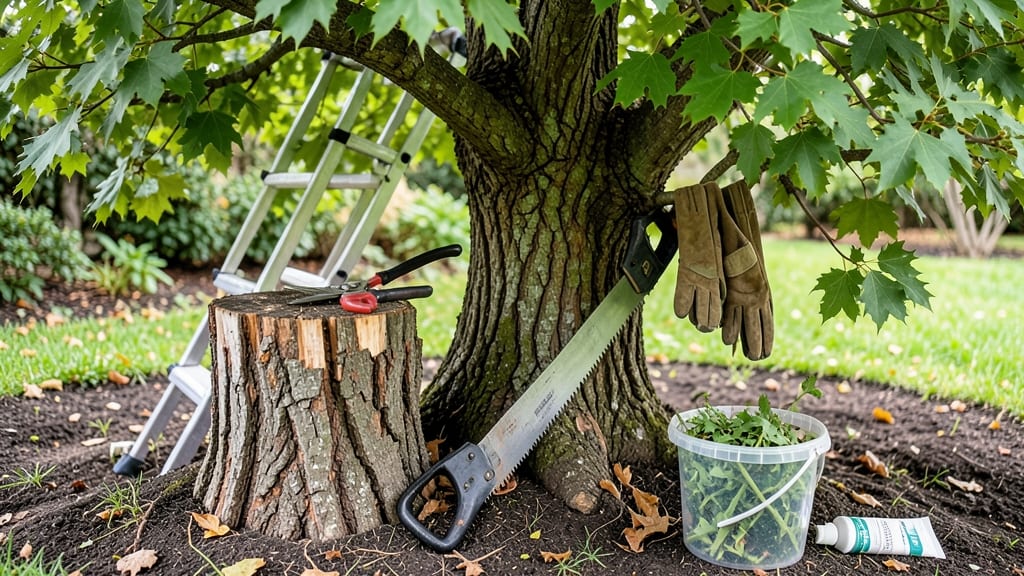
Big tree pruning isn't just about hacking back branches—it's an art of balance that keeps your oak, maple, or pine standing strong for decades. 🌳 I learned the hard way when a poorly timed cut turned my neighbor's century-old oak into a hazard overnight.
The right technique preserves structure and health, while the wrong one invites disease or weakens the tree's core.
Timing matters most: dormant season (late winter) is ideal, when trees aren't actively growing. You'll need sharp tools—a pruning saw for thick branches, loppers for 2-4 inch limbs, and pole pruners for high cuts—plus safety gear: gloves, goggles, and sturdy boots.
Never work in wet conditions or when branches are frozen; both make cuts sloppy and dangerous.
Start with deadwood removal—those brittle brown branches are just waiting to snap. Then thin the crown by cutting back 1/3 of the smallest branches at the branch collar (where the branch meets the trunk). Make clean cuts at a 45-degree angle just outside the branch collar to prevent tears.
You'll see sunlight reach the lower branches for the first time in years, and the tree's shape will look more open and airy.
After pruning, seal no larger than a 2-inch diameter with tree wound paint (optional but helpful for fast healing). Water deeply around the base to reduce stress, and monitor for new growth in spring.
The key is patience—big trees heal slowly, but with precision cuts, they'll thank you for decades. Here's where to begin safely.
📚 In This Guide
- What you need
- Instructions
- Tips and common mistakes
- Wrapping up and next steps
What you need
- ● Pruning shears: Bypass pruners (for cuts under 1 inch) – sharp, high-quality, and ergonomic (e.g., Felco or Corona).
- ● Lopping shears: For cuts between 1–3 inches – long handles (20–24 inches) for leverage.
- ● Pruning saw: Curved-tooth saw (for larger branches, 3+ inches) – replaceable blades recommended.
- ● Pole saw/pruner: Extendable (10–20 ft) for high branches – lightweight and sturdy.
- ● Rope or climbing gear: For hard-to-reach branches – static rope (½-inch diameter) + harness.
- ● Ladder: Extension ladder (24+ ft), sturdy, and rated for your weight + tools.
- ● Work gloves: Heavy-duty, cut-resistant (e.g., Mechanix or Wagner).
- ● Safety glasses: ANSI-rated for debris protection.
- ○ Hard hat: Optional but highly recommended for overhead work.
- ● First-aid kit: Include bandages, antiseptic, and gloves for minor injuries.
- ● Tree wound dressing: Pruning sealant (controversial but useful for large wounds).
- ● Tarps or drop cloths: Protect ground from falling debris.
- ● Stump grinder: If removing larger stumps post-pruning.
- ● Helmet with face shield: For extra protection against falling branches.
- ● Spotter: A helper to guide you with a ladder or rope.
- ● Knowledge: Familiarize yourself with proper pruning techniques (e.g., 3-cut method, branch collar preservation).
- ● Weather check: Prune on a dry, calm day (avoid wind or rain).
- ● Permits: Check local regulations—some areas require permits for large trees.
- ● Tree health assessment: Look for signs of disease (fungus, oozing sap) or pests before pruning.
Step-by-step guide to pruning large trees safely
Pruning big trees isn’t just about cutting branches—it’s about strategic shaping and health preservation.
✂️ Step 1: Assess the Tree and Plan Your Cuts
Start by examining the tree for dead, diseased, or crossing branches. Look for V-shaped crotches where limbs meet—these are structural weak points that often need attention. I always scan from the ground up, using a 10x magnification lens to spot issues like fungal spores or insect damage that aren’t visible to the naked eye.
Mark your cuts with brightly colored spray paint (I use yellow) to avoid guesswork later. Focus on removing less than 25% of the canopy in one session—this prevents shock. For large limbs, I sketch a rough outline of the intended shape to ensure the final result looks natural and balanced.
🌿 Step 2: Gather the Right Tools and Safety Gear
Big tree pruning requires three key tools: a pruning saw for limbs over 2 inches thick, loppers for ½ to 2-inch branches, and hand pruners for smaller cuts. I always check my tools before starting—dull blades tear bark and invite disease. Pair these with heavy-duty gloves, safety glasses, and ear protection (chain saws create serious noise pollution).
For elevated work, use a stable ladder (never a step stool) and position it on level ground with someone spotting you. I keep a first-aid kit and tree wound sealant nearby—you’ll need them more often than you think. If the tree is near power lines, call your utility company first; they’ll mark safe zones with flags.
☀️ Step 3: Make Precision Cuts Using the Three-Cut Method
For limbs over 3 inches thick, use the three-cut method to avoid bark tearing. First, make an undercut about 12 inches out from the branch collar (the swollen area where the branch meets the trunk). Angle this cut slightly upward to prevent bark from peeling down the trunk. Next, make a top cut about 6 inches farther out, angled downward to avoid damaging the branch collar.
Finally, remove the limb by cutting just outside the branch collar. Never leave stubs—this invites rot and weakens the tree. For smaller branches, a single clean cut at the branch collar is all you need. I always step back after each cut to check the tree’s balance—uneven removals can cause leaning or structural stress.
⏰ Step 4: Clean Up and Monitor the Tree’s Recovery
Remove all debris from the area—leaving branches on the ground creates tripping hazards and attracts pests. I use a leaf blower to clear small debris and a wheelbarrow for larger branches. Sterilize your tools with rubbing alcohol or a 10% bleach solution to prevent spreading disease between cuts.
After pruning, water the tree deeply (about 10 gallons for every inch of trunk diameter) to help it recover. Monitor the tree for new growth in the pruned areas—this is a good sign. If you see oozing sap, that’s normal, but blackened leaves or wilting means you’ve over-pruned. In that case, apply a tree sealant to larger wounds and avoid pruning for at least 6 months.
🪴 Step 5: Schedule Follow-Up Pruning for Long-Term Health
Big trees need regular maintenance, not just a one-time pruning. I schedule a light pruning session every 2–3 years to remove new weak growth and dead branches. For fruit trees, I prune just after harvest to encourage next year’s blooms. Always prune in late winter or early spring (just before buds swell) to minimize stress on the tree.
Keep a pruning journal to track the tree’s progress—note which branches you removed, the date, and any observations about the tree’s health. Over time, you’ll notice patterns, like certain branches always growing back weak or the tree responding poorly to heavy pruning in summer. Adjust your approach based on what you learn.
Tips & tricks for perfect big tree pruning
These precision-focused tips will help you avoid common mistakes and keep your big trees thriving for decades.
Tool Selection Matters: Never use a chainsaw for branches under 3 inches thick—it tears bark and creates jagged wounds. I keep a dedicated pruning saw for limbs over 2 inches and loppers for everything in between. The key is matching tool size to branch thickness to avoid unnecessary damage. Sharp tools are non-negotiable; dull blades crush bark instead of cutting cleanly, which invites disease.
Precision Cutting Technique: When using the three-cut method for limbs over 3 inches, make your undercut about 12 inches out from the branch collar—not closer. I've seen people make this cut too close, which can tear the bark when removing the limb. After making all three cuts, gently twist the branch to break it cleanly at the branch collar. This controlled break ensures the tree heals properly and reduces the risk of splitting.
Season Timing Strategy: Late winter or early spring is ideal for pruning because trees are dormant but about to burst with new growth. If you must prune in summer, do it early in the morning to minimize stress from heat and evaporation. I've learned the hard way that summer pruning can shock the tree, leading to wilting or even death in extreme cases. Always check local climate conditions—some regions have specific pruning windows based on rainfall patterns.
Recovery Monitoring: After pruning, watch for new growth within 4-6 weeks as a sign of successful recovery. If you notice blackened leaves or wilting instead, you've likely over-pruned. In that case, apply a tree sealant to larger wounds and avoid any further pruning for at least 6 months. I keep a small notebook to track each tree's response to pruning—it's become my most valuable reference over the years.
Pro Tips for Big Tree Pruning
- These precision-focused tips will help you avoid common mistakes and keep your big trees thriving for decades.
- Tool Selection Matters: Never use a chainsaw for branches under 3 inches thick—it tears bark and creates jagged wound...
- Precision Cutting Technique: When using the three-cut method for limbs over 3 inches, make your undercut about 12 inc...
Frequently asked questions
Got questions about big tree pruning? You’re not alone! Here are some of the most common concerns—and their straightforward answers—to help you make informed decisions before picking up those pruners.
When is the best time to prune a large tree?
The ideal window is late winter or early spring, just before new growth begins. This minimizes stress on the tree and reduces disease risks. Pro tip: Avoid pruning during drought or extreme heat, as it can slow recovery.
Can I prune a big tree myself, or should I hire a pro?
For trees over 30 feet tall or near power lines, roofs, or structures, hire a certified arborist. DIY pruning works for smaller branches, but big trees require specialized tools (like a pole saw) and safety training. Warning: Falling branches can cause serious injury!
How do I know if I’m pruning correctly?
Look for these signs of proper pruning: clean cuts (not torn bark), branch collars intact, and no stubs left. Avoid cutting into the trunk or removing more than 25% of the canopy at once. Pro tip: Use sharp tools to prevent jagged wounds that invite pests.
What should I do if my tree starts dying after pruning?
If leaves yellow, branches wilt, or oozing sap appears, you may have over-pruned or damaged the tree. Act fast: water deeply, avoid further cuts, and consult an arborist. Fungal infections (like honey fungus) can also mimic pruning stress—inspect for mushrooms or soft bark.
Are there alternatives to traditional pruning for big trees?
Yes! Consider crown thinning (removing select branches for airflow) or drop crotch pruning (targeting weak branch unions). For heritage trees, selective pruning preserves shape while improving health. Always prioritize structure over aesthetics to avoid long-term damage.
Wrapping up and next steps
Big tree pruning isn’t just about cutting branches—it’s an art of precision, patience, and purpose that keeps your trees thriving for decades. By following the right techniques, timing, and safety measures, you’ll protect your tree’s health, enhance its beauty, and even prevent costly damage down the road. 🌳✨
Ready to take the next step? Whether you’re tackling a small project yourself or hiring a pro, start with a plan—assess your tree’s needs, gather the right tools, and prioritize safety. Your trees (and future you) will thank you!