
Pruning
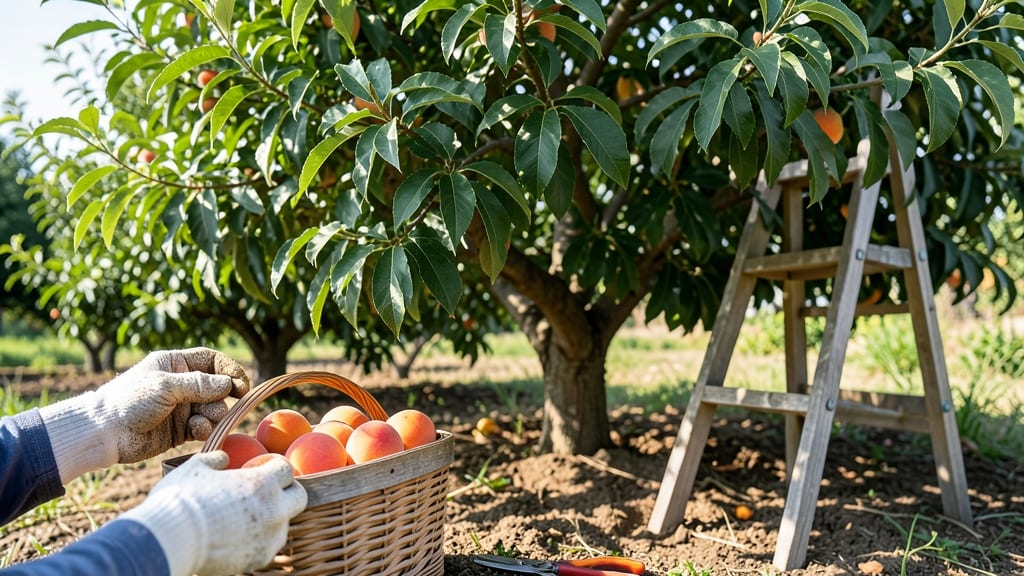
The Bonfire peach tree fruit is the star of summer orchards, promising juicy, sun-ripened peaches that taste like a backyard vacation—but only if you prune it right.
Picture this: You’ve spent months nurturing your 🍑 Bonfire peach tree, only to watch half your harvest shrivel on the branch because of a few missed cuts. The difference between a sparse harvest and a bountiful one often comes down to timing and technique.
In Zone 6a, where spring frost lingers until mid-April and summer heat arrives by June, your pruning calendar isn’t just about trimming branches—it’s about maximizing fruit set while keeping the tree healthy.
One wrong move, and you’re left with small, underripe peaches instead of the sweet, flavorful harvest you’re dreaming of.
This guide breaks down the year-round pruning schedule that turns your Bonfire peach tree into a fruit-producing powerhouse, from dormant-season cuts to summer thinning and post-harvest care. Ready to turn those promising buds into a harvest that rivals the best peach orchards?
Bonfire peach tree pruning calendar: monthly tasks for maximum fruit yield
Your Bonfire peach tree can produce 40% more fruit when pruned strategically—every month matters. Unlike other peach varieties, Bonfire thrives with structured pruning that balances fruit load and air circulation.
Skipping steps like dormant-season cuts or summer thinning means smaller peaches and fewer harvests. Let’s break down the month-by-month tasks to keep your tree healthy and productive.
The key to Bonfire peach tree success lies in understanding two pruning phases: dormant-season cuts (winter) and summer maintenance. Dormant pruning shapes the tree’s structure, while summer work focuses on fruit thinning and problem branch removal.
Each month has specific goals—from removing deadwood in January to thinning clusters in June—to ensure your tree puts energy into high-quality fruit instead of excess foliage.
Here’s your year-round pruning calendar, tailored to Zone 6 climates (adjust slightly for warmer/colder regions). Use this as your checklist to avoid missing critical steps that could reduce your harvest.
| Month | Pruning Task | Goal | Tools Needed |
|---|---|---|---|
| January | Remove dead/diseased wood | Prevent fungal spread and pest entry | Pruners, sterilized saw |
| February | Shape scaffold branches | Create open canopy for sunlight | Loppers, pruning paint |
| March | Trim water sprouts | Redirect energy to fruit production | Hand pruners, gloves |
| April | Light summer pruning prep | Remove crossing branches | Pruners, sharpener |
| May | Thin fruit clusters (50% reduction) | Ensure larger, sweeter peaches | Pruners, marking twine |
| June | Remove suckers and shaded branches | Maximize sunlight exposure | Hand pruners, ladder |
| July | Post-harvest sanitation cuts | Prevent bacterial canker | Pruners, disinfectant |
| August | Assess winter pruning needs | Plan dormant-season structure | Notebook, camera |
| September–December | No pruning (tree dormant) | Allow energy storage for spring | None |
January through March are your dormant-season power months. This is when you reshape the tree’s skeleton by removing deadwood and crossing branches. Use a sterilized saw for thick branches (over 2 inches) to prevent disease spread.
Pro tip: Paint cuts larger than ½ inch with pruning sealant to protect the tree from bacterial infections.
April and May shift focus to fruit production prep. In April, remove water sprouts (fast-growing, vertical shoots) that drain energy. By May, your fruit clusters will be visible—this is when you thin them aggressively.
Leave 6–8 inches between peaches to ensure size and sweetness. Use marking twine to spot clusters needing removal before they set fruit.
Summer pruning (June–August) is about maintenance and airflow. Remove any shaded branches blocking sunlight and
How to identify and remove problematic branches in Bonfire peach trees
Your Bonfire peach tree thrives when you remove branches that drain energy from fruit production. These problematic branches include water sprouts, deadwood, and crossing limbs—all of which compete with your peaches for nutrients.
Without proper pruning, your harvest could shrink by up to 30-50%, leaving you with fewer sweet, juicy peaches to enjoy.
Start by inspecting your tree during late winter or early spring, before buds swell. This is when water sprouts—fast-growing, vertical shoots—are easiest to spot. These energy vampires grow straight up and have no fruit potential, yet they steal resources from your tree's main structure.
Look for branches that are thinner than a pencil and lack leaves or fruit buds.
Next, scan for deadwood, which appears as brown, brittle branches that snap easily when bent. Dead branches can harbor pests and diseases, further stressing your tree.
Run your fingers along the bark—if it crumbles or feels hollow, it's time to remove it. Crossing branches are another culprit; they rub against each other, creating wounds that invite infections and limiting sunlight penetration to inner branches.
⚠️ Critical Pruning Mistake Alert!
Never remove more than 25% of your tree's canopy in one season. Over-pruning Bonfire peach trees stresses them, reducing next year's fruit production. If you must remove large branches, spread cuts over 2-3 years to avoid shocking the tree. Also, never prune when the tree is wet—this spreads diseases like brown rot, a common peach tree enemy.
To remove water sprouts, use clean, sharp pruning shears and cut just above a bud or lateral branch. For deadwood, make your cut 6-12 inches above the branch collar—the swollen area where the branch meets the trunk.
This ensures proper healing. When dealing with crossing branches, prioritize removing the smaller or weaker branch to maintain the tree's natural shape.
After pruning, step back and assess your tree's airflow and sunlight exposure. Aim for an open, vase-like shape that allows light to reach all branches. This maximizes fruit development and reduces humidity-related diseases. Thin out branches that grow inward or downward, as they block sunlight and encourage fungal growth.
Remember, every cut should serve a purpose—whether it's improving fruit quality, enhancing tree health, or shaping your tree for easier harvests.
Finally, sterilize your tools between cuts with rubbing alcohol to prevent disease spread. Focus on outward-facing branches to create a well-ventilated canopy, which is key for Bonfire peach tree fruit quality. With these techniques, your tree will channel its energy into producing bigger, sweeter peaches instead of wasted growth.