
Pruning
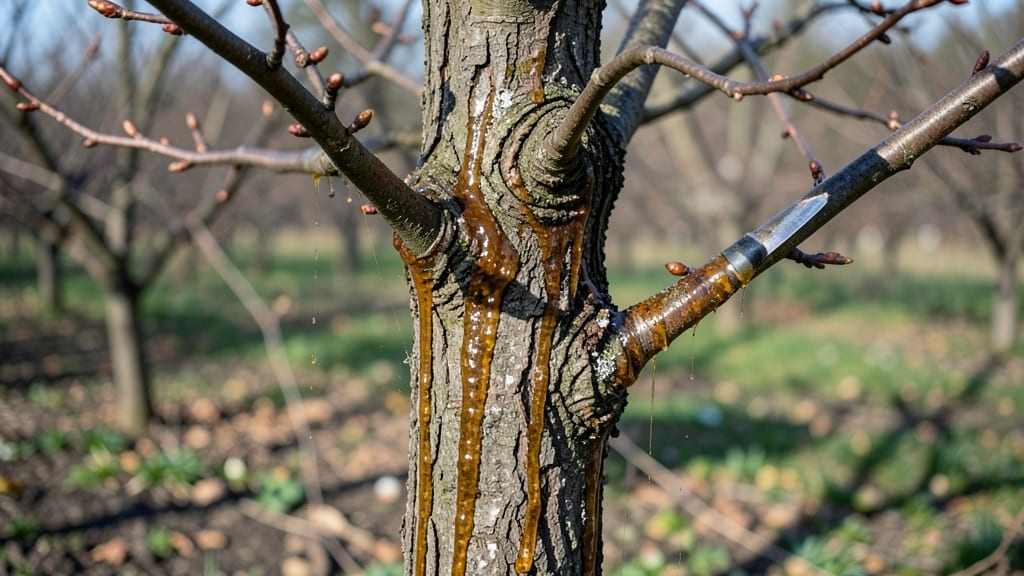
When your cherry tree starts oozing sap like a sticky syrup factory, it’s not just messy—it’s a cry for help. 🌳 I’ve seen this go from a minor annoyance to a full-blown emergency when ignored, especially if the sap is dark, foul-smelling, or paired with wilting leaves.
The good news? You can often stop it in its tracks with the right pruning and care, before it turns into something worse like root rot or silver leaf disease.
Most sap oozing stems from physical damage (like a branch rubbing against the trunk), fungal infections (think cankers or silver leaf), or insect attacks (borers love this stuff).
The location matters too: sap dripping from cracks or wounds is a red flag, while small amounts on young bark might just be seasonal stress. The key is acting fast—once the tree’s defenses are down, problems spread like wildfire.
Here’s the game-changer: emergency pruning. Sterilize your tools first, then cut out any oozing branches 6-12 inches below the damage to remove infected tissue. Seal larger wounds with pruning sealant (or even asphalt paint in a pinch) to prevent pests from moving in.
If the sap is thick and dark, pair this with a copper fungicide spray to stop fungal hitchhikers.
Prevention? Keep your tree healthy with regular pruning, proper watering (but not soggy soil), and an annual check for early signs of stress. A happy tree fights off sap oozing before it starts. Let’s get that sticky situation under control—before it’s too late.
Root Causes Behind Sap Oozing
When your cherry tree starts weeping sticky sap—whether it’s clear, milky, or discolored—it’s rarely a random event. Instead, it’s a distress signal from the tree, often tied to underlying issues. Understanding the root causes (pun intended) helps you diagnose the problem accurately and take swift action.
Below, we break down the most common triggers, from environmental stressors to hidden pests, and explain why they force your cherry tree to "bleed."
Cherry trees, like many woody plants, can ooze sap when they experience physical or physiological stress. This isn’t always a sign of disease—sometimes, it’s simply the tree’s way of releasing excess pressure or toxins. Here’s what typically sets it off:
- Mechanical Damage:
Cracks in the bark, broken branches, or even improper pruning cuts (like jagged edges or cuts too close to the trunk) create entry points for pathogens. The tree seals these wounds by oozing sap—a natural barrier response to prevent further invasion.
- Extreme Temperature Fluctuations:
Sudden freezes, heatwaves, or frost damage can disrupt the tree’s vascular system, causing sap to leak. For example, a late-spring frost can kill new growth, forcing the tree to "purge" damaged cells through sap.
- Transplant Shock:
If your cherry tree was recently moved, its roots may struggle to absorb water and nutrients efficiently. This hydraulic stress can lead to sap bleeding, especially if the tree is also dealing with drought or poor soil.
💡 Pro Tip: If sap appears after pruning or a storm, inspect the wounds for clean cuts (no torn bark) and apply a pruning sealant (like Tanglefoot Tree Wound Pruning Sealer) to speed up healing.
Fungal infections, bacterial diseases, and even viral agents can clog the tree’s plumbing, leading to sap oozing. Unlike stress-related bleeding, pathogen-induced sap is often discolored (yellow, brown, or black) and may smell foul. Here’s how it happens:
| Cause | How It Triggers Sap | Visual Clues |
|---|---|---|
| Silver Leaf Fungus (Chondrostereum purpureum) | The fungus invades the xylem vessels, blocking water transport. The tree responds by exuding gum-like sap to wall off the infection. | Sap turns dark brown/black; leaves may develop a silvery sheen. |
| Bacterial Canker (Pseudomonas syringae) | Bacteria multiply in wounds, creating oozing cankers that leak sap. The tree’s immune response floods the area with gummy exudate. | Sap is yellowish or creamy; bark may crack and ooze constantly. |
| Root Rot (Phytophthora or Armillaria) | Fungal root rot disrupts nutrient uptake, causing systemic stress. The tree may bleed sap from multiple wounds as it struggles to repair damage. | Sap is often watery and foul-smelling; roots appear mushy or blackened. |
⚠️ Warning: If sap oozing coincides with wilting leaves, dieback, or fungal growth (like mushrooms at the base), your tree may be battling a serious infection. Act fast—prune infected branches below the ooze and treat with a copper fungicide.
Insects and borers don’t just eat your cherry tree—they rewire its circulatory system. When pests like emerald ash borers, bark beetles, or sap-sucking aphids invade, they create tunnels or pierce the bark, forcing the tree to leak sap as a defensive mechanism. Here’s how:
- Boring Insects (e.g., Scolytus beetles):
Adult beetles lay eggs under the bark, and their larvae chew through the cambium layer (the tree’s "food pipe"). This disrupts sap flow, causing blister-like sap pockets to form.
- Sap-Sucking Pests (e.g., Aphids, Scale Insects):
These insects insert their mouthparts into the phloem (sap-conducting tissue), draining nutrients and triggering a resinous response. Heavy infestations lead to sticky, honeydew-like sap.
- Nematode Damage:
Microscopic nematodes attack roots, blocking water uptake and causing the tree to bleed sap from girdled roots or weak branches.
🔥 Action Step: If you spot tiny holes, sawdust-like frass (insect droppings), or webs near sap leaks, treat with systemic insecticides (like imidacloprid) or introduce beneficial nematodes for root-dwelling pests.
Next, we’ll cover how to diagnose which cause is affecting your cherry tree—and what to do about it before the damage becomes irreversible.
Fixing Sap Leaks in Trees
When your cherry tree starts oozing sap like a leaky faucet, it’s a clear sign that something’s wrong—but don’t panic! The good news is that most sap issues are fixable with the right approach.
Below, we’ll break down the most common causes of sap oozing and provide practical, step-by-step solutions to restore your tree’s health. We’ll also share prevention tips to keep future leaks at bay.
If the sap is thick, dark, and accompanied by sunken or cracked bark, you’re likely dealing with a fungal or bacterial infection (like Agrobacterium or Nectria). These pathogens weaken the tree’s defenses, causing sap to ooze as a natural response.
How to Fix It:
🔥 Step 1: Sterilize Your Tools Before touching the tree, clean your pruning shears with 70% isopropyl alcohol or a 10% bleach solution (1 part bleach to 9 parts water). This prevents spreading the infection.
🍳 Step 2: Prune Infected Branches
- Locate the exact point where the bark is cracked or oozing.
- Cut 6–12 inches below the affected area at a 45-degree angle (sloping away from the trunk).
- Remove all infected wood—even small branches can harbor the pathogen.
👨🍳 Step 3: Apply a Fungicide or Pruning Sealant
- For bacterial infections, use a copper-based fungicide (like Copper Sulfate).
- For fungal issues, try a baking soda solution (1 tbsp baking soda + 1 quart water + a few drops of dish soap) or a commercial fungicide (e.g., Neem Oil).
- Seal the wound with pruning sealant (like Tanglefoot Tree Wound Pruning Sealant) to protect it from further invasion.
🥘 Step 4: Improve Airflow & Reduce Moisture
- Thin out nearby branches to increase airflow around the tree.
- Avoid overhead watering—use drip irrigation instead to keep foliage dry.
💡 Prevention Tips:
✔ Inspect your tree regularly for early signs of cracks or oozing. ✔ Remove fallen leaves/debris near the base to reduce fungal spores. ✔ Avoid wounding the tree during wet seasons—wait for dry weather to prune.
If the sap is clear or watery and stems from a fresh wound (like a branch split or rodent gnawing), the tree is simply trying to heal itself. While not always dangerous, these wounds can invite pests or disease if left unchecked.
How to Fix It:
🔪 Step 1: Assess the Damage
- If the wound is small (<1 inch wide), the tree can often seal it on its own—just leave it alone.
- If the wound is large (>1 inch wide) or jagged, it needs intervention.
⏰ Step 2: Clean & Seal the Wound
- Scrape away any loose or dead bark with a sterilized knife.
- Smooth the edges of the wound (don’t over-cut—just clean up rough spots).
- Apply a tree wound sealant (like Ortho Fruit Tree Sealant) to protect it.
🎯 Step 3: Protect from Pests
- If squirrels or rabbits are the culprits, install tree guards or mesh wraps.
- For insect damage, treat with insecticidal soap or neem oil.
💡 Prevention Tips:
✔ Prune properly—use sharp tools and make clean cuts to avoid tears. ✔ Inspect for pests before sap issues arise (look for chewed bark or sawdust-like frass). ✔ Water deeply but less frequently to reduce stress-related cracks.
When cherry trees experience drought stress, root rot, or heat shock, they may produce excess sap as a survival mechanism. This is often clear, watery, and sticky, sometimes accompanied by wilting leaves.
How to Fix It:
💧 Step 1: Check Soil Moisture
- Stick your finger 2–3 inches into the soil—if it’s dry, water deeply (1–2 inches per week).
- If the soil is soggy, your tree may have root rot. Stop watering immediately and improve drainage.
🌡️ Step 2: Mulch & Shade
- Apply 2–4 inches of mulch (wood chips or straw) around the base (but not touching the trunk).
- Provide light shade during extreme heat (use shade cloth if needed).
🔄 Step 3: Adjust Watering Practices
- Drought stress? Water slowly and deeply (soak the root zone).
- Overwatering? Let the soil dry out between waterings and consider raising the tree’s base with gravel.
💡 Prevention Tips:
✔ Test your soil (pH 6.0–7.0 is ideal for cherry trees). ✔ Avoid compacted soil—amend with compost if needed. ✔ Monitor weather extremes—cover young trees in frost or heatwaves if possible.
If you spot tiny holes, honeydew, or sawdust-like frass along with sap, pests like aphids, scale insects, or bark borers may be to blame. These critters weaken the tree, causing it to ooze sap as a defense.
How to Fix It:
🐜 Step 1: Identify the Pest
- Aphids/Scale: Look for sticky residue (honeydew) and clusters of small bugs.
- Bark Borers: Check for exit holes and sawdust piles at the base.
🧴 Step 2: Treat Infestations
- For soft-bodied pests (aphids, scale):
- Spray with insecticidal soap or neem oil (repeat every 7–10 days).
- For borers:
- Apply borer-specific insecticide (like Bt [Bacillus thuringiensis]) or systemic granules (e.g., Imidacloprid).
- For severe cases, professional treatment may be needed.
🌿 Step 3: Encourage Natural Predators
- Attract ladybugs, lacewings, or birds by planting native flowers nearby.
💡 Prevention Tips:
✔ Inspect trees biannually (spring and fall) for early signs. ✔ Remove nearby debris where pests hide. ✔ Keep trees healthy—stressed trees attract more pests.
If your cherry tree is large, the sap is oozing heavily from multiple spots, or the bark is severely cracked, it’s best to consult an arborist. Some issues (like advanced root rot or aggressive borer infestations) require specialized treatment to save the tree.
By following these steps, you’ll not only stop the sap leak but also strengthen your cherry tree’s defenses for years to come! 🌳💚
Frequently asked questions
Why is my cherry tree oozing sap suddenly?
Sudden sap oozing usually signals stress or damage. Check for physical wounds (like cracks or broken branches), pest activity (tiny holes or sawdust-like frass), or fungal/bacterial infections (dark, foul-smelling sap). Extreme weather (frost or heat) can also trigger this response as the tree tries to heal itself.
Is oozing sap always a sign of a serious problem?
Not always! Small amounts of clear sap from minor wounds (like a branch rub) are normal and usually harmless. The red flags are dark, thick sap with cracked bark, wilting leaves, or fungal growth—these indicate infections like silver leaf disease or bacterial canker that need immediate attention.
How do I tell if the sap is from pests vs. disease?
Look for clues: Pest-related sap often has tiny holes, honeydew residue, or sawdust-like frass (insect droppings). Disease-related sap is usually dark, sticky, and foul-smelling, often paired with cracked bark or sunken cankers. Sterilize tools before investigating!
Can I prune my cherry tree while it's oozing sap?
Yes, but only if you sterilize your tools first (use 70% isopropyl alcohol) and remove entire infected branches (cut 6-12 inches below the ooze). Avoid pruning during wet weather—wait for dry conditions to prevent spreading infections. Seal larger wounds with pruning sealant to speed healing.
Will the sap stop if I just leave it alone?
Maybe, but it depends on the cause. Minor wounds may seal naturally, but persistent oozing (especially dark or foul-smelling) won’t resolve on its own. Without treatment, infections or pests can worsen, leading to dieback or even tree death. Act fast—prune, treat, and monitor for improvement within 2-4 weeks.