
Trees
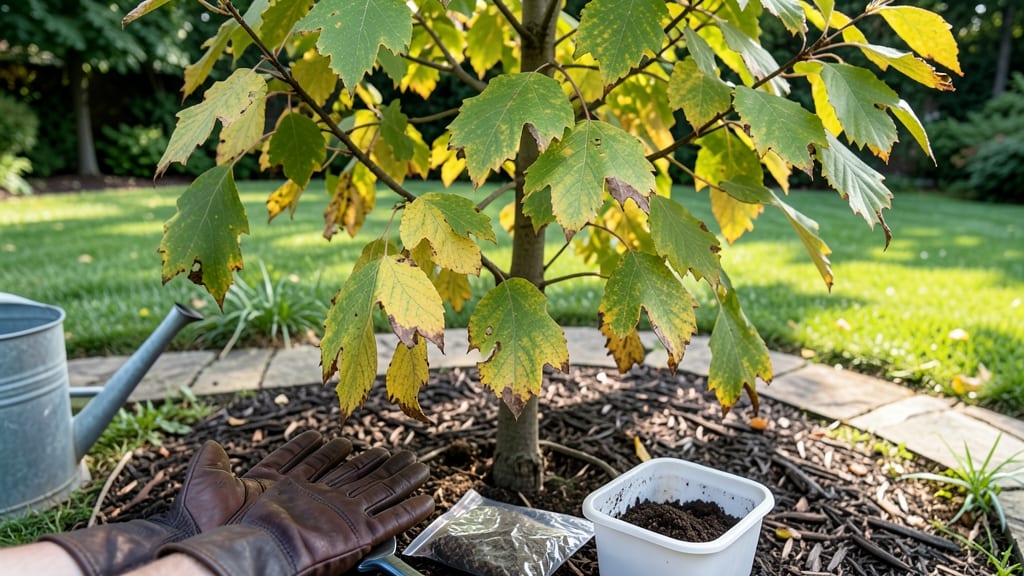
When your elm tree develops yellow leaves, it’s usually a warning sign of stress from fungal infections like Dutch elm disease, improper watering, or nutrient imbalances in the soil. Acting quickly with the right treatments can save your tree from permanent decline.
Yellowing elm leaves often start as small patches before spreading—this is your tree’s way of signaling trouble. 🌳 The most critical culprit is Dutch elm disease, spread by bark beetles carrying fungal spores that clog the tree’s vascular system, cutting off water and nutrients.
But environmental factors like overwatering (which suffocates roots) or sudden drought can trigger similar symptoms, as can nutrient deficiencies like iron or nitrogen. The key is to examine the leaves closely: look for dark streaks under the leaves (a sign of Dutch elm) or powdery white residue (powdery mildew).
If you suspect a fungal infection, prune affected branches 12 inches below the visible damage to prevent spread, then treat with a systemic fungicide. For nutrient issues, a soil test reveals exactly what’s missing—elm trees often need extra iron or nitrogen to recover.
Remember, yellow leaves in spring or fall might just be seasonal, but persistent yellowing demands action before the tree weakens permanently.
💡 In This Article
- Dutch Elm Disease and Other Elm Tree Fungal Infections
- Diagnosing and Treating Yellowing Elm Leaves
Dutch elm disease and other elm tree fungal infections
The root cause of Dutch elm disease lies in the fungus Ophiostoma novo-ulmi, which invades the tree's water-conducting vessels through tiny wounds created by bark beetles. These fungal spores multiply rapidly, forming a gelatinous mass that blocks the xylem—your tree's plumbing system—cutting off water and nutrients to the leaves.
This vascular obstruction triggers chlorophyll breakdown, causing leaves to turn yellow before wilting and falling. 🌿 What makes this disease particularly devastating is how quickly it spreads: a single infected tree can contaminate nearby trees within just a few weeks.
Elm trees typically show early signs of Dutch elm disease between late spring and early summer, when bark beetles are most active.
Look for yellowing leaves that start at the top of the tree and progress downward, often accompanied by dark brown streaks visible when you split open a small branch. These streaks are the telltale sign of fungal growth in the vascular system.
In contrast, powdery mildew appears as a white, powdery coating on leaf surfaces, while leaf spot diseases create irregular brown or black spots with yellow halos—none of which involve the tree's internal plumbing system.
The science behind these differences lies in how each pathogen interacts with the tree. Dutch elm disease attacks from within, while powdery mildew thrives on the leaf surface, feeding on sugars produced through photosynthesis.
This surface infection creates a physical barrier that blocks light, further stressing the leaf and accelerating yellowing. Leaf spot diseases often result from bacterial or fungal infections that disrupt cell function in localized areas, creating those distinctive spots. The key difference?
Dutch elm disease is always fatal if untreated, while mildew and leaf spots can sometimes be managed with proper care.
Another critical factor is the role of bark beetles in disease transmission. These insects don't just carry the fungus—they create entry points when they lay eggs under the bark.
The beetles themselves are often attracted to stressed trees, creating a vicious cycle where a healthy tree might become infected after nearby trees fall victim.
This is why early detection is crucial: once the fungus establishes itself in the vascular system, it's nearly impossible to eradicate completely. 🌳 The disease progresses in stages, starting with partial wilting, then full canopy yellowing, and finally tree death within 2-4 years if left untreated.
For comparison, consider how powdery mildew affects elms differently. This fungal infection thrives in humid conditions and appears as a white, powdery coating on leaf surfaces. Unlike Dutch elm disease, powdery mildew doesn't kill the tree but weakens it by blocking sunlight and reducing photosynthesis.
The yellowing in this case comes from the leaf's inability to produce enough chlorophyll due to this physical obstruction. You'll notice this yellowing appears more uniformly across the leaf surface rather than starting at the edges or progressing downward from the top.
Understanding these distinctions helps you take targeted action. If you see those characteristic dark streaks in the vascular system, you're dealing with Dutch elm disease and need immediate treatment.
But if you notice white powder or irregular spots, you might only need to adjust your watering practices or apply a fungicide. The key is always to examine both the leaves and the bark—what happens below the surface often determines the best course of action.