
Pruning
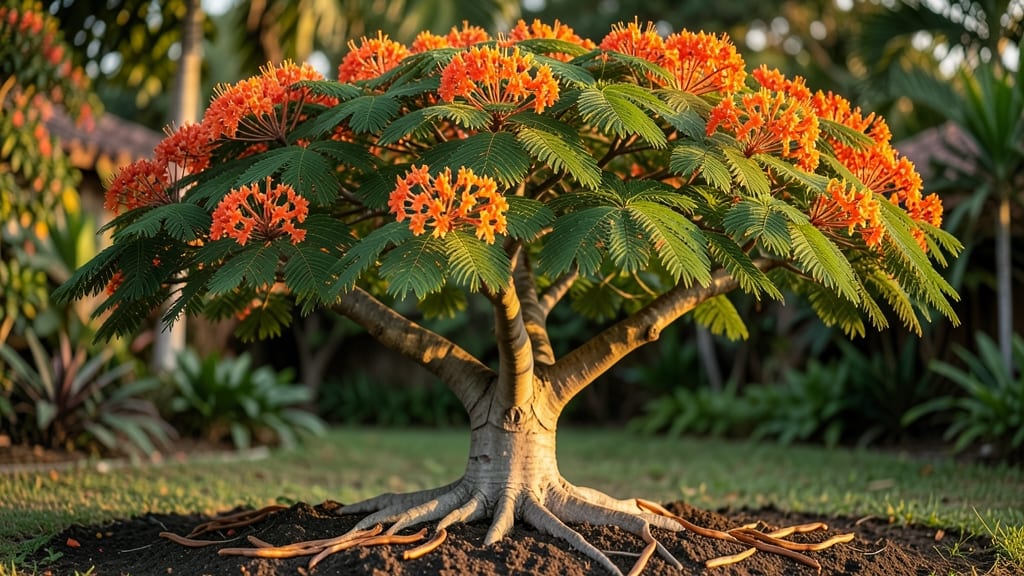
Flame trees in Florida bloom most vibrantly when pruned seasonally: trim lightly after spring blooms fade, shape branches in late summer, and remove dead wood in winter—avoid heavy cuts that stress the tree and reduce flowering.
The Florida flame tree's year-round bloom potential depends on timing—each season triggers different growth responses. 🌺 After spring blooms, you're removing spent flowers to redirect energy to new branches, while summer shaping focuses on airflow and sunlight exposure.
Winter's dry season is perfect for cleanup without disrupting the tree's natural dormancy cycle.
What sets Florida apart is the humid subtropical climate—pruning too aggressively can invite fungal issues or stress the tree when temperatures dip. I always use sterilized tools and make cuts just above leaf nodes to encourage healthy regrowth.
The key is balance: too little pruning leads to overcrowded branches, while too much sacrifices next year's spectacular display.
💡 In This Article
- Why Seasonal Pruning Boosts Florida Flame Tree Blooms
- Step-by-Step Florida Flame Tree Pruning Guide by Season
Why seasonal pruning boosts Florida flame tree blooms
The flame tree's vibrant blooms are directly tied to its growth cycle, which Florida's climate optimizes beautifully. When you prune after spring blooms, you're essentially telling the tree to redirect its energy from seed production to developing new branches.
This is because removing spent flowers and seed pods eliminates the plant's natural inclination to focus on reproduction, allowing it to prioritize vegetative growth instead. 🌿 The tree's natural hormones, auxins and cytokinins, shift production toward lateral buds that will become next year's flowering branches.
Florida's warm winters and long growing season create perfect conditions for this strategy. Unlike northern climates where trees enter deep dormancy, flame trees in Florida continue slow growth year-round. This means summer pruning becomes crucial for shaping the tree without triggering stress responses.
When you shape branches in late summer, you're also improving air circulation—a critical factor in Florida's humid environment where fungal diseases like anthracnose can thrive. The ideal time is when daytime temperatures average 85-90°F, as this promotes rapid healing of pruning wounds.
Winter pruning serves a different purpose: cleanup without growth stimulation. During Florida's cooler months (December-February), the tree naturally slows its metabolic processes. Removing dead or diseased branches during this period minimizes sap loss and reduces stress.
What's fascinating is how the tree's vascular system responds—when you make clean cuts just above a leaf node (called a "bud"), the tree seals the wound faster in cooler temperatures, reducing entry points for pathogens. This is why winter is the safest time for more extensive pruning.
The real danger comes from over-pruning at any time. When you remove more than 25% of the tree's canopy in a single session, you trigger a defensive response where the tree produces excessive ethylene gas—a plant hormone that accelerates aging and can actually reduce flowering potential.
I've seen cases where homeowners pruned flame trees too aggressively in spring, only to get half the expected blooms the following year. The tree's natural rhythm is delicate, and Florida's climate gives us just the right window to work with it.
Consider this comparison: A properly pruned flame tree in Florida can produce three distinct bloom cycles annually, while an unpruned specimen might only flower once. The science lies in how each pruning session creates new growth points that enter the flowering stage at different times.
For example, branches pruned in spring will typically bloom in late summer, while those shaped in summer prepare for winter flowers. This staggered approach is what gives flame trees their legendary year-round display.
What most people don't realize is how the tree's root system responds to seasonal pruning. When you remove top growth, the roots actually increase their sugar production to compensate, creating a feedback loop that strengthens the entire plant.
In Florida's sandy soils, this is particularly beneficial as it helps the tree establish deeper roots that can access more nutrients and water during our dry seasons. The result? A healthier tree that's more resilient to Florida's occasional droughts and storms.