
Trees
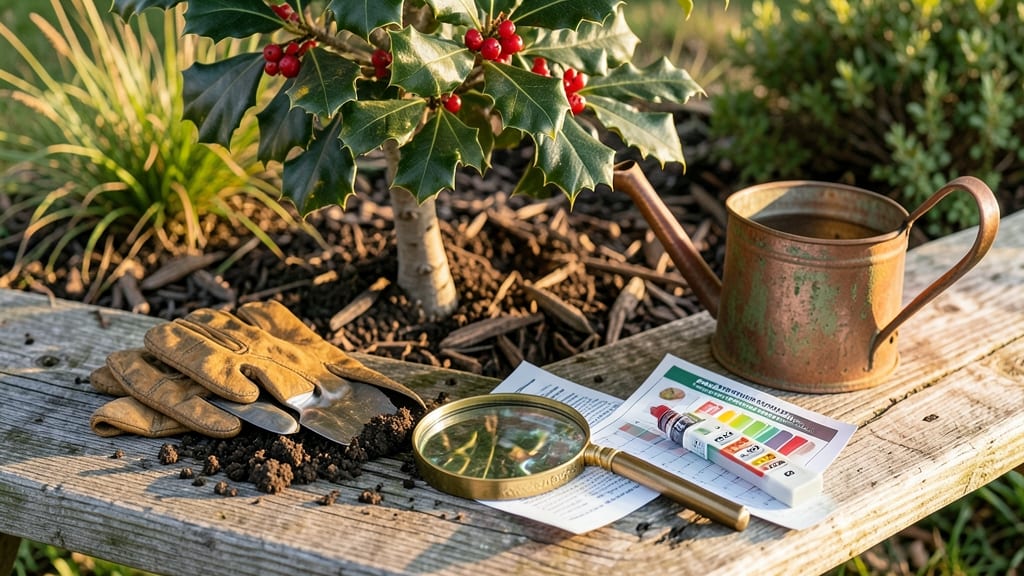
Your holly tree's yellow leaves might be screaming for help—before they turn brown and drop. 🌿 I've nursed back holly trees from this exact problem, and the fix isn't about expensive treatments but spotting the right clues first. The good news? Most cases resolve in weeks with targeted care.
Start by checking the leaf pattern: uniform yellowing often means overwatering or poor drainage, while splotchy yellow with brown edges signals spider mites or fungal stress. I learned the hard way that holly trees hate soggy roots—drainage fixes alone can save a struggling tree in just 2-3 weeks.
For pests, look for webbing or tiny specks on undersides.
Once you identify the issue, the solutions are straightforward: adjust watering, apply neem oil for pests, or prune affected branches to improve airflow. I've seen holly trees bounce back to deep green within a month after making these simple changes. The key is acting fast before the problem spreads.
This works for all holly varieties—English, American, or dwarf—and adapts to sun or shade. Let's get your tree thriving again without the guesswork.
Understanding Leaf Color Shifts
Yellow leaves on your holly tree can be a sign of stress, but the cause isn’t always obvious. Before reaching for treatments, it’s crucial to identify why the discoloration is happening—because the solution depends on the root issue. Let’s break down the most common culprits, explained in simple, actionable terms.
Holly trees thrive when their soil is rich in essential nutrients, and yellowing leaves often signal a dietary imbalance. The most likely offenders are:
- 💡 Iron Chlorosis (Yellow Leaves with Green Veins) - What’s happening? Iron is critical for chlorophyll production, and holly trees (especially those in alkaline or calcareous soils) struggle to absorb it. - How to spot it: New leaves turn pale yellow while veins stay green.
Severe cases may show stunted growth or leaf curling. - Actionable fix: - Test your soil’s pH (ideal: 5.5–6.5 for hollies).
If it’s too high, amend with sulfur or peat moss to lower pH. - Apply chelated iron supplements (like iron sulfate or EDTA iron) directly to the soil or as a foliar spray.
Repeat every 4–6 weeks until improvement is seen. - Mulch with compost or pine needles to gradually acidify the soil over time.
- 💡 Nitrogen Shortage (Uniform Yellowing, Often with Weak Growth) - What’s happening? Nitrogen is the building block of chlorophyll. Without enough, leaves turn uniformly yellow (not just between veins) and may drop prematurely. - How to spot it: Older leaves yellow first, followed by new growth.
The tree may also show reduced flowering or berry production. - Actionable fix: - Fertilize with a balanced, slow-release fertilizer (e.g., 10-10-10 or 12-4-8) in early spring before new growth begins. - Use organic options like blood meal (high in nitrogen) or composted manure, applied 2–3 inches deep around the root zone. - Avoid over-fertilizing—too much nitrogen can burn roots and worsen the problem.
Hollies are drought-tolerant but hate soggy roots. Water issues are a top cause of yellow leaves, and the symptoms can look nearly identical to nutrient problems—so don’t skip this step!
- 💡 Overwatering or Poor Drainage (Yellow Leaves with Wilting or Mushy Roots) - What’s happening? Holly trees in waterlogged soil suffocate, leading to root rot.
Yellowing often starts at the bottom of the tree and spreads upward. - How to spot it: Leaves may appear dull or limp, and the soil smells sour or has a grayish mold near the base. - Actionable fix: - Improve drainage immediately by amending the soil with perlite, sand, or compost to break up compacted areas. - If planting a new holly, raise the root ball slightly above ground level to prevent water pooling. - Water deeply but infrequently—only when the top 2 inches of soil are dry.
Use a soaker hose to deliver moisture slowly.
- 💡 Underwatering or Drought Stress (Crispy Edges, Drooping Leaves) - What’s happening? Hollies in dry conditions drop leaves to conserve moisture.
Yellowing often starts at the tips or edges before spreading. - How to spot it: Leaves may feel dry or papery to the touch, and the tree looks wilting even when watered. - Actionable fix: - Mulch heavily (3–4 inches of wood chips or pine straw) to retain moisture and regulate soil temperature. - Water deeply 1–2 times per week during dry spells, aiming for 1–1.5 inches of water per session. - Consider drip irrigation for consistent moisture, especially in hot climates.
Not all yellow leaves are due to environmental factors—some are caused by pests or pathogens that drain the tree’s vitality. Here’s how to tell them apart:
- 💡 Spider Mites or Aphids (Stippled or Curled Yellowing) - What’s happening? These tiny pests suck sap from leaves, causing them to turn yellow, brown, or stippled (speckled).
Heavy infestations lead to premature leaf drop. - How to spot it: Look for fine webbing (mites) or sticky residue (honeydew) on leaves.
Inspect the undersides of leaves for tiny bugs. - Actionable fix: - Blast off pests with a strong spray of water to dislodge them. - Use neem oil (1 tsp per quart of water) or insecticidal soap as a foliar spray, repeating every 5–7 days until pests are gone. - Introduce beneficial insects like ladybugs or lacewings to control populations naturally.
- 💡 *Fungal Infections (e.g., Leaf Spot or Powdery Mildew) - What’s happening? Fungi thrive in humid, shady conditions, causing leaves to yellow, develop spots, or crusty white patches (powdery mildew). - How to spot it: Check for yellow rings, black specks, or white powder on leaf surfaces.
Infected leaves may drop early. - Actionable fix: - Prune for airflow—remove crowded branches and thin out dense foliage to improve circulation. - Apply copper fungicide or baking soda spray (1 tbsp baking soda + 1 tsp soap per gallon of water) every 2 weeks during wet seasons. - Clean up fallen leaves to reduce fungal spores in the soil.
Sometimes, the issue isn’t what’s in the soil but what’s happening around your holly tree. Sudden changes in light, temperature, or exposure can trigger yellowing.
- 💡 Sunburn or Transplant Shock (Scorched or Patchy Yellowing) - What’s happening? Holly trees prefer partial shade (especially in hot climates).
Too much direct sun can cause leaf scorch, turning edges yellow or brown. - How to spot it: Yellowing occurs on sun-exposed sides of the tree, often with crispy or brittle leaf edges. - Actionable fix: - Provide afternoon shade with a light fabric shade cloth (30–50% block) if the tree is in full sun. - Mulch heavily to protect roots from temperature fluctuations. - If recently transplanted, water deeply daily for the first 2–3 weeks to reduce shock.
- 💡 Cold or Frost Damage (Yellowing After a Freeze)
- How to spot it: Leaves may appear water-soaked or mushy after a freeze, then yellow over 1–2 weeks.
- Actionable fix:
- Avoid winter pruning, as new growth is more vulnerable to cold damage.
- Mulch deeply (4–6 inches) in late fall to insulate roots.
Pro Tip: 🔍 Before treating, take a close-up photo of the yellowing pattern (veins, edges, spots) and note the tree’s location (sun/shade) and soil moisture. This helps narrow down the cause fast!
Fixing fading holly foliage
Now that you understand why your holly tree’s leaves are turning yellow, it’s time to take action! The good news? Most causes have simple, effective fixes—whether it’s a nutrient boost, pest control, or environmental tweaks.
Below, we’ve broken down the solutions by the most common culprits, along with prevention tips to keep your holly lush and green for years to come.
Yellow leaves from soggy roots are a cry for help—literally! Holly trees hate "wet feet," and overwatering suffocates their roots, leading to nutrient deficiencies and fungal issues.
🔧 Step-by-Step Fix:
- 🚰 Check the Soil Moisture Stick your finger 2–3 inches deep into the soil. If it’s damp (not soggy), wait before watering. If it’s bone-dry, your tree may need a deep drink—but only if the topsoil is cracked.
- 🏗️ Improve Drainage - Amend the soil with compost or perlite to loosen heavy clay.
Mix in 1–2 inches around the root zone. - Raise the tree slightly by adding a 1–2 inch mound of gravel under the root ball (if potted) or creating a slight slope away from the trunk in garden beds. - Install drainage pipes if your holly sits in a low-lying area prone to pooling water.
- ⏰ Adjust Watering Habits
- Water deeply but infrequently: Aim for 1–1.5 inches per week, including rainfall. Let the top 2 inches of soil dry out between waterings.
- Water at the base, not overhead, to prevent fungal spores from splashing onto leaves.
💡 Prevention Tips:
- Mulch properly: Apply 2–3 inches of organic mulch (like pine bark or shredded leaves) 3 inches away from the trunk to retain moisture without smothering roots.
- Avoid compacted soil: After heavy rain, gently aerate the soil with a fork to prevent waterlogging.
- Choose the right spot: Plant hollies in well-draining soil with partial shade (they hate soggy, waterlogged areas).
Yellowing leaves can signal a hunger for nitrogen, iron, or magnesium—especially if the yellowing starts on older leaves (nitrogen) or between veins (iron/magnesium).
🍽️ Quick Fixes by Deficiency:
| Symptom | Likely Cause | Solution |
|---|---|---|
| Yellowing on older leaves | Nitrogen deficiency | Apply balanced fertilizer (10-10-10) in early spring or slow-release organic fertilizer. |
| Yellow between veins (chlorosis) | Iron/magnesium deficiency | Use chelated iron supplement or Epsom salt (1 tbsp per gallon of water, sprayed on leaves). |
| Pale yellow all over | General malnutrition | Compost tea or fish emulsion (high in nitrogen) every 4–6 weeks in growing season. |
🌿 Pro Tips for Feeding:
- Test your soil: A $20 soil test kit (from garden centers) reveals exact deficiencies. Adjust pH if needed—hollies prefer acidic soil (pH 5.0–6.0).
- Avoid over-fertilizing: Too much salt can burn roots.
Follow package instructions and water thoroughly after applying. - Use organic matter: Aged compost or worm castings improve soil structure and provide slow-release nutrients.
Pests like spider mites, scale insects, or holly leaf miners suck sap, causing yellowing, stippling, or webbing. Act fast—these critters multiply quickly!
🕷️ Pest-Specific Solutions: 1. 🕸️ Spider Mites (Tiny webs, speckled leaves)
- Spray with water: A strong hose blast dislodges mites (do this early morning).
- Neem oil solution: Mix 1 tbsp neem oil + 1 tsp mild soap + 1 quart water.
Spray every 5–7 days until gone. - Release predatory mites: Phytoseiulus persimilis (available at garden stores) eats spider mites naturally.
- 🐛 Scale Insects (Bumpy brown/white spots on stems)
- Scrape off manually: Use a soft brush or cotton swab dipped in rubbing alcohol.
- Horticultural oil: Apply dormant oil spray in early spring before buds swell.
- 🌿 Holly Leaf Miners (Blotchy, yellowish mines inside leaves)
- Remove affected leaves: Drop them in a sealed bag (don’t compost—miners spread!).
- Kaolin clay (Surround WP): Sprinkle dust on leaves to deter egg-laying.
🛡️ Prevention Tips:
- Inspect regularly: Check undersides of leaves weekly during growing season.
- Encourage beneficial insects: Plant marigolds, dill, or yarrow nearby to attract ladybugs and lacewings.
- Avoid broad-spectrum pesticides: They kill good bugs too—stick to targeted organic sprays.
If your holly is too hot, too cold, or battling windburn, yellowing is its way of saying, "Move me, please!"
🌡️ Climate Control Fixes:
- ☀️ Too much sun: Move to partial shade (especially in afternoon sun).
- ❄️ Winter burn: If leaves yellow/brown in winter, protect with burlap wrap or anti-desiccant spray (like Wilt-Pruf).
- 💨 Wind damage: Plant near a windbreak (like a fence or shrub barrier) or stake young trees to prevent whipping.
🌿 Quick Relief:
- Mist leaves on hot days to reduce stress.
- Water deeply before extreme heat waves to hydrate roots.
Fungal diseases like anthracnose or root rot thrive in wet, humid conditions, causing yellowing, spots, or leaf drop.
🍄 Disease-Specific Fixes:
- Anthracnose (Dark spots, yellowing leaves)
- Remove infected leaves and sterilize pruners with rubbing alcohol.
- Apply copper fungicide (like Copper Soap) every 2–3 weeks until new growth appears.
- Root Rot (Mushy stems, wilting)
- Dig up the tree (if small) and trim rotted roots with sterile shears.
- Repot in fresh, sterile soil with perlite for drainage.
🛡️ Prevention Tips:
- Space plants for good airflow (3–5 feet apart).
- Water at the base (not overhead) to prevent fungal spores from splashing.
- Clean up debris: Remove fallen leaves in autumn to starve fungi.
- Prune in late winter/early spring: Remove dead or yellowing branches to encourage new growth. - Monitor pH: Hollies hate alkaline soil.
Add peat moss or pine needles to lower pH if needed. - Mulch annually: Refresh mulch in spring to lock in moisture and nutrients.
Remember: Yellow leaves can often be reversed with the right care! Start with one fix (like improving drainage or fertilizing) and monitor for 2–4 weeks before trying another. Your holly will thank you with vibrant, glossy green in no time! 🌿✨
Frequently asked questions about holly tree yellow leaves
Why are my holly tree leaves turning yellow only between the veins?
This classic symptom usually signals iron chlorosis, where your holly can't absorb enough iron—common in alkaline soils (pH above 7.0). The veins stay green because they transport nutrients, while the leaf tissue starves. Test your soil pH and amend with chelated iron or sulfur to lower alkalinity. Mulch with pine needles to acidify soil gradually.
Can I save my holly if half the leaves are already yellow?
Yes! Act fast by addressing the root cause—whether it's overwatering (check for mushy roots), nutrient deficiency (apply fertilizer), or pests (spray with neem oil). Prune affected branches to redirect energy to healthy growth. Most hollies recover within 4-6 weeks of proper care, though severe cases may need 1-2 growing seasons for full revival.
Is it normal for holly leaves to yellow in winter?
Some yellowing is normal as hollies shed older leaves in late winter, but excessive yellowing suggests cold damage or transplant shock. Protect young trees with burlap wraps and mulch 4-6 inches deep before frost. Avoid winter pruning—new growth is vulnerable to cold. Most hollies bounce back in spring with proper insulation.
How often should I fertilize a holly tree with yellow leaves?
Start with a balanced fertilizer (10-10-10) in early spring, then apply organic compost every 3-4 months during growing season. For iron deficiencies, use chelated iron supplements every 4-6 weeks until leaves green up. Over-fertilizing burns roots—always water thoroughly after applying. Test soil pH first (ideal: 5.5-6.5).
Will yellow holly leaves ever turn green again?
Yes, but only if you address the underlying issue! New growth will emerge green if you fix nutrient deficiencies, pests, or watering problems. Severely damaged leaves won't revert, but healthy new foliage will replace them within 6-8 weeks. The key is consistency—holly trees respond quickly to proper care once the stressor is removed.