
Size
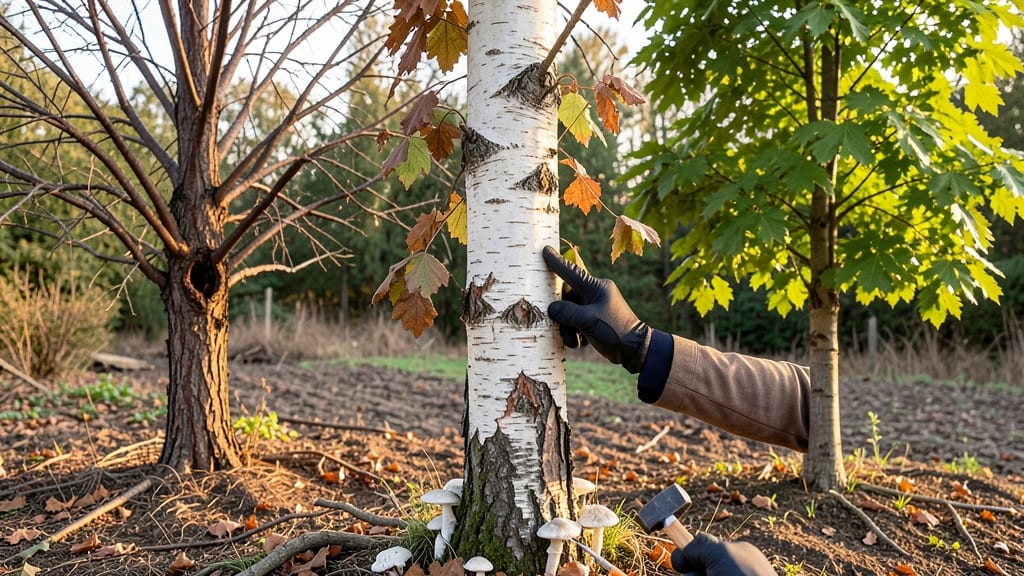
How can you tell when a tree is dead? If the bark peels away like sunburnt skin—no green underneath—it’s a clear sign. 🌳 I’ve stared at enough dying trees to spot the warning signs: brittle branches that snap like dry twigs, no leaves even in spring, and a hollow trunk that echoes when you knock. These aren’t just signs of dormancy; they’re red flags that say "this tree’s had it." Start with the scratch test: peel back a small patch of bark. Healthy trees reveal green layers beneath; dead ones show brown or black. Check for root rot too—lift a corner of the soil and look for mushy, foul-smelling roots. If the tree’s been struggling for years, it’s likely beyond saving, but these tests confirm it before you invest in removal. What you’ll learn is how to act fast—whether that means cutting your losses, replanting, or saving a neighbor’s tree before it becomes a hazard. The key is catching it early, before the roots rot completely or the trunk splits under winter ice. For now, focus on the three big clues: bark, branches, and roots. If all three fail the test, it’s time to call an arborist—or at least stop watering it and start planning a replacement.
Root Causes Of Tree Death
Trees don’t just wither away without reason—they succumb to death due to a mix of environmental stress, biological attacks, and human interference. Understanding why trees die helps you spot early warning signs and take action before it’s too late.
Here’s a breakdown of the most common culprits, explained in simple terms with science-backed details.
Fungi and pathogens are like invisible assassins to trees. They thrive in moist conditions and can spread rapidly, blocking a tree’s ability to transport water and nutrients. Some of the most destructive offenders include:
- Heart Rot Fungi (e.g., Fomes fomentarius): These fungi invade the tree’s core, turning its heartwood into a spongy, decayed mess. Once established, they’re nearly impossible to eradicate. Look for conk growths (shelf-like fungi) at the tree’s base or trunk—this is a classic sign of advanced decay.
- Dutch Elm Disease (caused by Ophiostoma novo-ulmi): Spread by bark beetles, this fungal disease clogs a tree’s vascular system, cutting off its water supply. Infected elms often show yellowing leaves in late summer and wilted branches, even when soil moisture is high.
- Root Rot (e.g., Phytophthora species): Overwatering or poorly drained soil creates the perfect breeding ground for these water-loving fungi. They attack roots, preventing nutrient uptake. 💡 Pro Tip: If the ground around your tree is constantly soggy, aerate the soil or install drainage to starve the fungus of its favorite environment.
Many diseases are opportunistic, meaning they exploit trees already weakened by drought, poor soil, or physical damage. Think of them like a cold virus—your tree’s health determines how severe the infection becomes.
Trees are resilient, but extreme or prolonged stress can push them past their breaking point. Environmental factors often work in combination, making trees more vulnerable to disease or pests.
| Stressor | How It Kills Trees | Signs to Watch For |
|---|---|---|
| Drought | Trees need consistent moisture to transport water from roots to leaves. Prolonged drought causes cavitation, where air bubbles form in the xylem (water-conducting tissue), effectively suffocating the tree. Evergreens are especially vulnerable because they lose water year-round. |
|
| Extreme Heat | Heatwaves increase transpiration (water loss through leaves), while also cooking the tree’s roots if the ground is dry. Combined with drought, this creates a double whammy. Some trees, like oaks, are more heat-tolerant, while others, like maples, suffer severely. | |
| Poor Soil Conditions | Compacted, nutrient-poor, or overly alkaline/acidic soil starves trees of essential minerals like nitrogen, phosphorus, and potassium. Roots can’t anchor properly, and the tree becomes weak. 🌡️ Key Stat: A single cubic foot of healthy soil can hold millions of beneficial microbes—disrupt that ecosystem, and your tree suffers. |
|
💡 Pro Tip: If your tree is struggling with environmental stress, mulching properly (2–4 inches of organic mulch, kept away from the trunk) can improve soil moisture and temperature, giving roots a fighting chance.
Insects and pests don’t just nibble—they can systematically dismantle a tree’s defenses. Some target leaves, while others go straight for the vascular system or bark. Here’s how they do it:
- Bark Beetles (e.g., Dendroctonus species): These wood-boring beetles lay eggs under the bark, and their larvae tunnel through the phloem (the tree’s food-transporting layer). The tree’s resin usually repels them, but drought-stressed trees can’t produce enough, leading to mass infestations. 🔥 Red Flag: Look for sawdust-like frass at the base of the tree or tiny holes in the bark.
- Emerald Ash Borer (Agrileus planipennis): This invasive beetle targets ash trees, laying eggs under the bark where larvae burrow into the cambium (the growth layer). Infested trees develop S-shaped galleries under the bark and often sprout epicormic shoots (sudden clusters of small branches) as a desperate survival tactic.
- Gypsy Moths (Lymantria dispar): While they don’t kill trees outright, their caterpillars defoliate entire canopies. A tree can survive one or two years of heavy defoliation, but repeated attacks exhaust its energy reserves, leaving it vulnerable to disease or winter cold.
- Root Weevils (e.g., Hylobius pales): These beetles chew on young roots and root collars, preventing water and nutrient uptake. Infested trees may show wilting despite wet soil or sudden dieback in new growth.
Pests thrive when trees are already weakened. 🎯 Prevention Tip: Encourage natural predators like birds, ladybugs, and parasitic wasps by planting native shrubs and avoiding broad-spectrum pesticides that kill beneficial insects.
From well-meaning gardening choices to outright neglect, humans are often the direct cause of tree death. Here’s how:
- Improper Pruning: Cutting branches too close to the trunk (within the branch collar) or removing too much foliage at once can disrupt the tree’s energy flow. ✨ Key Rule: Never remove more than 25% of a tree’s canopy in one year, and always prune during the dormant season (late winter/early spring).
- Soil Compaction: Heavy foot traffic, construction equipment, or even lawnmowers can compress soil, reducing oxygen and root growth. Compacted soil also increases runoff, leaving roots high and
Revive or Remove Dead Trees
Now that you’ve identified the signs of a dead or dying tree, it’s time to take action—whether that means giving it a fighting chance or removing it safely.
Below are practical solutions tailored to the most common causes of tree death, along with prevention tips to keep your trees healthy for years to come.
🔥 Cause: Disease or Fungal Infection
If your tree is showing signs of cankers, oozing sap, or mushroom growth at the base, it may be battling a fungal infection or disease. Here’s how to help:
- 🍳 Prune Infected Branches
- Use sterilized pruning shears (wipe with rubbing alcohol between cuts) to remove dead, discolored, or oozing branches.
- Cut 6–12 inches below the infected area to ensure the fungus doesn’t spread.
- Burn or dispose of infected branches (do not compost them).
- 👨🍳 Apply Fungicide (If Needed)
- For serious infections (like anthracnose or powdery mildew), use a copper-based or sulfur fungicide following label instructions.
- Best time to treat: Early spring or fall when fungi are most active.
- 🌡️ Improve Airflow & Drainage
- Thin out dense foliage to reduce humidity around the tree.
- Aerate compacted soil with a garden fork to help roots breathe.
💡 Pro Tip: If the tree is less than 30% infected, it may recover with proper care. If more than 50% is affected, removal might be the kinder option.
🌪️ Cause: Storm or Physical Damage
After a windstorm, hail, or heavy snow, trees can suffer broken limbs, split trunks, or uprooted roots. Act fast to prevent further harm:
- 🔪 Stabilize the Tree Immediately
- If the trunk is cracked but still standing, brace it with wooden stakes and straps (like a tree support system) to prevent splitting.
- For hanging branches, do not pull them down by hand—call a professional arborist.
- 🌳 Assess Root Damage
- If the tree is tilted or uprooted, check if the root ball is intact.
- Gently replant (if roots are mostly intact) and water deeply to encourage regrowth.
- If major roots are severed, the tree may not survive—consider removal.
- ⏰ Monitor for Signs of Recovery
- Healthy new growth in spring is a good sign.
- If the tree fails to leaf out for two years in a row, it’s likely dead.
💡 Pro Tip: After a storm, inspect trees for "widowmaker" branches (dead limbs hanging over structures)—these should be removed immediately by a pro.
💧 Cause: Overwatering or Poor Drainage
If your tree is sitting in soggy soil or showing yellowing leaves and root rot, it’s drowning. Here’s how to fix it:
- 🚰 Improve Soil Drainage
- Aerate the soil around the tree’s drip line (use a soil probe or auger).
- Add organic matter (compost or pine bark) to loosen heavy clay soil.
- Install a French drain if water pools near the base.
- 🌧️ Adjust Watering Habits
- Deep watering (1–2 inches per week) is better than frequent shallow watering.
- Avoid watering the trunk—focus on the root zone (5–10 feet from the trunk).
- If the tree is in a low-lying area, consider raising the planting bed slightly.
- 🌿 Mulch Properly
- Apply 2–4 inches of mulch (wood chips or shredded bark) keeping it 6 inches away from the trunk.
- Never pile mulch against the trunk—this traps moisture and invites rot.
💡 Pro Tip: If the tree is in a container, ensure it has drainage holes and never let it sit in standing water.
If your tree is completely dead (no leaves, brittle bark, or hollow trunk), removal is the safest option. Here’s how to do it right:
- 🔪 Call a Professional Arborist
- Never attempt to remove a large dead tree yourself—it’s dangerous and illegal in many areas.
- A pro will assess structural integrity and use proper rigging to avoid damage to your property.
- 🌳 Choose the Right Removal Method
- Grinding: Best for small dead trees—grinds the trunk into wood chips.
- Sectioning & Chipping: Used for large trees—cut into sections and chipped on-site.
- Stump Removal: If you want the tree completely gone, a stump grinder can eliminate it.
- 🌱 Replace with a Healthy Tree (If Desired)
- If the dead tree was valuable (e.g., shade, fruit), plant a native, disease-resistant species in its place.
- Best choices for replacement:
- Oak (long-lived, drought-tolerant)
- Maple (great for shade)
- Dogwood (low-maintenance, beautiful flowers)
✨ Bonus Tip: If you don’t need the wood, ask the arborist to chip it for mulch—free compost for your garden!
The best way to avoid a dead tree is to prevent problems before they start:
- 🌱 Plant the Right Tree in the Right Place
- Check sunlight, soil type, and space needs before planting.
- Avoid planting near sidewalks or power lines—future growth can cause damage.
- 🪓 Prune Regularly (But Correctly)
- Remove dead/diseased branches in late winter or early spring.
- Thin the canopy to allow airflow and sunlight to reach inner branches.
- Never "top" a tree (cutting the top flat)—this weakens the tree and invites decay.
- 💧 Water Deeply & Infrequently
- Young trees need 1–2 gallons of water, 2–3 times per week.
- Mature trees benefit from deep watering every 1–2 weeks (depending on drought).
- 🌿 Mulch & Fertilize Properly
- Mulch helps retain moisture and regulate soil temperature.
- Fertilize in early spring with a slow-release, balanced fertilizer (10-10-10 or 20-20-20).
- 🦟 Monitor for Pests Early
- Borers, beetles, and aphids can kill trees quickly. Inspect bark and foliage regularly.
- Use natural predators (like ladybugs) or insecticidal soap for minor infestations.
By following these simple but effective steps, you can extend your tree’s lifespan and avoid the heartbreak (and danger) of a sudden death. 🌳💚
Frequently asked questions
Why does a tree lose leaves but still seem alive?
Leafless trees in winter are normal, but if it's summer or spring and the tree has no leaves, it could be dead. Check for green tissue under the bark (scratch test) or new growth in spring. Some trees like oaks and maples drop leaves early if stressed by drought or disease.
Can a tree be dead but still standing?
A tree can remain upright for years after dying, especially if it's large and sturdy. Look for hollow trunks (tap it—if it sounds hollow), peeling bark with no green underneath, and no leaves or buds even in spring. These are major red flags.
How do I test if a tree is dead without cutting it down?
Try the scratch test: peel back a small section of bark. If you see green layers underneath, the tree is alive. If it's brown or black, it's dead. You can also check for sap flow—if you cut a small branch and no sap oozes out, it's likely deceased.
What should I do if my tree is dead but still standing?
Dead trees can be hazardous—especially if they're near structures or power lines. Call a professional arborist to assess the risk. If it's small, you might remove it yourself, but larger trees require specialized equipment and expertise to avoid injury or property damage.
Can a tree come back to life after being declared dead?
In rare cases, trees can recover if only partially dead. If the roots are still alive, new shoots may emerge in spring. However, if the trunk is hollow, the bark is completely gone, or the roots are rotted, revival is unlikely. Act fast if you suspect partial death!