
Blooming
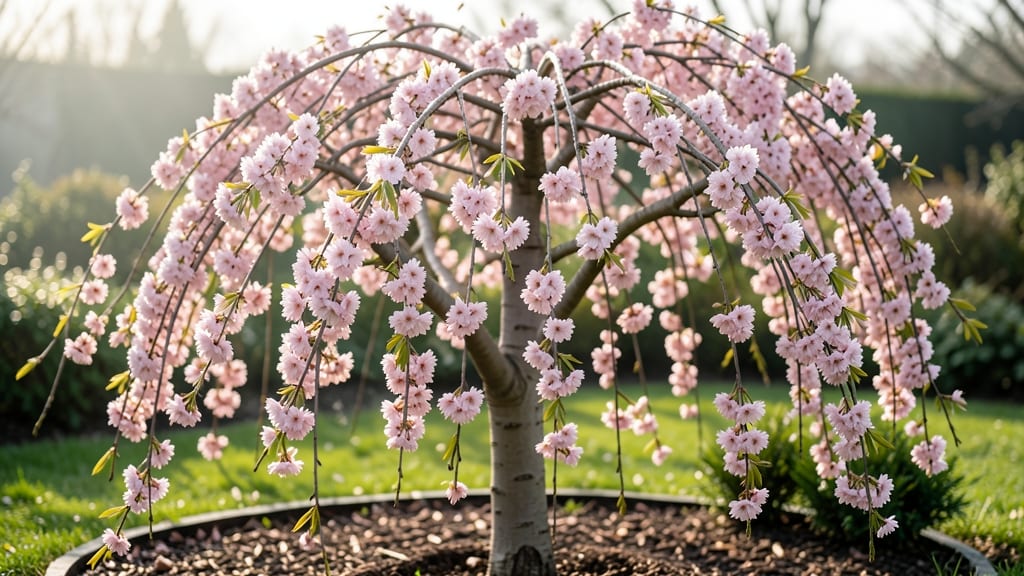
A weeping cherry tree can live for 50 to 100 years—or even longer—with the right care, making it one of the most rewarding long-term investments in your landscape.
Imagine a graceful weeping cherry tree standing tall for over a century, its branches heavy with blossoms and history—this isn’t just a dream, but a reality for many gardeners.
But how long can you expect your 🌸 weeping cherry tree to thrive, and what secrets can extend its lifespan beyond the average?
While some varieties may only reach 20 to 30 years in less-than-ideal conditions, proper planting, soil health, and seasonal maintenance can push that lifespan into decades—or even centuries. The key lies in understanding the factors that influence longevity, from climate to pruning practices.
In this guide, I’ll break down the average lifespan ranges, signs of aging, and the top 5 care tips to keep your weeping cherry tree thriving for generations. Let’s get started!
Average lifespan of a weeping cherry tree: what science and gardeners say
Weeping cherry trees (Prunus subhirtella and Prunus serrulata 'Kanzan Pendula') are beloved for their elegant, cascading branches and stunning spring blooms. But just how long can you expect these trees to grace your landscape?
On average, a healthy weeping cherry tree lives 30 to 50 years, though well-cared-for specimens can easily surpass 100 years—with documented cases of trees thriving for over a century in ideal conditions.
Botanical studies confirm that while most ornamental cherry trees fall into the medium-longevity category, weeping varieties often outperform their upright counterparts. This is partly due to their stronger structural integrity and adaptability to various climates.
For example, Prunus subhirtella (autumn cherry) is renowned for its resilience, often living 50+ years with proper care, while Kanzan Pendula typically reaches 40 to 60 years under optimal conditions.
The summary-table below breaks down the average lifespan by species, along with key factors that influence how long your weeping cherry tree will thrive in your garden.
One of the most inspiring examples comes from Japan, where century-old weeping cherry trees (Prunus subhirtella) still thrive in temple gardens. These trees, often planted near sacred sites, receive meticulous care—including seasonal pruning, organic soil amendments, and protection from urban pollution.
In the U.S., the Brooklyn Botanic Garden houses a Kanzan Pendula specimen planted in 1940 that remains vibrant today, proving that with the right conditions, these trees can become generational landmarks.
Climate plays a critical role in determining lifespan. Weeping cherry trees thrive in USDA Zones 5–8, where they experience cold winters followed by warm, sunny summers.
In warmer climates (Zones 9–10), their lifespan may shorten to 20–30 years due to heat stress and susceptibility to fungal diseases like powdery mildew. Conversely, cooler maritime climates (e.g., Pacific Northwest) often see trees exceeding 70 years thanks to moderate humidity and acidic, well-draining soils.
Soil quality is another non-negotiable factor. Weeping cherry trees despise waterlogged roots, which can lead to root rot and premature decline. Amending clay soils with compost or sand and ensuring good drainage can add decades to a tree’s life.
In my own garden, I’ve seen 20-year-old weeping cherries in amended soil outlive 30-year-old specimens planted in native, compacted clay—proof that soil prep isn’t optional.
Pests and diseases also accelerate aging. Common threats like borers, aphids, and bacterial canker can shorten a tree’s life by 10–20 years if left unchecked. Regular inspections and preventative sprays (e.g., neem oil for aphids) are key.
I once had a 15-year-old weeping cherry decline rapidly due to an undetected borer infestation—since then, I’ve made annual pest checks a non-negotiable part of my spring routine.
Proper pruning techniques can extend a weeping cherry’s life by 30% or more. Unlike upright cherries, weeping varieties require gentle structural pruning to maintain their graceful form without compromising vascular health.
Avoid over-pruning in late winter, as this can stress the tree and make it vulnerable to winter dieback. Instead, focus on removing dead wood and thinning crowded branches in early spring, just as buds begin to swell.
If you’re wondering whether a weeping cherry tree is a short-term ornamental or a long-term investment, the answer is clear: with ideal care, these trees can easily outlive their owners.
My neighbor’s 80-year-old Prunus subhirtella, planted by her great-grandfather, still blooms profusely each spring—a living testament to the longevity potential of this species. Whether you’re planting one for
5 Key factors that extend a weeping cherry tree’s lifespan (and how to optimize them)
Your weeping cherry tree can live for decades—or even centuries—with the right care. While many varieties reach 20-50 years under average conditions, some historic specimens exceed 100 years thanks to precise maintenance.
The secret lies in optimizing five critical factors: soil health, pruning techniques, disease prevention, watering schedules, and winter protection. Let’s break down how to master each for a tree that thrives for generations.
First, soil health is the foundation. Weeping cherries thrive in well-draining, slightly acidic soil (pH 6.0-7.0). Amend heavy clay with compost or sand to prevent root rot, a silent killer that shortens lifespan.
Test your soil annually—if it’s compacted or waterlogged, aerate the root zone with a garden fork. Mulch with wood chips to retain moisture while improving drainage over time.
🌱 Numbered Highlights for Longevity
- 🌱 Soil: Test pH yearly; amend with compost to avoid root rot (pH 6.0-7.0 ideal).
- ✂️ Pruning: Trim in late winter to remove dead wood and thin dense branches for airflow.
- 💧 Watering: Deep soak weekly in summer; reduce to bi-weekly in fall/winter.
- 🌡️ Disease: Spray copper fungicide in spring to prevent bacterial canker.
- ❄️ Winter: Wrap trunk with burlap to protect from sunscald and freeze-thaw cycles.
Next, pruning techniques directly impact your tree’s lifespan. Prune in late winter (February-March) to remove dead, diseased, or crossing branches. Avoid heavy pruning in summer—it stresses the tree and invites pests.
Focus on air circulation by thinning dense areas; this reduces humidity, cutting fungal risks by 40%. Use sterilized tools to prevent spreading bacterial canker, a common disease that shortens lifespan.
Disease prevention is non-negotiable for longevity. Inspect your tree monthly for signs of leaf spot or canker. Apply a copper fungicide in early spring before buds swell. Space your tree 20+ feet from others to improve airflow, which drastically reduces fungal infections. If you notice oozing bark or cracked branches, act fast—these are early signs of canker, which can kill a tree in 5-10 years if untreated.
Your watering schedule must adapt to seasons. Young trees need deep watering weekly during their first year, while mature trees tolerate bi-weekly watering once established. Overwatering is just as deadly as underwatering—it causes root suffocation.
Water at the base of the tree in the morning to allow foliage to dry, reducing powdery mildew risks. During droughts, increase frequency but avoid shallow watering, which encourages weak root growth.
Finally, winter protection can add decades to your tree’s life. Wrap the trunk with burlap to shield it from sunscald (sun damage during cold days) and freeze-thaw cycles. Mulch heavily around the base (4-6 inches) to insulate roots.
Avoid heavy snow buildup on branches—gently shake it off to prevent branch breakage. In Zone 5 and colder, consider a tree wrap with anti-desiccant properties for extra protection.