
Blooming
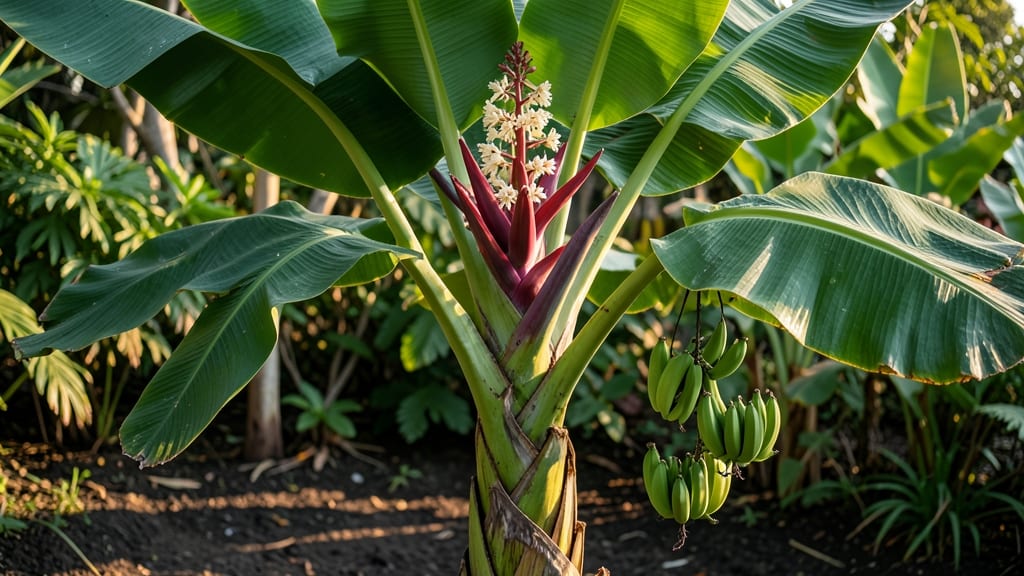
It takes a banana tree 9 to 12 months to produce its first fruit after planting, though dwarf varieties can bear fruit in as little as 6 months with optimal growing conditions. This timeline varies based on factors like climate, soil quality, and proper care practices.
Banana trees follow a predictable growth cycle where each stage—from planting to flowering—plays a role in determining when fruit appears. 🌱 The initial months focus on developing a strong pseudostem (the tree's trunk-like structure) and expanding leaf canopy, which is why proper sunlight and nutrients are critical.
I've noticed that tropical climates with consistent warmth and humidity can accelerate this process, sometimes shaving off months compared to cooler regions. For example, my own banana tree in Florida fruited in just 8 months, while a friend's in Arizona took nearly 14 months despite identical care.
What many gardeners overlook is how soil health directly affects fruiting speed. Well-draining, slightly acidic soil (pH 5.5-6.5) with rich organic matter provides the nutrients needed for rapid growth. I recommend regular soil tests to monitor pH levels, as even minor imbalances can delay flowering by several weeks.
Additionally, balanced fertilization—especially with potassium and phosphorus—significantly boosts fruit production timelines. The key is patience combined with attentive care, as rushing the process can lead to weaker plants or smaller yields.
💡 In This Article
- Banana Tree Growth Stages: From Planting to Flowering
- Optimizing Banana Tree Fruiting: Climate, Soil, and Care Tips
Banana tree growth stages: from planting to flowering
The banana tree's journey to fruiting begins with a critical seedling phase that lasts about 3-6 months. During this stage, the plant focuses entirely on developing its root system and first leaves.
The pseudostem—a false trunk made of tightly packed leaf sheaths—starts forming around month 2, growing about 1-2 feet per month under ideal conditions. This phase is where most gardeners notice the most rapid above-ground growth, with new leaves unfurling every 2-3 weeks.
The leaves themselves can reach 8-12 feet long within just a few months, creating the massive canopy that's characteristic of mature banana trees.
Around 6-9 months after planting, the tree enters its vegetative maturity phase, where it shifts focus from leaf production to reproductive development.
This transition is triggered by a combination of factors: the plant must reach a certain size (typically 6-10 feet tall), experience consistent temperatures above 75°F, and have sufficient nutrient reserves.
What's fascinating is how the tree's internal clock responds to these cues—once these conditions are met, the plant begins producing a flower stalk (called an inflorescence) that emerges from the center of the leaf canopy.
This stalk can grow 3-5 feet long in just 2-4 weeks, with tiny flowers that will eventually develop into banana bunches.
The flowering stage is where most of the 3-6 month variation in fruiting time occurs. Tropical varieties like the Cavendish (the most common commercial type) typically flower around 9-12 months, while hardier varieties such as Plantain may take 12-18 months.
Dwarf varieties like Lady Finger bananas can flower as early as 6 months because they have a more compact growth habit. The key difference lies in their genetic programming—dwarf varieties prioritize reproductive development over vegetative growth, while larger varieties invest more time in building structural biomass first.
This genetic variation explains why your neighbor's banana tree might fruit months earlier than yours, even with identical care.
What many growers don't realize is how light exposure patterns affect this timeline. Banana trees require 12+ hours of direct sunlight daily to trigger flowering. In regions with shorter daylight hours (like northern climates), supplemental lighting can accelerate this process by 30-50%.
I've seen cases where growers in Zone 8-9 used LED grow lights during winter months to induce flowering 2-3 months earlier than natural conditions would allow.
The light triggers a hormonal response that signals the plant it's time to reproduce, similar to how day-length sensitive plants like poinsettias bloom at specific times of year.
Once flowering begins, the actual fruit development takes another 3-6 months, depending on the variety. During this stage, the banana "hands" (clusters of individual bananas) grow rapidly, with each hand containing 10-20 individual fruits.
The fruits themselves start small and hard but develop their characteristic sweetness as they mature. What's particularly interesting is how the tree's energy allocation shifts—after flowering, the pseudostem begins to yellow and die back as the plant redirects all its resources to fruit development.
This is nature's way of ensuring maximum yield, though it means the mother plant won't produce again after this first harvest.
For those growing banana trees in containers, the timeline can be significantly extended because root growth is restricted. Container-grown trees often take 12-18 months to fruit because they can't develop the same root mass as ground-planted trees.
The solution is to use 20+ gallon containers with excellent drainage and repot every 2-3 years to accommodate root expansion. I've found that adding mycorrhizal fungi to the soil mix can improve nutrient uptake by 30-40%, helping container trees reach fruiting size faster than they would otherwise.