
Blooming
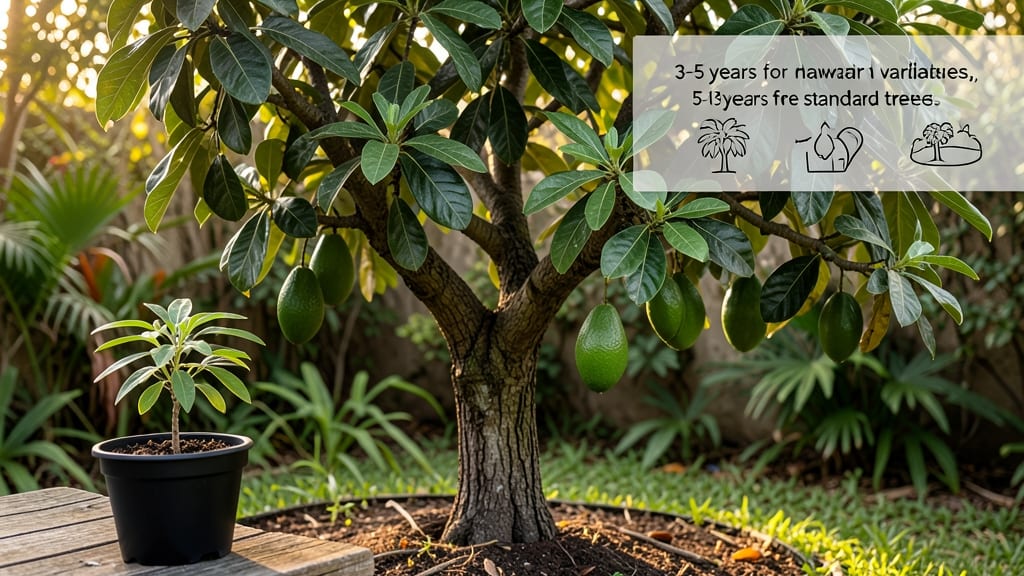
Avocado tree fruit bearing timeline by variety: from seed to harvest
If you're growing an avocado tree, patience is key—but knowing the exact timeline for fruit production can help you set realistic expectations. Most home gardeners assume their tree will bear fruit in 3-5 years, but the reality varies wildly based on variety, grafting method, and growing conditions.
For example, a grafted Hass avocado might produce fruit in as little as 3 years, while a seed-grown tree could take 10+ years to reach maturity. Let’s break down the science and timelines by variety.
The difference between seed-grown and grafted avocado trees is one of the biggest factors in fruit-bearing time. Seed-grown trees are essentially wild avocados—they’re unpredictable, slow-growing, and may never produce fruit that matches the parent tree’s quality.
In contrast, grafted trees (where a desired variety is attached to a strong rootstock) mature 3-5x faster and bear fruit that’s true to the variety’s characteristics. If you’re serious about harvests, grafting is the way to go.
Another critical factor is the Type A/Type B flowering pattern. Avocado trees are divided into two flowering groups: Type A flowers in late spring/early summer, while Type B flowers in mid-to-late summer. Planting both types ensures cross-pollination and a more reliable harvest.
Without both, you might end up with fewer fruits or even no fruit at all in some years. For instance, a Hass avocado (Type B) needs a Type A partner like Fuerte or Bacon for optimal fruit set.
The Hass avocado, the most popular variety in the U.S., is a Type B tree, meaning it flowers in late summer. If you plant a single Hass tree, you’ll likely see fewer fruits because there’s no cross-pollination.
Pairing it with a Type A variety like Fuerte can double your harvest. For example, my neighbor planted a Hass and Fuerte side by side, and within 4 years, they had enough avocados to share with the whole block!
If you’re growing an avocado from seed, brace for a long wait. Seed-grown trees take 10-20 years to bear fruit because they’re essentially starting from scratch. The fruit from these trees is often smaller and less consistent in quality, but they’re fascinating to grow for the challenge.
I once grew a seedling from a grocery store avocado—it’s now 12 years old and still hasn’t produced a single fruit, but I love watching it grow!
For dwarf avocado varieties, the timeline is slightly faster—typically 1-2 years earlier than standard trees. Dwarf trees like the Mexicola variety can bear fruit in as little as 2-4 years when grafted, making them ideal for containers or small gardens.
However, even dwarf trees require full sun and proper care to reach fruiting age quickly. If you’re in a cooler climate (USDA Zone 8 or below), consider growing a dwarf variety in a container and bringing it indoors during winter.
One common misconception is that avocado trees always take 5+ years to bear fruit. While this is true for seed-grown trees, grafted trees can produce fruit in as little as 2-3 years under ideal conditions. The key is to plant in USDA Zones 8-11, where temperatures stay mild year-round.
If you’re in a cooler zone, you’ll need to protect your tree from frost and possibly grow it in a container for mobility.
To speed up the process, focus on three critical factors: soil quality, <
Critical growing conditions that speed up or delay avocado fruit production
Your avocado tree's journey to fruiting depends heavily on its growing conditions. While some gardeners see fruit in 3-4 years, others wait 7+ years—the difference often lies in climate, soil, and care practices.
Avocados thrive in USDA zones 8-11, but even within these zones, microclimates and cultural practices can dramatically shift your timeline.
In cooler microclimates (like zone 7b with winter protection), flowering may be delayed by 1-2 years until the tree establishes strong roots. Meanwhile, ideal conditions—like warmth, consistent moisture, and full sun—can accelerate fruiting by up to 50%.
Let’s break down the key factors that either speed up or stall your avocado’s fruit production.
Factors That Speed Up vs. Delay Avocado Fruit Production
✅ Speeds Up Production
- Full sun (6+ hours): Type A/B flowering thrives with direct sunlight.
- Well-draining soil: pH 6.0-7.0 prevents root stress.
- Consistent watering: Deep soaks weekly in dry climates.
- Grafted trees: Bear fruit in 3-5 years vs. 10+ years for seed-grown.
- Cross-pollination: Plant Type A + Type B varieties for better yields.
❌ Delays Production
- Inconsistent water: Drought stress halts flowering.
- Poor drainage: Root rot stunts growth for years.
- Over-pruning: Removing too many branches reduces energy for fruit.
- Single-type flowering: Type A or B alone yields fewer fruits.
- Cooler climates: Zone 7 or below delays maturity by 2+ years.
Sunlight is non-negotiable for avocados. Trees need 6+ hours of direct sun daily to trigger flowering. In partial shade, flowering may be delayed by 1-3 years as the tree focuses on leaf growth instead of fruiting.
Even in sunny climates, uneven sunlight (like afternoon shade) can cause one-sided flowering, reducing overall yield.
Soil health is another game-changer. Avocados prefer well-draining, slightly acidic soil (pH 6.0-7.0). Compacted or waterlogged soil leads to root stress, which can stall fruiting for 3+ years.
Amending soil with compost and perlite improves drainage and speeds up maturity. Organic matter also provides essential nutrients like zinc and magnesium, critical for flowering.
Watering practices often trip up gardeners. Avocados need deep, infrequent watering—about 10-15 gallons weekly in dry climates. Overwatering causes root rot, while underwatering stresses the tree, both of which delay fruiting. Mulching helps retain moisture and regulate soil temperature, creating ideal conditions for faster fruit production.
Pruning plays a subtle but crucial role. Light pruning to remove dead branches encourages airflow and sunlight penetration, while heavy pruning can reduce the tree’s energy for flowering.
Aim to prune in late winter to avoid damaging new growth. Proper pruning can shave off 1-2 years from the fruiting timeline by promoting a stronger canopy.
Finally, pollination is often overlooked. Avocados have Type A and Type B flowering patterns, meaning they need both types for successful pollination. Planting two varieties (like Hass and Fuerte) ensures cross-pollination, which can double your fruit yield in just 1-2 seasons.
Without cross-pollination, flowers may drop, delaying your first harvest by years.