
How To
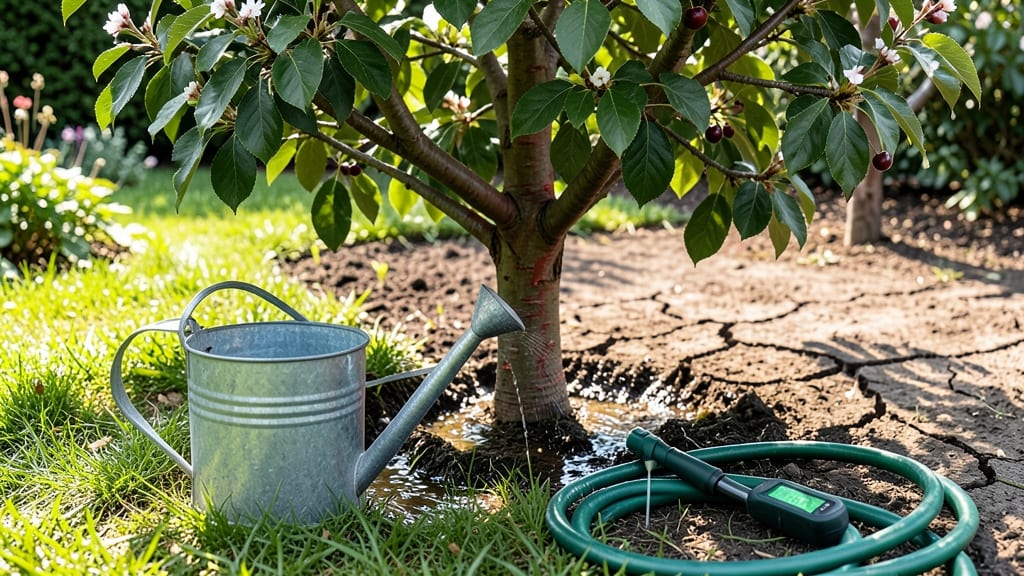
A cherry tree 🍒 needs about 15-20 gallons of water every 7-10 days once established, but the real secret is how you deliver it—deep soaks that encourage strong roots instead of shallow sprinkles that waste water.
Picture this: You’ve just planted your sapling, and every time you water, the moisture barely reaches past the top inch of soil. That’s a recipe for shallow roots and stress—especially in Zone 6a summers when temperatures climb.
Too much water, and you risk suffocating the roots; too little, and your tree wilts before it ever bears fruit.
What most gardeners miss is that watering needs shift with the seasons. A newly planted cherry tree in spring demands consistent moisture, while a mature tree in summer might only need a deep drink every 10-14 days if rainfall picks up.
And winter? That’s when you dial it back to just enough to keep the soil from drying out completely.
In this guide, I’ll break down the exact watering schedule for every growth stage—from sapling to fruit-bearing giant—plus how to tell if you’re overdoing or underdoing it. No guesswork, just a plan that keeps your cherry tree thriving year-round.


Cherry tree watering requirements by growth stage: weekly needs explained
Watering a cherry tree isn't a one-size-fits-all task—it changes dramatically as your tree grows. Young saplings need frequent, gentle hydration to establish roots, while mature trees develop deeper root systems that require less frequent but deeper watering.
Understanding these growth-stage-specific needs ensures your tree thrives and produces fruit for decades. Let’s break down the exact watering schedule for each stage, so you can avoid common pitfalls like root rot or drought stress.
First, always water in the early morning (before 10 AM) to reduce evaporation and fungal risks. Use a soaker hose or drip irrigation to deliver water directly to the root zone, avoiding wetting the leaves.
For all stages, test soil moisture before watering—stick your finger 2-3 inches deep; if it feels dry, it’s time to water. This simple check prevents overwatering, which is just as harmful as underwatering.
🍒 Key Insight: Cherry trees hate soggy roots. Amend heavy clay soil with compost to improve drainage, and mulch with 2-3 inches of organic mulch (like wood chips) to retain moisture and regulate soil temperature.
For young saplings (0-2 years), consistency is critical. These trees have shallow roots and need 15-20 gallons of water per week, delivered as two deep waterings (e.g., 10 gallons each, twice weekly). Focus on keeping the soil evenly moist but never waterlogged.
If your sapling’s leaves turn yellow or droop, it’s a sign of overwatering—reduce frequency immediately. During the first year, avoid letting the soil dry out completely, as this can stunt root growth.
When your cherry tree reaches the established stage (3-5 years), its root system expands deeper, reducing the need for frequent watering but increasing the volume per session. Aim for 20-30 gallons weekly, delivered as one deep soak.
Test soil moisture by probing 4-6 inches deep—if it’s dry, water thoroughly. In drought-prone areas, increase to weekly watering during summer. Mulching becomes even more critical at this stage to retain moisture and protect roots from temperature swings.
Mature cherry trees (6+ years) are the most drought-tolerant but still require 30-50 gallons weekly during peak growing seasons. Their extensive root systems allow them to access water deeper in the soil, so you can reduce frequency to bi-weekly deep waterings.
However, during fruit production (late spring to summer), increase watering to support heavy crop loads. Never let mature trees go completely dry—this can cause leaf drop and reduce fruit quality.
Seasonal adjustments are non-negotiable. In spring, increase watering as new growth emerges, and in fall, taper off to prepare the tree for dormancy. During winter, reduce watering to monthly light applications unless your region experiences extreme cold snaps.
Always adjust for rainfall: skip watering if you’ve had 1 inch of rain in the past week. Use a rain gauge to track precipitation accurately.
Pro tip: Install a moisture meter near your cherry tree to monitor soil conditions in real time. These tools eliminate guesswork and help you tailor watering to your tree’s exact needs. Pair it with regular soil checks to ensure you’re hitting the sweet spot between hydration and suffocation.
With the right watering routine, your cherry tree will reward you with decades of fruit production and vibrant growth.
🌱
Seasonal watering adjustments for cherry trees: when to increase or reduce
Your cherry tree's watering needs change dramatically with the seasons, making seasonal adjustments critical for its health. In spring, newly planted trees need consistent moisture to establish roots, while established trees benefit from deep soaks as growth accelerates.
Summer brings drought stress, requiring extra attention, especially in sandy soils that dry out quickly.
Fall is all about preparing the tree for dormancy, so you’ll gradually reduce watering as temperatures drop. Winter care focuses on minimal moisture—just enough to prevent root desiccation. Understanding these shifts helps you avoid common mistakes like overwatering in cool weather or underwatering during heatwaves.
- 1 Spring (April-May): Water deeply once weekly (15-20 gallons) to encourage root growth. Clay soils may need less frequent watering, while sandy soils dry out faster.
- 2 Summer (June-August): Increase to every 7-10 days during droughts, using drip irrigation to avoid leaf burn. Mulch heavily (3-4 inches) to retain moisture.
- 3 Fall (September-October): Reduce to bi-weekly watering as temperatures drop. Stop fertilizing to let the tree harden off before winter.
- 4 Winter (November-March): Water monthly only if soil is bone-dry. Avoid wet snow accumulation near the trunk to prevent rot.
Pay close attention to rainfall patterns in your region—adjust your watering schedule accordingly. For example, if you receive 1 inch of rain in a week, skip your scheduled watering for clay soils but may still need to water sandy soils.
Use a soil moisture meter to check depth (4-6 inches down) before watering.
Young cherry trees (0-2 years old) are most vulnerable to seasonal shifts, so monitor them closely. Mature trees (6+ years) have deeper roots and can handle brief dry spells better, but prolonged drought will still stress them.
Always water in the early morning to reduce evaporation and fungal risks.
Pro tip: Mulch annually in late winter with wood chips or straw to improve soil moisture retention year-round. This simple step can cut your summer watering needs by up to 30% while protecting roots from temperature extremes.
By adjusting your watering routine with the seasons, you’ll help your cherry tree thrive through every stage—from spring blossoms to summer fruit and winter dormancy. 🌳💧☀️