
How To
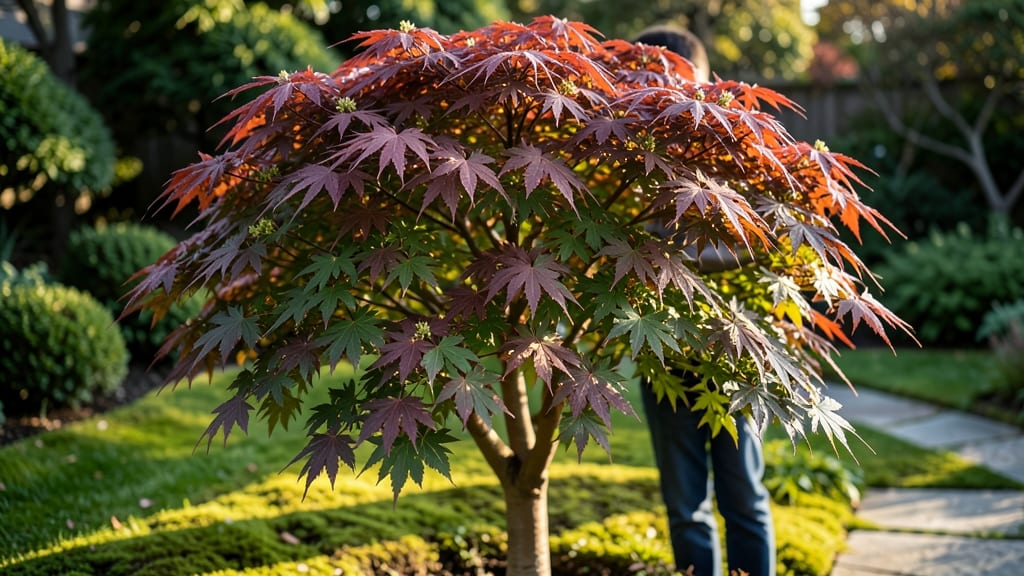
A Japanese Maple tree can grow how tall it does depending on the variety—ranging from a compact 8 feet to towering over 30 feet, so picking the right one for your space is everything.
Picture this: a dwarf cultivar like 'Crimson Queen' adding delicate color to a patio corner, while a standard type like 'Emperor I' stretches toward the sky in a spacious yard. That’s the beauty—and the challenge—of these trees.
But it’s not just about the variety. Soil, sunlight, and even your pruning habits play a huge role in how tall your Japanese Maple 🌿 grows. Skip the right care, and you might end up with a tree that outgrows its welcome.
In this guide, I’ll break down the height ranges of the most popular varieties, share pruning secrets to control growth, and give you the soil and sunlight tips to keep your tree at the perfect size—whether you want a small accent piece or a statement tree in your landscape.


Japanese maple tree height by variety: from dwarf to towering giants
Choosing a Japanese maple tree means deciding between delicate dwarf varieties perfect for patios and towering specimens that become garden focal points. The mature height of these trees can range from just 3 feet to over 30 feet, making variety selection critical for your space.
Whether you're designing a Zen garden or adding shade to a large yard, understanding these dimensions ensures your tree thrives without outgrowing its welcome.
Most gardeners focus on foliage color and form when selecting Japanese maples, but height potential often determines placement. A 6-foot 'Drummondii' planted too close to a house will soon require drastic pruning, while a 25-foot 'Bloodgood' needs ample ceiling clearance.
Let's explore the spectrum from tiny tabletop varieties to majestic giants, plus the spacing rules that prevent future headaches.
🌿 Quick Tip: Always check a variety's mature height range and growth rate—some compact types grow 1 foot per year, while fast growers can add 3 feet annually under ideal conditions.
For small-space gardeners, varieties like 'Drummondii' and 'Virginal' stay under 8 feet and thrive in 15-gallon containers. These dwarf types grow slowly (6-12 inches per year) and work beautifully
How to control Japanese maple tree height: pruning & care techniques
Controlling the height of your Japanese maple starts with understanding its natural growth patterns. Most varieties grow 1-2 feet per year, but aggressive pruning can slow this down significantly. The key is timing—prune at the right seasons to encourage bushier growth while keeping the canopy manageable.
For small gardens, dwarf varieties like 'Shishigashira' (max 6 feet) are ideal, but even standard types can be trained with proper techniques.
Your pruning tools matter just as much as your technique. Always use sharp, sterilized pruners or a pruning saw for thicker branches. Avoid dull tools, which can tear bark and invite disease.
I recommend keeping a clean pair of bypass pruners (like Felco or Fiskars) and rubbing alcohol for sterilization between cuts. This simple step prevents bacterial infections that can stress your tree.
- 1 Choose the right season: Prune in late winter or early spring (before buds swell) or summer after flowering. Avoid pruning in fall or winter when the tree is dormant—this can stimulate weak growth vulnerable to frost damage.
- 2 Identify structural branches: Remove 1/3 of the oldest wood to encourage new growth. Look for crossing or inward-growing branches—these compete for energy and should be cut at the branch collar to prevent decay.
- 3 Use the "third cut" method: For thick branches, make your first cut 1-2 inches away from the branch collar. Then cut below the branch and finish by removing the stub flush with the branch collar. This prevents bark tearing.
- 4 Encourage bushier growth: Prune the topmost leader branch to stimulate lateral branching. This creates a fuller, wider canopy while reducing vertical growth. Aim to keep the lowest branches within 3-4 feet of the ground for a balanced shape.
- 5 Avoid these mistakes: Never remove more than 25% of the canopy in one season—this stresses the tree. Also, avoid topping (cutting the main stem flat), which leads to weak, unsightly regrowth and disease.
For container-grown Japanese maples, height control is even easier. Simply prune roots every 2-3 years by trimming 1/3 of the root ball when repotting. This slows top growth while maintaining a compact form.
Pair this with regular pinching of new shoots in spring to keep the tree under 5 feet if desired. Just be sure to use a well-draining potting mix to prevent root rot.
Light pruning throughout the growing season can also shape your tree. In summer, remove suckers or water sprouts (fast-growing, weak shoots) to redirect energy to stronger branches.
For dwarf varieties, a light trim after flowering encourages denser foliage. Remember: less is more—Japanese maples respond better to minimal, strategic cuts than aggressive pruning.
Finally, mulch properly to support controlled growth. Apply 2-3 inches of organic mulch (like shredded bark) around the base, keeping it 6 inches away from the trunk. This insulates roots, retains moisture, and reduces vertical growth spurts caused by stress.
Pair this with balanced fertilization (10-10-10 NPK) in early spring, and your Japanese maple will stay healthy and proportionate for years to come. 🌿✂️🪴