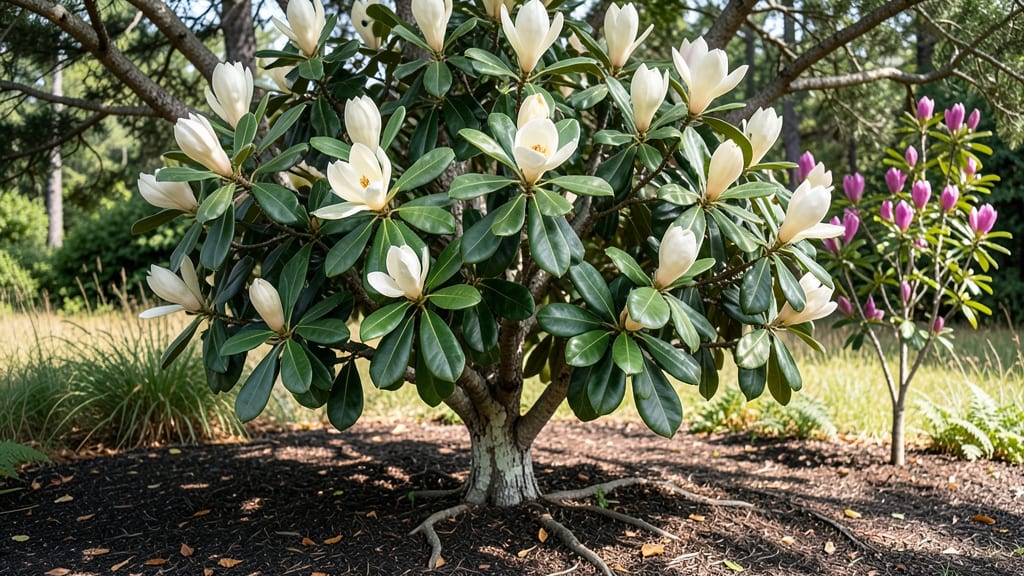
A magnolia tree can grow how tall can a magnolia tree grow anywhere from 8 feet to towering over 120 feet at maturity, depending on the variety and growing conditions.
Dreaming of a majestic 🌳 in your landscape but unsure how much space it’ll need? The height of a magnolia tree can vary dramatically—from compact shrubs to towering giants—depending on the variety and growing conditions.
For example, a dwarf variety like Magnolia stellata stays around 15 feet, while a giant like Magnolia grandiflora can reach 80 to 120 feet—that’s taller than a four-story building!
If you’re planning to plant one, understanding these differences is key to choosing the right spot. Some varieties thrive in smaller gardens, while others need acres of space.
Below, we’ll break down the height ranges by species, the factors that influence growth, and how to manage size with pruning and care.
Whether you’re aiming for a statement tree or a compact accent plant, knowing these details will help you pick the perfect magnolia for your yard. Let’s dive into the specifics so you can make an informed choice.
Dwarf
8-15 ft
Container friendly
Semi-Dwarf
15-30 ft
Most popular
Standard
40-120 ft
Full orchard size
Magnolia tree height by variety: small to giant mature sizes
If you're planning to add a magnolia tree to your landscape, knowing its mature height is essential for proper spacing and long-term enjoyment. Magnolias come in stunning varieties, but their sizes can range from compact shrubs to towering giants.
Whether you have a small yard or a spacious garden, there’s a magnolia variety to fit your space—here’s what to expect from dwarf to giant varieties.
The height of a magnolia tree depends heavily on its species and growing conditions. Some varieties stay under 15 feet, making them perfect for urban gardens, while others can soar to 100+ feet, dominating large estates.
Understanding these differences helps you choose the right tree for your vision and available space.
Below is a detailed breakdown of popular magnolia varieties by size category, including their mature heights and growth habits. This will help you visualize how each variety will look in your landscape over time.
| Variety |
Mature Height |
Growth Habit |
Best For |
| Dwarf Varieties |
8–15 ft |
Slow-growing, rounded |
Small yards, containers, urban gardens |
| Magnolia 'Black Tulip' |
10–12 ft |
Compact, multi-stemmed |
Foundation plant, small landscapes |
| Magnolia 'Little Gem' |
15–20 ft |
Narrow, upright |
Narrow spaces, privacy screens |
| Small Varieties |
15–30 ft |
Moderate growth, spreading canopy |
Medium-sized yards, focal points |
| Magnolia 'Jane' |
15–20 ft |
Upright, vase-shaped |
Small to medium landscapes |
| Magnolia 'Starry Starry Night' |
20–25 ft |
Broad, rounded |
Garden accents, mixed borders |
| Medium Varieties |
30–50 ft |
Fast-growing, broad canopy |
Large yards, shade trees |
| Magnolia 'Ann'® |
20–30 ft |
Upright, multi-trunked |
Versatile for various settings |
| Magnolia 'Elizabeth' |
30–40 ft |
Pyramidal, dense |
Shade trees, statement plants |
| Large Varieties |
50–80 ft |
Slow to moderate growth, massive canopy |
Estates, parks, large properties |
| Magnolia grandiflora |
60–80 ft |
Evergreen, broad |
Southern landscapes, privacy screens |
| Magnolia 'Teddy Bear' |
50–60 ft |
Broad, rounded |
Large gardens, focal points |
| Giant Varieties |
80–120+ ft |
Slow-growing, massive stature |
Factors that influence magnolia tree height growth
When planning your garden, understanding how tall a magnolia tree can grow is crucial—but the final height depends on more than just the variety. Your local climate, soil quality, and care practices all play starring roles in determining whether your magnolia stays compact or stretches toward the sky.
For example, a Southern magnolia (Magnolia grandiflora) might reach 80-100 feet in ideal conditions, while a star magnolia (Magnolia stellata) typically maxes out at 15-20 feet. Let’s break down the key factors that shape your tree’s growth trajectory.
First, consider your USDA hardiness zone. Magnolias thrive in zones 4-10, but their growth rate accelerates in warmer climates. In Zone 7 or higher, magnolias grow faster due to longer growing seasons, potentially reaching mature heights 20-30% faster than in cooler zones.
Even within the same zone, microclimates—like a sheltered south-facing slope—can boost growth by 10-15 feet over a decade compared to a windy, exposed site.
1.
Soil Type and Drainage: Magnolias crave acidic, well-draining soil (pH 4.5-6.5). Compacted or alkaline soil stunts root development, limiting height. Amending with peat moss or pine bark can add 5-10 feet to mature height by improving nutrient uptake.
2.
Sunlight Exposure: Full sun (6+ hours/day) fuels rapid growth, but afternoon shade in hot climates prevents stress. A magnolia in partial shade may grow 30% slower but live longer, while full sun can push some varieties 10-20 feet taller over 20 years.
3.
Pruning Practices: Regular structural pruning in early spring can reduce height by 20-40% over time, while no pruning lets the tree grow unchecked. Over-pruning weakens the tree, however, and can halt height growth entirely if done aggressively.
4.
Watering and Nutrition: Deep, weekly watering during the first 3 years encourages root expansion, adding 5-8 feet to mature height. Fertilizing with balanced 10-10-10 in early spring boosts growth by 15-25% compared to unfertilized trees.
5.
Climate and Wind: Coastal areas with high humidity and moderate winds promote lush, tall growth, while dry inland climates can stunt height by 10-30 feet. Wind-prone sites often produce wider, bushier magnolias due to stress-induced growth patterns.
Another often-overlooked factor is the root system’s health. Magnolias with restricted root zones—like those planted in small containers or urban planters—can grow 50% slower in height compared to those with unrestricted root spread.
If you’re planting in a small garden, choose dwarf varieties like ‘Black Tulip’ (Magnolia × soulangeana), which tops out at 15 feet even with optimal care.
Finally, remember that patience is key. Magnolias grow slowly in their first 5 years, adding only 1-3 feet per year, but accelerate to 6-12 inches annually once established.
By year 10, your tree’s height will reflect the cumulative effects of all these factors—so start with the right conditions to avoid costly mistakes later.
For gardeners in urban areas, where space is limited, consider espalier training or container growing for smaller varieties. Even a 20-foot magnolia can be managed with strategic pruning and regular monitoring. The key is balancing your vision with the tree’s natural growth habits—so choose your variety and site carefully!
★★★★★5.0(7 reviews)
|