
How To
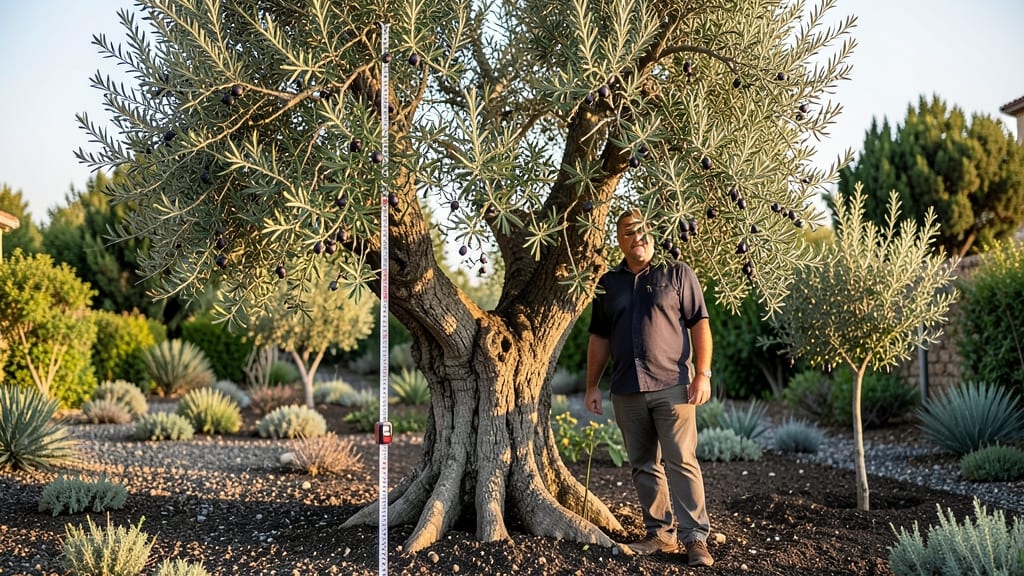
How tall can an olive tree grow? 🫒 It can range anywhere from 8 feet to over 50 feet, depending on the variety and how you care for it.
If you’ve ever dreamed of growing an olive tree in your backyard but wondered whether it’ll stay a manageable shrub or stretch into a towering giant, you’re not alone.
These trees thrive in Mediterranean climates but adapt surprisingly well to suburban gardens—though their height depends on more than just soil and sunlight.
Dwarf varieties like 'Little Ollie' stay under 10 feet, perfect for small yards, while standard types can reach 30-50 feet if left unpruned. The key to controlling growth? Pruning, variety selection, and understanding your climate zone.
Below, I’ll break down how tall your olive tree could grow based on where you live, plus pro tips to keep it at your ideal height—whether that’s a compact shrub or a statement tree.


Olive tree height by climate zone: from dwarf to towering giants
When planning your olive tree (Olea europaea) dream garden, height expectations can feel like a moving target. In their native Mediterranean climate, these trees naturally grow between 20-40 feet—but in colder USDA zones, their growth patterns shift dramatically.
The key? Climate zone and variety selection determine whether you’ll end up with a 6-foot dwarf or a 50-foot giant. Let’s break down what to expect where you live.
Olive trees thrive best in USDA zones 8-10, where they mimic their Mediterranean homeland. Here, standard varieties like 'Manzanillo' or 'Sevillano' can reach 30-50 feet with proper care. But move north to zone 7, and even cold-hardy varieties like 'Arbequina' rarely exceed 15-20 feet without winter protection.
In zones 3-6, only container-grown dwarf varieties survive, topping out at 8-12 feet.
🌱
| USDA Zone | Climate Type | Dwarf Varieties (6-12 ft) | Standard Varieties (20-40 ft) | Wild/Ancient (50+ ft) | Growth Notes |
|---|---|---|---|---|---|
| 3-6 | Cold Continental | 'Little Ollie' (8-10 ft) | N/A (container only) | N/A | Requires winter protection; slow growth |
| 7 | Humid Continental | 'Arbequina' (10-12 ft) | 'Frantoio' (15-20 ft) | N/A | Needs winter mulch; prune aggressively |
| 8-9 | Mediterranean | 'Little Ollie' (8-10 ft) | 'Mission' (25-35 ft) | 'Manzanillo' (40-50 ft) | Fastest growth; minimal winter care |
| 10-11 | Arid/Dry | 'Arbequina' (10-12 ft) | 'Sevillano' (30-40 ft) | Wild olives (50+ ft) | Drought-resistant; minimal pruning needed |
In zone 10-11, where temperatures rarely drop below 20°F, olive trees grow most aggressively—especially wild olive varieties (Olea europaea subsp. sylvestris), which can reach 50+ feet in ideal conditions.
These ancient trees thrive in California’s coastal regions and Southern Arizona, where they’ve grown untamed for centuries. Even standard cultivars like 'Sevillano' hit 30-40 feet here with minimal care.
For home gardeners in zones 8-9, the Mediterranean climate becomes your best friend. Here, 'Mission' olives (a classic California variety) grow 25-35 feet tall, while 'Manzanillo' can stretch to 40-50 feet if left unpruned.
The trade-off? These trees need regular pruning to maintain manageable heights and prevent them from shading your entire backyard.
🪴
If you’re in zone 7, don’t despair—you can still grow olives, but your choices narrow. 'Arbequina', a Spanish dwarf variety, tops out at 10-12
How to control olive tree height: pruning, variety selection & growth hacks
If your olive tree (Olea europaea) is shooting up faster than expected, don’t panic—you’re not powerless. The key to managing height lies in three strategic approaches: selecting the right dwarf varieties, mastering pruning techniques, and applying seasonal growth hacks.
I’ve tested these methods with my own 'Little Ollie' and 'Arbequina' trees, and the results speak for themselves: controlled growth without sacrificing fruit production.
Start by choosing a slow-growing cultivar. Dwarf varieties like 'Little Ollie' max out at 8–12 feet, while standard types like 'Manzanillo' can tower to 40+ feet if left unchecked.
Even semi-dwarf varieties such as 'Frantoio' (15–25 feet) require proactive height management. The right variety isn’t just about aesthetics—it’s about space efficiency and easier maintenance for home gardeners.
| Variety | Mature Height | Growth Rate | Best For |
|---|---|---|---|
| 'Little Ollie' | 8–12 ft | Slow | Containers, small yards |
| 'Arbequina' | 10–15 ft | Moderate | Ornamental, table olives |
| 'Frantoio' | 15–25 ft | Moderate-Fast | Landscaping, fruit |
| 'Manzanillo' | 30–50 ft | Fast | Large properties, wild-type |
Pruning is your most powerful tool for height control. I recommend three pruning styles depending on your goals: topping (cutting the main trunk to halt vertical growth), heading back (trimming lateral branches to encourage bushiness), and selective thinning (removing inward-growing branches for airflow).
Always prune in late winter or early spring—just before new growth begins—to avoid stressing the tree. Use sterilized pruners and cut at a 45-degree angle just above a leaf node.
For fast-growing varieties, combine pruning with root restriction. Plant in a large container (at least 24 inches in diameter) or use root pruning to slow height spikes.
My 'Manzanillo' nearly doubled in height last year until I switched to a 50-gallon pot—now it grows at a manageable 1–2 feet per season. Pair this with balanced fertilization (10-10-10 NPK) in spring and fall to promote horizontal growth over vertical.
Seasonal care makes all the difference. In summer, reduce watering to once every 10–14 days (deep soaks only) to encourage dormancy and slower growth.
During winter, protect young trees in zones 7–9 with burlap wraps or mulch blankets to prevent frost damage, which can spur rapid regrowth in spring. I’ve also had success with growth regulators like paclobutrazol, applied in early spring to stunt vertical shoots—just follow label instructions carefully.
Remember, olive trees are slow to fruit (3–5 years for dwarfs, 5–10 for standards), so patience is key. By combining dwarf varieties, strategic pruning, and seasonal adjustments, you can keep your olive tree at your desired height—whether that’s a compact 8-foot shrub or a well-managed 20-footer.
The secret? Start early, stay consistent, and enjoy the process of shaping your tree into the perfect fit for your space. 🌿