
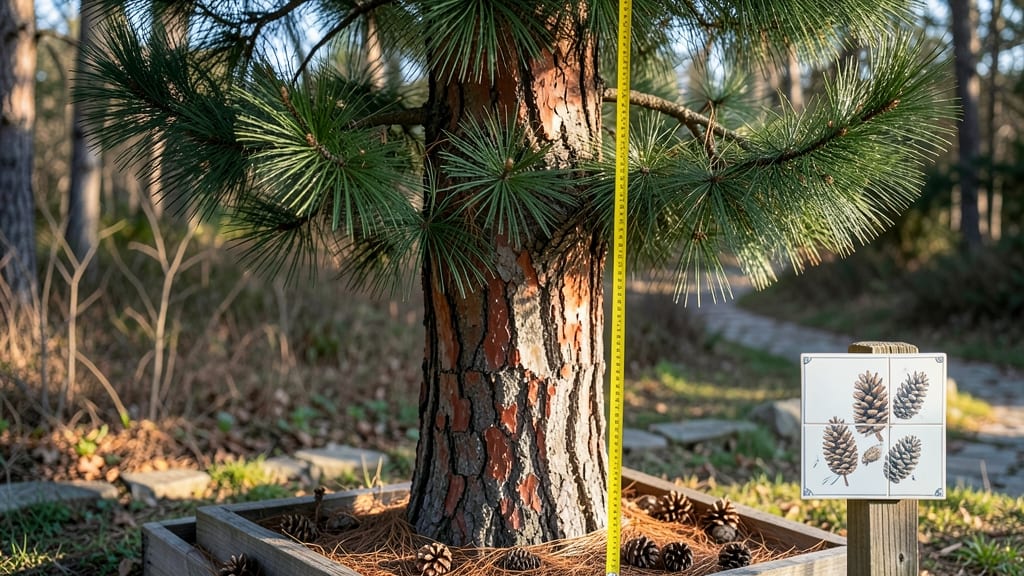
How Tall Do Pine Trees Grow: Species-Specific Heights by Climate Zone

How To

How Tall Do Pine Trees Grow: Species-Specific Heights by Climate Zone

Pine trees—how tall does a pine tree grow?—range from dwarf varieties under 20 feet to towering giants over 200 feet, depending entirely on the species and growing conditions.

If you've ever wondered whether that towering pine in your neighborhood will one day block your skyline—or if your backyard dwarf pine will stay small forever—the answer lies in understanding species-specific growth patterns and climate influences.

Some pines, like the Ponderosa or Sugar Pine, can reach heights of 200 feet or more, while others, such as the Mugo Pine, max out around 10 feet.

The difference isn’t just genetics—soil quality, sunlight, and even pruning play a role in shaping how tall your 🌲 will grow.

In this guide, I’ll break down the height ranges of the most common pine species, how climate zones affect growth, and practical tips to control or encourage height—so you can plan your landscape with confidence.

Dwarf
10-20 ft
Container friendly
Semi-Dwarf
25-40 ft
Most popular
Standard
60-200 ft
Full orchard size

Pine tree height ranges by species: from dwarf to giant varieties

Choosing the right pine tree for your landscape means understanding their mature height ranges, which can vary from compact 5-foot shrubs to towering 200-foot giants. Each species has distinct growth patterns influenced by genetics, climate, and soil conditions.

Whether you're planning a privacy screen or a statement centerpiece, knowing these ranges helps you avoid future headaches like overgrown trees blocking views or power lines.

Pine trees grow at different rates too—some take decades to reach maturity, while others grow 2-3 feet per year in ideal conditions. The world's tallest pine, a Pinus longaeva (Bristlecone Pine) in California, stands over 160 feet tall and is over 5,000 years old!

Even slower-growing species like the Mugo Pine can live centuries while staying under 10 feet tall.

Species Mature Height (ft) Growth Rate (ft/year) Lifespan (years) Best For
Ponderosa Pine (P. ponderosa) 100-200 1-2 300-600 Large landscapes, forests
Eastern White Pine (P. strobus) 50-80 1-1.5 200-400 Backyards, windbreaks
Bristlecone Pine (P. longaeva) 30-50 (up to 160 ft wild) 0.1-0.5 1,000-5,000 Alpine gardens, containers
Mugo Pine (P. mugo) 3-10 (dwarf varieties) 0.2-0.5 100-300 Borders, rock gardens
Scots Pine (P. sylvestris) 40-60 0.5-1 200-300 Urban streets, parks
Lodgepole Pine (P. contorta) 40-80 0.5-1.5 150-300 Wildlife habitats, slopes
Japanese Black Pine (P. thunbergii) 20-40 0.3-0.8 100-200 Bonsai, coastal gardens
Virginia Pine (P. virginiana) 30-50 0.5-1

How climate zones affect pine tree growth: cold vs. warm regions

Climate zones dramatically influence how tall pine trees grow, with USDA hardiness zones dictating species selection and growth rates. In Zone 3 (Alaska, northern Canada), only cold-hardy species like Pinus sylvestris (Scots Pine) thrive, growing slowly to 30-50 feet due to short growing seasons.

Meanwhile, in Zone 9 (Florida, southern California), fast-growing Pinus palustris (Longleaf Pine) can reach 80-100 feet with ideal warmth and moisture.

Your local climate zone determines which pine species will not only survive but thrive and reach their full height potential.

For example, Pinus strobus (Eastern White Pine) in Zone 4-8 grows 50-80 feet tall, while Pinus ponderosa (Ponderosa Pine) in Zone 5-8 can tower 100-165 feet with ample sunlight and well-drained soil. These differences aren't just about height—they also affect growth speed and maintenance needs.

Species Climate Zone Mature Height Growth Rate Key Adaptation
Pinus strobus (White Pine) 4-8 50-80 ft 1-2 ft/year Cold tolerance, flexible branches
Pinus palustris (Longleaf Pine) 8-10 80-100 ft 2-3 ft/year Fire-resistant bark, deep roots
Pinus sylvestris (Scots Pine) 3-7 30-50 ft 0.5-1 ft/year Drought-resistant, slow-growing
Pinus ponderosa (Ponderosa Pine) 5-8 100-165 ft 1.5-2.5 ft/year Deep taproot, sun-loving
Pinus mugo (Mugo Pine) 3-7 10-20 ft (dwarf) 0.3-0.5 ft/year Compact growth, alpine hardy

In cold climates (Zones 3-5), pine trees prioritize survival over rapid growth. Species like Pinus sylvestris develop thick bark and slow growth rates to endure harsh winters, often reaching maturity in 50+ years.

Their height is directly tied to summer growing season length—shorter seasons mean slower vertical growth. Conversely, warm climates (Zones 8-10) accelerate growth, with species like Pinus elliottii (Slash Pine) growing 2-3 feet annually and reaching towering heights faster.

Soil quality also interacts with climate to influence pine height. In Zone 9, sandy soils (common in Florida) allow Pinus palustris to develop deep roots and grow tall, while Zone 4's rocky, nutrient-poor soils limit Pinus resinosa (Red Pine) to 60-75 feet.

Always test your soil's pH (4.5-6.0 ideal) and drainage—poor conditions can stunt even the hardiest species by 30-50% of their potential height.

Pruning plays a critical role in managing height across zones. In warm regions, regular pruning encourages bushier growth and controls height for landscape-friendly pines. In cold regions, minimal pruning preserves energy for winter survival.

For example, Pinus strobus in Zone 6 benefits from annual tip pruning to prevent overgrowth, while Pinus ponderosa in Zone 7 may need structural pruning every 3-5 years to maintain shape without sacrificing height.

If you're planting pines, always check your USDA zone and match it with species suited for your climate. A Zone

★★★★★5.0(2 reviews)
Categories How To