
How To
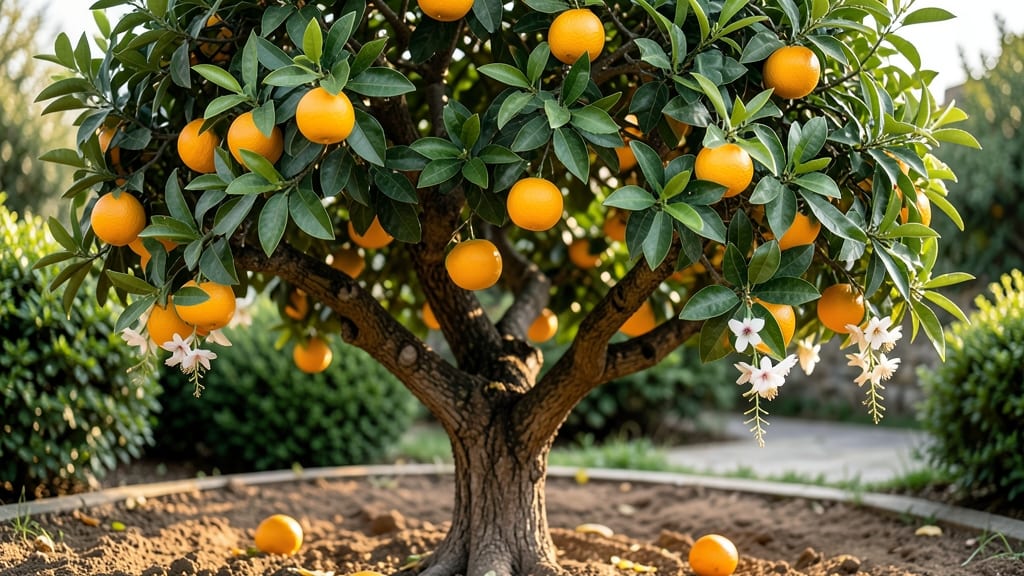
Wondering how tall does an orange tree grow? The height of an orange tree can range from 8 feet to over 40 feet, depending on the variety and care you give it.
If your backyard can accommodate a towering orange tree, you’re in for a rewarding experience—because the height of an orange tree isn’t just about space; it’s about choosing the right variety, climate, and care to get the sweetest harvest possible.
Standard varieties like Valencia or Navel can reach 20 to 40 feet in ideal conditions, while dwarf types stay under 12 feet, making them perfect for containers or small yards. Climate plays a role too—cooler zones may stunt growth, while tropical heat fuels rapid expansion.
In this guide, you’ll learn how to pick the perfect size for your space, control growth with pruning, and even speed up fruiting—so you can enjoy homegrown oranges without sacrificing your patio.


Orange tree height by variety: dwarf to giant sizes explained
Choosing an orange tree isn’t just about the sweet fruit—it’s about matching the tree height to your space. Standard varieties can reach 20-40 feet, while dwarf options stay under 12 feet.
The right choice depends on your garden layout, climate, and whether you’re growing in pots or in-ground.
Most orange trees grow 6-10 feet in their second year and reach maturity in 3-5 years. However, some varieties like Valencia oranges grow faster than Navel oranges. Understanding these differences helps you plan for pruning needs and fruit harvest efficiency.
If you’re growing dwarf Meyer lemon-oranges, expect a compact 8-12 foot tree perfect for container gardening. These varieties are grafted onto dwarfing rootstock like Citrus macrophylla or Poncirus trifoliata, keeping them manageable even in small spaces.
The semi-dwarf Navel orange is a great middle-ground option, reaching 12-18 feet while still fitting in most backyards. These trees require 10-12 feet of spacing to avoid crowding, which is crucial for airflow and sunlight—both critical for fruit production.
For larger properties, Valencia oranges grow 20-30 feet tall and need 15-20 feet of space. Their fast growth means they’ll fill out quickly, so plan for pruning early to shape the tree and encourage fruit-bearing branches.
Blood oranges typically reach 15-25 feet, making them ideal for ornamental gardens where height adds visual interest. Their deep red flesh is prized by chefs, but their size requires careful planning if you’re limited on space.
Standard Navel oranges are the tallest, growing 25-40 feet and needing 20-25 feet of clearance. These are best suited for rural settings or large estates where their giant stature won’t obstruct walkways or structures.
Remember, container growing can reduce height by 30-50%, but even dwarf varieties need proper root space. Use 5-gallon pots for young trees and upgrade to 15-gallon containers as they mature to prevent root-bound stress.
🌱
Climate zones and how they affect orange tree growth height
Your orange tree’s height isn’t just about genetics—it’s heavily influenced by your USDA hardiness zone. In zones 9-11, where frost is rare, standard varieties like Valencia oranges can reach 20-40 feet tall, while Meyer lemons (a cold-hardy relative) max out at 10-15 feet.
Outside these zones, growth slows dramatically, and trees may never reach their full potential without protection.
In USDA zone 8, where winter temps dip to 10-20°F, most citrus trees struggle unless you choose cold-hardy varieties or use microclimate strategies. Even then, growth rates drop by 30-50% compared to frost-free zones.
For example, a dwarf Navel orange in zone 10 might hit 8-12 feet, but the same tree in zone 8 could max out at 6-8 feet due to stunted winter growth.
Temperature extremes play a critical role in height control. In zone 10, where winters stay above 30°F, orange trees grow aggressively—sometimes 12+ inches per year. But in zone 8, cold snaps can kill new growth, forcing trees to focus energy on survival rather than height.
This is why Meyer lemons thrive in zone 8—they’re grafted onto trifoliate orange rootstock, which tolerates 20°F temps.
Seasonal changes also dictate pruning needs. In frost-free zones, you can prune year-round to control height, but in cooler zones, wait until late winter after the last frost risk.
Heavy pruning in cold climates can stimulate new growth that gets damaged by frost, so opt for light structural pruning to maintain shape without sacrificing winter hardiness.
For container-grown orange trees in zones 7 or colder, height is artificially capped at 4-6 feet due to root restrictions. However, even potted trees in zone 9 can reach 10-15 feet if not pruned.
The key is rootstock selection: Carrizo citrange keeps trees smaller, while sour orange rootstock encourages taller growth. Always match rootstock to your climate zone for best results.
If you’re in a transition zone (like zone 8b), consider winter protection like burlap wraps or frost cloth to preserve height. Without protection, your tree may only grow half as tall as its zone-10 counterpart.
For example, a Valencia orange in zone 8b with protection might hit 15 feet, while an unprotected tree could stay under 10 feet.
Remember: height isn’t everything. A shorter tree in zone 8 with heavy fruit production can yield more oranges than a tall, stressed tree in zone 11. Choose varieties and care strategies that prioritize fruit quality over size—your harvest will thank you! 🍊