
How To
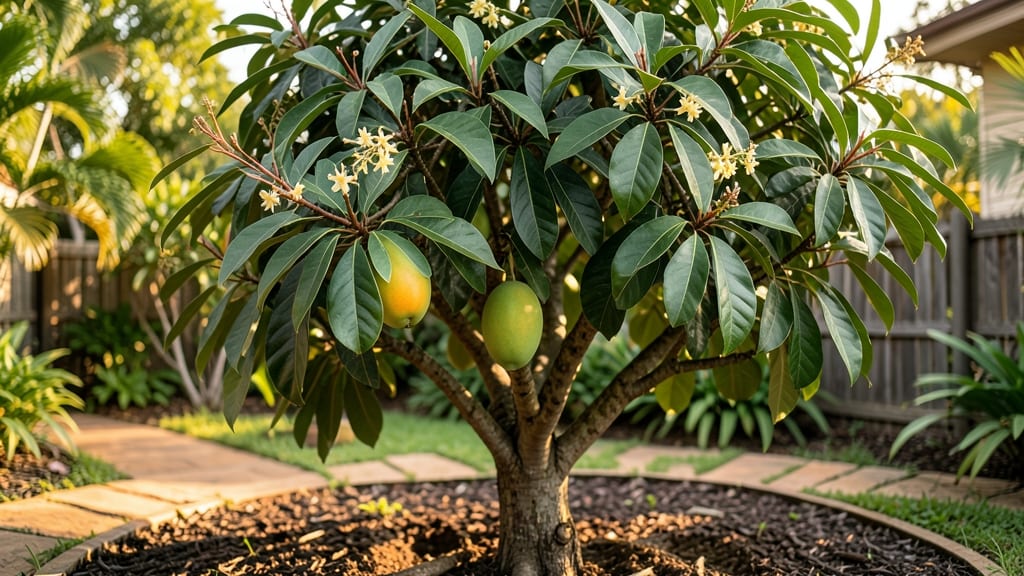
A mango tree can grow up to 60 feet tall—taller than a five-story building—if left unchecked, but the right variety and care can keep it manageable for your space.
If you're dreaming of lush tropical shade or a bountiful mango harvest, knowing your mango tree's potential height is critical—because some varieties stretch skyward like giants, while others stay compact enough for even small gardens.
Standard varieties reach 30-40 feet at maturity, making them perfect for large yards or orchards, while dwarf types top out around 15-20 feet, ideal for containers or urban patios.
Below, I break down height ranges by variety, how to control growth with pruning, and the best compact options for small spaces—so you can enjoy sweet 🥭 harvests without sacrificing your yard.


Mango tree height by variety: dwarf vs standard vs giant sizes explained
Choosing the right mango tree for your space starts with understanding height differences—because a 30-foot giant won't fit in your backyard like a 10-foot dwarf will. Varieties range from patio-friendly dwarfs to towering tropical giants that need acres.
Let's break down the height spectrum so you can pick the perfect match for your garden.
Mango trees grow at rapid rates—some varieties gain 3 feet yearly in ideal conditions. Dwarf types stay manageable, while standard and giant varieties demand serious space planning. The key? Variety selection and pruning strategies to control growth. Let's explore the height ranges that will shape your tropical oasis.
🌱 Did You Know? Some dwarf mangoes like 'Cogshall' reach 10-15 feet at maturity, while 'Keitt' giants can soar past 60 feet—taller than most two-story homes! Your choice affects everything from fruit accessibility to storm safety in windy climates.
If you're working with limited space, dwarf varieties like 'Julie' or 'Ice Cream' stay under 12 feet—perfect for containers or small patios. These compact mangoes produce fruit in 3-5 years while keeping their height manageable. Just ensure they get full sun exposure (6+ hours daily) to thrive.
For medium-sized yards, semi-dwarf varieties like 'Kent' reach 20-25 feet and offer a balance between manageable height and high yields. These need pruning annually to maintain shape and prevent overgrowth. I recommend pruning in late winter before new growth begins.
Standard varieties dominate landscapes with 30-foot canopies, making them ideal for rural properties. The Keitt and Palmer varieties fall into this category, requiring regular pruning to keep branches from encroaching on power lines or roofs. Always leave the central leader intact to maintain structural integrity.
Giant mango trees like 'Haden' or 'Tommy Atkins' grow 40-60 feet tall—these are not for suburban gardens! They demand wide-open spaces and professional care. In tropical climates, these giants thrive but may need storm support due to their height and weight.
Your mango tree's final height depends on 3 key factors: variety, pruning practices, and growing conditions. Even dwarf varieties can grow taller if not pruned properly. I always recommend spreading roots with a 5-gallon container for the first year to encourage stronger root systems before transplanting.
Pro tip: Plant dwarf varieties 10-15 feet from buildings, while standard trees need 30+ feet of clearance. Giant varieties should be planted in open fields with no obstructions. Always check local building codes regarding tree proximity to structures.
🌳 Whether you choose a compact mango for your balcony or a towering giant for your tropical estate, understanding these height ranges ensures your tree thrives—and stays within your space constraints!
How to control mango tree height: pruning tips for small spaces
Managing a mango tree's height is essential for small gardens or urban spaces where towering giants won't fit. With the right pruning techniques, you can keep your tree at a manageable 6-10 feet while still enjoying sweet fruit.
The key is timing—prune during dormant seasons or right after harvest to avoid stressing the tree.
Before grabbing your shears, gather the right tools: sterilized pruning shears, sharp loppers, and a pruning saw for thicker branches. Always disinfect tools with rubbing alcohol to prevent disease spread. Safety first—wear gloves and eye protection, especially when working with taller branches.
Step-by-Step Pruning Guide
- 🌱 Step 1: Identify Target Branches
Remove suckers (shoots at base) and water sprouts (vertical growth) first. These compete for nutrients and encourage bushier growth. - ✂️ Step 2: Cut at the Right Angle
Make cuts 45 degrees above a bud or branch collar. Avoid leaving stubs, which invite disease. Use sharp tools for clean cuts. - 🌿 Step 3: Shape the Canopy
Aim for an open-center shape to improve airflow and sunlight penetration. Remove crossing branches and those growing inward. - 🌳 Step 4: Thin Out Overgrowth
Selectively remove 1/3 of the tree's foliage to reduce height. Focus on vertical growth at the top to control upward expansion. - ☀️ Step 5: Post-Pruning Care
Apply wound sealant to large cuts (over 1 inch) to prevent decay. Water deeply and fertilize lightly with a balanced NPK 10-10-10 to support recovery.
For dwarf varieties, pruning is minimal—just remove dead or diseased branches. But for standard or tall varieties, annual pruning in late winter or early spring keeps them in check. Avoid heavy pruning during fruit-bearing seasons, as it can reduce yields.
Pro tip: Use a ladder or pole pruner for higher branches to avoid falls. If your tree is near power lines or structures, hire a professional arborist for safety. Remember, patience is key—mango trees respond best to gradual height adjustments over time.
With consistent pruning, your mango tree will stay fruit-bearing and manageable, even in tight spaces. Happy pruning—your future mango harvest depends on it! 🥭