
How To
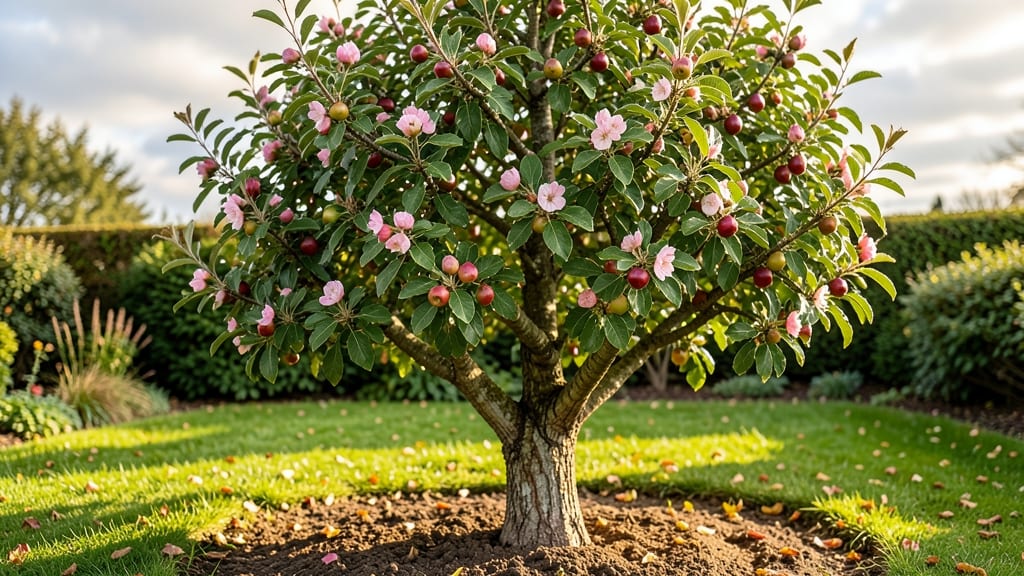
A crab apple tree 🍎 can grow anywhere from 10 to 25 feet tall, depending on the variety you choose and how you care for it.
If you're dreaming of a stunning shade tree with fragrant blooms and edible fruit—but don’t want a towering giant—crab apple trees offer the perfect balance. But how tall will yours grow?
The answer depends on whether you pick a dwarf, semi-dwarf, or standard variety, with some reaching 30 feet while others stay compact at just 10 feet.
Fast-growing varieties like 'Adams' can shoot up 3 to 4 feet per year, while slower types like 'Dolgo' mature at a more manageable pace. Pruning habits and growing conditions also play a big role in keeping your tree at your desired height.
Below, I’ll break down the height ranges by variety, share pruning tips to control growth, and explain the 5 key factors that affect how tall your crab apple tree becomes.


Crab apple tree height ranges: fastest-growing varieties explained
Choosing a crab apple tree isn’t just about the fragrant spring blooms or ornamental fruit—it’s also about understanding mature height. Some varieties grow aggressively tall, while others stay compact and manageable.
The fastest-growing types can add 3-5 feet per year in ideal conditions, but size depends heavily on the variety you select and your pruning approach.
If you’re working with limited space, dwarf varieties like 'Dolgo Crabapple' or 'Centennial' are perfect. These stay under 12 feet at maturity, making them ideal for small yards or containers.
On the other end, standard varieties like 'Adams' or 'Sargent' can reach 25-30 feet, offering full shade and wildlife benefits.
Below is a comparison of 10 popular crab apple varieties, ranked by growth speed and mature height. I’ve included growth rates, ideal spacing, and best uses to help you pick the perfect fit for your garden.
The 'Dolgo Crabapple' is one of the fastest-growing dwarf varieties, reaching 10 feet in just 5 years with minimal pruning. Its compact size makes it perfect for balcony gardens or patio containers, yet it still produces abundant fruit.
If you’re after quick shade, the 'Adams' variety grows 3-4 feet per year and can top 25 feet in 7-8 years.
For medium-sized yards, 'Royalty' and 'Golden Hornet' strike a balance, growing 15-20 feet while offering vibrant fall color and wildlife benefits. These varieties are also disease-resistant, making them low-maintenance choices for busy gardeners.
If you’re planting near a fence or property line, consider 'Sargent'—it’s one of the tallest and fastest-growing options, but its vigorous growth means you’ll need to prune annually
How to control crab apple tree height: pruning tips for compact growth
Want to keep your crab apple tree at a manageable height without sacrificing its beauty? Pruning is the key to controlling growth and maintaining a compact shape. By using the right techniques and timing, you can encourage slower vertical growth while promoting a fuller canopy.
The best part? You can start shaping your tree as early as its first year and adjust as it matures.
Pruning isn’t just about cutting branches—it’s about understanding how your tree responds to different cuts. For example, heading cuts (trimming back the tips of branches) slow down height growth by redirecting energy to lateral branches.
Meanwhile, crown thinning removes overcrowded branches to improve airflow and light penetration. Let’s break down the exact steps to achieve your desired height, whether that’s a 10-foot dwarf or a 15-foot semi-dwarf.
When to prune: The ideal time is late winter or early spring (just before buds swell) or summer after fruiting. Avoid heavy pruning in fall or winter when the tree is dormant, as this can stress the plant. For young trees, you can do light pruning throughout the growing season to guide their shape early on.
For young crab apple trees, focus on establishing a strong structure by removing competing leaders (competing vertical stems) and encouraging a single central leader. If you’re dealing with an overgrown tree, prune in stages over 2-3 years to avoid shocking the plant.
Never remove more than 25% of the canopy in a single year.
Remember, pruning isn’t just about height control—it’s also about tree health and fruit production. A well-pruned crab apple tree will have better airflow, fewer pests, and more abundant blooms.
With consistent care, you can keep your tree at your desired height while enjoying its stunning spring blossoms and ornamental fruit year after year.
Start with these techniques, and you’ll be well on your way to a compact, healthy crab apple tree that fits perfectly in your landscape. Happy pruning!