
Propagation
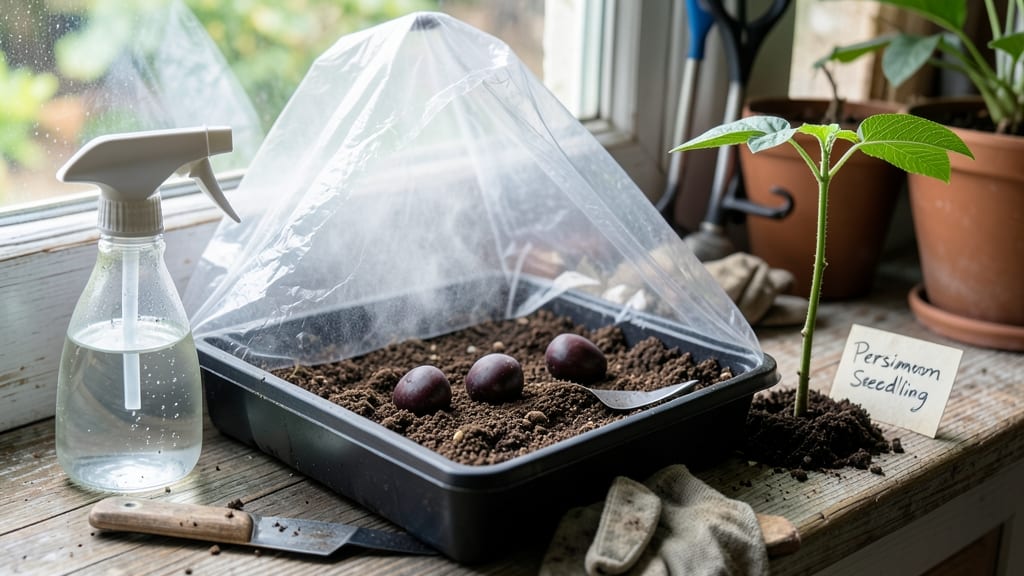
Starting a persimmon tree from seed unlocks nature’s slow magic—just don’t expect fruit for a decade. 🌱 The key is cold stratification, a process that mimics winter’s slow prep work in the soil before germination even begins.
I’ve grown three from seed, and while they’re stubborn starters, the payoff is worth the wait: a tree that thrives with minimal fuss once established.
The secret lies in patience and timing. After scooping out the flat, seed-like fruit from a ripe persimmon (yes, you can eat the rest), you’ll need to chill the seeds for 60-90 days in damp sand or a plastic bag in the fridge.
This tricks the seed into thinking winter has passed, breaking its dormancy so it’ll sprout when you plant it in spring. Most seeds germinate within 2-4 weeks after planting—though some take months.
Once sprouted, keep the young seedling in bright, indirect light and moist (not soggy) soil. It’ll grow slowly at first, but within 2-3 years, you’ll have a sturdy sapling ready for transplanting outdoors.
The real reward? A tree that can live for centuries, bearing fruit decades after you planted that first seed. It’s gardening at its most rewarding—and slowest.
Fair warning: Seed-grown persimmons may not fruit for 8-12 years, and the fruit might not match the parent tree’s quality. But the journey? That’s the point. Here’s how to make it work without losing your patience—or your seeds.
Seed Dormancy Barriers Explained
Understanding why persimmon seeds struggle to sprout starts with recognizing the natural defenses built into their lifecycle. Persimmons are no exception to the rule that many tree seeds rely on dormancy mechanisms to survive harsh conditions and time their germination for optimal growth.
Here’s why your seeds might be sitting idle—and how nature designed it that way.
Persimmon seeds are encased in a hard, woody seed coat that acts as a protective barrier against predators, disease, and premature germination. This coat is rich in lignin and other complex polymers, making it nearly impermeable to water and oxygen—two critical ingredients for sprouting.
Why it happens:
- Physical blockage: The seed coat prevents water from penetrating the embryo, stalling hydration.
- Gas exchange limits: Oxygen can’t reach the seed, halting cellular respiration needed for growth.
- Mechanical resistance: Even if moisture seeps in, the coat may not soften enough for the radicle (root) to emerge.
Actionable insight: This dormancy ensures seeds only germinate when conditions are ideal—typically after a winter chill period mimics natural forest floor cycles. Without intervention, your seeds might wait years (or never sprout) unless you replicate this process.
Inside the persimmon seed, abscisic acid (ABA)—a plant hormone—acts as a germination inhibitor. ABA levels are high in freshly harvested seeds, suppressing growth until environmental cues (like cold stratification) signal it’s safe to sprout.
Why it happens:
- ABA dominance: High ABA concentrations block enzymes that break down stored nutrients (like starches) in the seed.
- Gibberellin imbalance: Low levels of gibberellins (GA), which promote seed germination, keep the embryo dormant.
- Metabolic stall: The seed’s mitochondria (energy producers) remain inactive without proper stratification.
Actionable insight: ABA levels naturally decline during cold, moist conditions (like winter). Artificial stratification mimics this by reducing ABA and increasing GA production, tricking the seed into thinking spring has arrived.
Persimmons are non-dormant but after-ripening seeds, meaning they need a period of cold, moist exposure to complete their developmental readiness. This process, called stratification, isn’t just about breaking dormancy—it’s about reprogramming the seed’s internal clock.
Why it happens:
- Enzyme activation: Cold temperatures activate hydrolases, enzymes that soften the seed coat and mobilize stored nutrients.
- Hormonal shift: Stratification reduces ABA while increasing ethylene and GA, priming the seed for germination.
- DNA repair: Prolonged cold exposure may repair minor damage from desiccation, improving viability.
Actionable insight: Skipping stratification is like trying to bake a cake without preheating the oven—the seed lacks the energy and signals to germinate. Without it, you might see mold, rotting, or no germination at all.
Persimmon seeds have a narrow temperature window for successful stratification. Too warm, and dormancy persists; too cold, and the seed’s cellular machinery freezes.
Why it happens:
- Optimal range: Ideal stratification temps hover around 35–45°F (2–7°C). Above 50°F (10°C), ABA stays dominant; below 30°F (-1°C), cellular damage occurs.
- Metabolic slowdown: At high temps, seeds may prematurely use up stored energy without breaking dormancy.
- Microbial risks: Warm, damp conditions can foster fungal or bacterial growth, rotting the seed before germination.
Actionable insight: Use a refrigerator (not freezer!) for stratification—never room temperature. Consistency is key; fluctuations can confuse the seed’s internal cues.
Pro Tip: 💡 Test a few seeds in different stratification methods (wet vs. dry, sand vs. peat moss) to see what works best for your climate. Persimmon seeds vary by species—some (like American persimmons) are more finicky than others!
Fixing Common Seed-Germination Hurdles
Growing a persimmon tree from seed is a rewarding but sometimes finicky process—especially when seeds refuse to sprout or seedlings struggle early on. The good news? Most issues have simple, science-backed fixes.
Below, we break down the most common problems and how to turn them around, plus prevention tips to keep your little saplings thriving.
Cause: Persimmon seeds need cold stratification (a winter-like chill) to break dormancy. Without it, they may sit stubbornly dormant for months—or never sprout at all.
How to Fix It:
- Cold Stratify Properly 🥶
- Place clean, dry seeds in a damp paper towel or peat moss.
- Seal them in a plastic bag with a few air holes, then refrigerate for 60–90 days at 34–40°F (1–4°C).
- Pro Tip: 💡 Label the bag with the date to track progress—some varieties need longer chilling!
- Warm Them Up 🔥
- After stratification, sow seeds ½-inch deep in a warm, moist seed-starting mix (65–75°F).
- Keep soil consistently damp (not soggy) and place in bright, indirect light.
- Patience is Key ⏳
- Germination can take 3–6 months—longer than most seeds! If nothing happens in 6 months, the seeds may be nonviable.
Prevention Tips:
- Test viability by cutting open a seed—if the inside is brown or moldy, toss it.
- Use fresh seeds (store-bought or just-harvested) for best results.
Cause: Overly wet or poorly sterilized soil creates the perfect breeding ground for mold, which can rot seeds before they sprout.
How to Fix It:
- Adjust Moisture Levels 💧
- Use a well-draining mix (50% peat moss, 30% perlite, 20% vermiculite).
- Water only when the top inch of soil feels dry—never let seeds sit in standing water.
- Sterilize Your Setup 🧼
- Wash containers and tools with 1 part bleach to 9 parts water, then rinse well.
- Add a fungicide (like mycorrhizal powder) to the soil mix for extra protection.
- Improve Airflow 🌬️
- Cover trays with clear plastic wrap (to retain humidity) but prop it open slightly for ventilation.
- Avoid stacking trays—this traps moisture and encourages mold.
Prevention Tips:
- Use a fan on low setting near seedlings to prevent dampness.
- Discard moldy seeds immediately—don’t risk spreading spores.
Cause: Overwatering, poor light, or nutrient deficiencies can weaken young persimmon saplings.
How to Fix It:
- Check Watering Habits 💦
- Underwatering? Soil should stay evenly moist (like a damp sponge).
- Overwatering? Yellow leaves + mushy stems = root rot. Let soil dry slightly between waterings.
- Boost Light Exposure ☀️
- Move seedlings to a south-facing window or under grow lights (12–14 hours/day).
- Lack of light causes leggy, weak stems—rotate trays weekly for even growth.
- Fertilize Gently 🌱
- Wait until seedlings have 2–3 true leaves before using a balanced, diluted fertilizer (5-5-5 or 10-10-10 at ¼ strength).
- Warning: 🚨 Too much fertilizer burns tender roots—start small!
Prevention Tips:
- Use clear containers to monitor root health—white, fibrous roots are good; black/mushy roots are bad.
- Hardening off (acclimating seedlings to outdoor conditions) before transplanting reduces shock.
Cause: Tiny pests like fungus gnats, aphids, or spider mites love young, tender persimmon leaves.
How to Fix It:
- Spot Treat Infestations 🦟
- Fungus gnats: Let soil dry slightly between waterings and add sand to the top layer to deter eggs.
- Aphids: Spray with soapy water (1 tsp mild soap + 1 quart water) or introduce ladybugs.
- Spider mites: Wipe leaves with a neem oil solution (1 tsp neem oil + 1 quart water).
- Prevent Future Pests 🛡️
- Quarantine new plants for 2 weeks before adding to your seedling collection.
- Encourage beneficial insects like lacewings by planting dill or marigolds nearby.
Prevention Tips:
- Inspect leaves daily—catch pests early when they’re easiest to remove.
- Avoid overcrowding seedlings, which creates humid microclimates pests love.
Cause: Persimmon seedlings are sensitive to temperature swings, root disturbance, or poor soil after sprouting.
How to Fix It:
- Gradual Acclimation 🌡️
- If moving outdoors, harden off seedlings over 7–10 days: start with 1 hour outside, then increase daily.
- Choose a warm, sunny day (above 50°F) for transplanting.
- Use the Right Soil 🏺
- Persimmons thrive in well-draining, slightly acidic soil (pH 5.5–6.5).
- Mix compost into native soil to improve fertility and structure.
- Support Early Growth 🌱
- Young trees benefit from a light mulch (wood chips) to retain moisture and regulate temperature.
- Stake if needed, but avoid tying too tightly—persimmons can be brittle.
Prevention Tips:
- Transplant on a cloudy day to reduce stress from direct sun.
- Water deeply after transplanting to help roots establish.
Persimmon seeds are nature’s slow players—they demand patience, but the payoff is worth it.
By addressing these common issues head-on, you’ll give your seedlings the best shot at growing into a healthy, fruit-bearing tree. 🌟 Keep a growth journal to track progress, and soon you’ll be harvesting sweet persimmons straight from your own backyard!
(Need more troubleshooting? Drop your specific issue in the comments—we’re happy to help!)
Frequently asked questions
Why do persimmon seeds need cold stratification?
Persimmon seeds have a hard outer shell and natural dormancy that prevents premature sprouting. Cold stratification (mimicking winter) softens the seed coat and triggers internal chemical changes that signal it's time to grow. Without this process, seeds may stay dormant for months—or never sprout at all!
How long should I keep persimmon seeds in the fridge?
Most persimmon seeds need 60-90 days of cold stratification at 34-40°F (1-4°C). American persimmons often require the full 90 days, while Asian varieties may need only 60 days. Always label your containers to track progress—some seeds may take longer!
Can I grow a persimmon tree from store-bought fruit?
Yes! Just save the flat, seed-like fruits from ripe persimmons (the ones that feel soft when gently squeezed). Remove the seeds, clean them, and follow the stratification process. Store-bought persimmons work fine—just avoid seeds from unripe or overly soft fruit, as they may not be viable.
How deep should I plant persimmon seeds?
Plant persimmon seeds ½-inch deep in well-draining soil. They don't need to be buried deeply—they just need enough coverage to stay moist while germinating. Use a light potting mix (like peat moss and perlite) to prevent rot and ensure good airflow.
Will my seed-grown persimmon tree bear fruit?
Seed-grown persimmons may take 8-12 years to bear fruit, and the quality might differ from the parent tree. However, with proper care, your tree will eventually produce fruit! For faster fruiting, consider grafting later, but the journey of growing from seed is incredibly rewarding.