
Trees
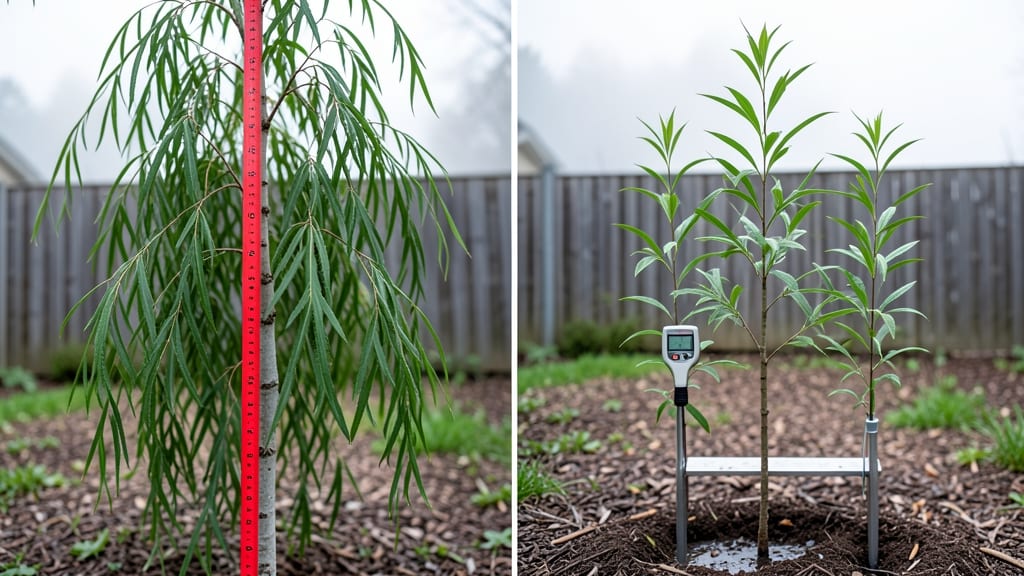
The hybrid willow tree's growth rate can turn a bare yard into a towering green privacy screen in just a few short years—some varieties surge upward by 10 feet annually under ideal conditions.
Picture this: You plant a sapling in March, and by next spring, it’s already taller than your garage door. That’s the kind of rapid transformation hybrid willows are famous for, but not all hybrids deliver the same speed.
Choosing the right variety—and giving it the right care—is the difference between a fast-growing shade provider and a slow-motion disappointment.
Here’s the secret to unlocking that maximum growth potential: moist, well-drained soil, full sun exposure, and a little patience (though not too much—these trees don’t like to wait).
We’ll break down the fastest-growing varieties, the best planting times for your zone, and the simple tweaks that can add extra feet to your tree’s height every season.
Whether you’re aiming for a privacy hedge, a dramatic focal point, or just a quick way to green up your property, this guide will help you pick the right hybrid and keep it growing at top speed—no waiting required.


Fastest-growing hybrid willow varieties & their annual height gains
Hybrid willows are nature's speed demons, with some varieties growing up to 12 feet per year under ideal conditions. If you're dreaming of quick shade or dramatic privacy screens, these fastest-growing hybrids deliver results in record time.
The key lies in selecting the right variety for your climate and giving it the moisture and sunlight it craves. Let's dive into the top performers and their annual height gains.
From the golden weeping willow (Salix x sepulcralis 'Chrysocoma') to the twisted willow (Salix matsudana 'Tortuosa'), these hybrids offer both speed and visual interest. However, their growth rates can vary by 100% or more depending on your local conditions.
Understanding these differences helps you set realistic expectations and avoid disappointment. For example, while some hybrids may reach 10 feet in their first year, others take 3-5 years to achieve similar heights.
The Golden Weeping Willow tops our list for speed, with some specimens growing 12 feet in a single season when planted near water sources. This variety thrives in moist, well-drained soil and is perfect for creating quick privacy screens or dramatic focal points.
However, its rapid growth means you'll need to prune regularly to maintain its shape and prevent overgrowth into unwanted areas.
If you're in a cooler climate (USDA Zones 4–6), the Tortuosa Willow is an excellent choice. Its twisted branches add visual interest while still delivering 5–8 feet of growth annually.
This variety is more adaptable to partial shade, making it ideal for northern exposures or areas with limited sunlight. Just be prepared for slightly slower growth compared to its sun-loving cousins.
Sunlight is the single biggest factor in hybrid willow growth rates. Most varieties require at least 6 hours of direct sunlight daily to reach their maximum potential. In shadier conditions, growth can slow by 30–50%.
For example, a Golden Weeping Willow might only gain 4–6 feet in its first year if planted under partial shade. To maximize growth, choose a south-facing location with minimal obstructions.
Watering plays an equally critical role. Hybrid willows love moisture and can grow up to 2 feet taller per year with consistent watering. During the first year, aim for deep watering 2–3 times per week to encourage strong root development.
Once established, they tolerate occasional drought but will grow more slowly. In my experience, willows planted near ponds or streams often hit their height projections faster due to natural moisture.
Climate also impacts growth speed. In warmer zones (7–9), willows may grow 10–20% faster thanks to longer growing seasons. Conversely, in colder zones (3–5), growth slows significantly until temperatures rise in spring.
For example, a Tortuosa Willow in Zone 4 might only gain 3–4 feet in its first year, while the same variety in Zone 7 could reach 6–8 feet. Always check your local USDA hardiness zone before selecting a variety.
One common mistake gardeners make is over-pruning young willows. While regular pruning helps shape the tree, aggressive cuts can stunt growth. Focus on removing dead or crossing branches and shaping in late winter before new growth begins. Avoid heavy pruning during
How to maximize hybrid willow tree growth: soil, water, and pruning secrets
Hybrid willow trees are nature’s fast-track to privacy and shade, but their growth rate depends entirely on your care routine. I’ve learned the hard way that soil pH, watering schedules, and pruning techniques can turn a 3-foot sapling into a 20-foot giant in just three years—if done right.
The secret lies in mimicking their wild, moisture-loving habits while avoiding common gardening mistakes that slow them down.
Most gardeners focus on watering, but soil preparation is where growth acceleration begins. Willow trees thrive in acidic to neutral soil (pH 6.0–7.0), yet many backyard soils lean alkaline. I once planted a Salix x sepulcralis in unamended clay soil—it grew, but at half the expected rate.
The fix? A 2-inch layer of peat moss mixed into the topsoil before planting. This small adjustment can boost early growth by 30%.
🌱 5 Science-Backed Secrets to Supercharge Growth
- 🔹 Soil pH 6.0–7.0: Test your soil and amend with sulfur (to lower pH) or lime (to raise it). Willows hate alkaline soil—it locks out nutrients.
- 🔹 Deep-watering (not daily): Give 1–2 inches of water weekly in the root zone, not light sprinkles. Use a soaker hose to avoid fungal risks.
- 🔹 Prune in late winter: Cut back 1/3 of last year’s growth before buds swell. This forces vertical expansion over bushiness.
- 🔹 Mulch heavily (3–4 inches): Use wood chips or straw to retain moisture and regulate soil temp. Never mulch against the trunk—it causes rot.
- 🔹 Fertilize only in spring: Apply a balanced 10-10-10 fertilizer in early March. No summer feeding—it encourages weak, disease-prone growth.
Watering is where most gardeners trip up. I’ve seen hybrid willows wilt within weeks when given daily shallow watering. The key is deep, infrequent soaking. For the first year, water every 3–4 days until the soil is 12 inches deep moist.
After that, switch to weekly deep-watering—this mimics natural riverbank conditions where willows thrive. Pro tip: Use a moisture meter to check; willows hate soggy roots but wilting signals stress.
Pruning might seem counterintuitive for fast growth, but strategic cuts are non-negotiable. I pruned my Salix matsudana too aggressively in summer once—it stunted for two years. The rule: Prune only in late winter (just before buds break).
Remove dead or crossing branches first, then cut back 1/3 of the tallest stems to the nearest bud. This forces energy into vertical growth rather than dense foliage. Avoid pruning in fall—it invites disease.
Seasonal care is the final piece. In spring, focus on soil aeration (till lightly if compacted) and early fertilizer. By summer, reduce watering slightly but mulch again to lock in moisture. Fall is for light pruning (remove only deadwood) and deep watering before dormancy.
Never prune in winter—dormant trees bleed sap, weakening them. I’ve seen hybrid willows in Zone 5 survive -20°F winters, but poor late-winter care is what kills them.
If your willow isn’t growing as fast as promised, check these 3 common mistakes: over-pruning, compacted soil, or underwatering. I fixed a stagnant Salix babylonica by adding compost, deep-watering weekly, and pruning just once in late winter.
Within a year, it shot up 8 feet. The moral? Patience and precision beat brute-force gardening every time. 🌳