
Size
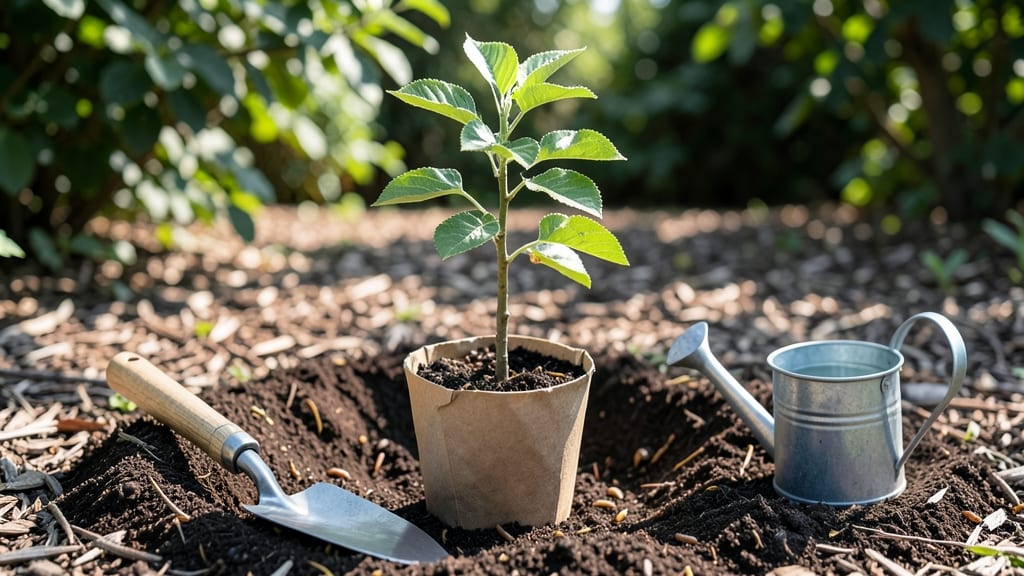
If you plant an apple seed, a tree will grow—but it may take 5–10 years to bear fruit, and the apples won’t resemble the parent variety. Genetic unpredictability and cross-pollination create wildly different results compared to nursery-grown trees.
When you plant an apple seed, you’re starting with a tiny piece of genetic potential rather than a guaranteed fruit producer. 🌱 The seed contains the embryo of a new tree, but its growth depends on breaking through dormancy—a natural pause that can last months.
Once sprouted, the seedling develops roots first, then shoots, and eventually a trunk, but the journey to fruit-bearing takes patience. What’s fascinating is how the resulting tree may produce apples with entirely different colors, shapes, or flavors than the original—thanks to genetic recombination during pollination.
This process explains why gardeners often choose grafted nursery trees instead.
Grafting combines the roots of a hardy rootstock with a scion (a branch from the desired apple variety), ensuring the fruit matches what you planted. 🍏 While seed-grown trees offer a fun experiment, they’re far less reliable for consistent harvests.
If you’re eager for apples, starting with a grafted tree from a reputable nursery gives you control over the outcome—and faster results.
💡 In This Article
- How Apple Seeds Germinate and Develop Into Trees
- Best Alternatives to Seed-Grown Apple Trees for Reliable Fruit
How apple seeds germinate and develop into trees
The journey from seed to apple tree begins with a critical phase called dormancy, where the seed enters a resting state to survive harsh conditions.
Apple seeds contain two embryonic leaves (cotyledons) and a radicle (the future root), but they won’t sprout until exposed to cold stratification—typically 60-90 days at 35-45°F. This mimics winter’s chill, breaking down growth-inhibiting hormones like abscisic acid while activating enzymes that prepare the seed for germination.
Without this cold treatment, seeds may remain dormant indefinitely, even if planted in warm soil. 🌱
Once dormancy breaks, germination follows a precise sequence: the radicle emerges first, growing downward to establish roots within 7-14 days. Next, the shoot pushes upward, developing into the stem and leaves. At this stage, the seedling relies entirely on its stored energy (endosperm) until photosynthesis begins.
What’s surprising is how quickly genetic variability appears—even siblings from the same apple can produce trees with different fruit sizes, colors, or disease resistances. This occurs because apple trees are polyploid (often 3n or 4n chromosomes), making their offspring genetically diverse through meiosis.
The real magic—and frustration—happens during flowering. Apple trees are self-incompatible, meaning they need cross-pollination from another variety to produce fruit. If your seedling grows alone, it may flower beautifully but yield no apples. Even with pollinators, the fruit that does form often lacks the parent’s desirable traits.
For example, planting a seed from a Honeycrisp apple might produce a tree bearing tart, small apples with thin skins—nothing like the original. This genetic roulette explains why seed-grown trees are prized by breeders but frustrating for home gardeners. 🍎
Root development is another critical factor. Seedlings grow shallow, fibrous root systems that struggle in competition with weeds or drought. Unlike grafted trees, which inherit robust rootstock from disease-resistant varieties, seed-grown roots are vulnerable to rot or pests.
The trunk also takes years to harden—young trees are prone to splitting in storms or cracking under heavy fruit loads. These biological quirks mean seed-grown trees often require 3-5 years of care just to reach fruiting maturity, while grafted trees can bear apples in 2-4 years.
Consider this: the Malus domestica species (cultivated apple) has over 7,500 varieties, but only a fraction produce reliable fruit from seeds. Most commercial apples, like Granny Smith or Fuji, are propagated via grafting to preserve their exact traits.
The genetic unpredictability of seeds is what makes them fascinating for scientists studying plant evolution—but impractical for anyone wanting a predictable harvest. 🌿
For the curious gardener, this process offers a hands-on lesson in genetics. If you do plant a seed, choose a potted container first to monitor growth closely. Place it in a sunny spot with well-draining soil, and expect to wait 5-7 years before any fruit appears—if it does at all.
The patience required is part of the reward: a one-of-a-kind tree that tells a story of nature’s unpredictability. 💫