
Pruning
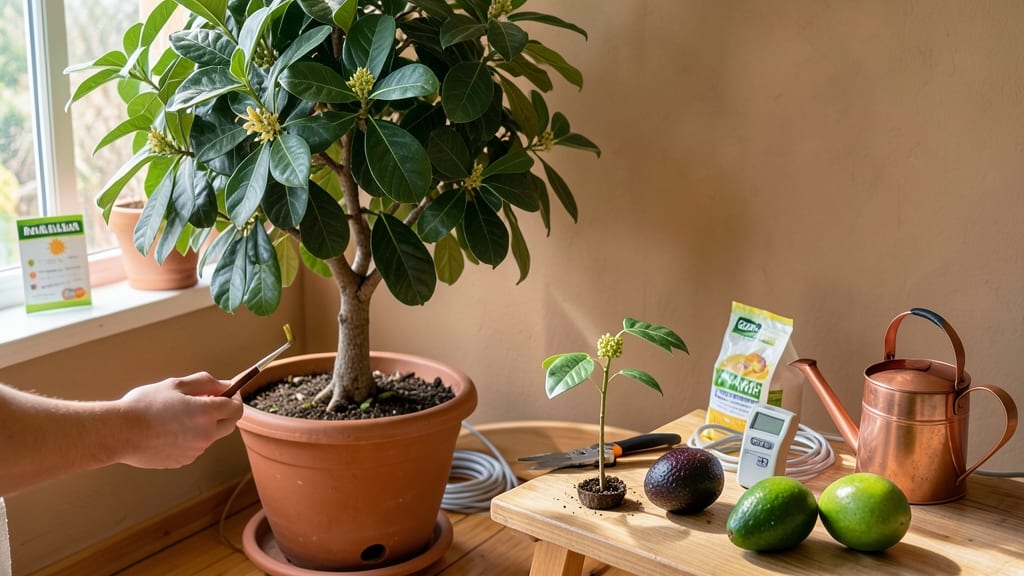
Getting your avocado tree to bear fruit isn’t about magic—it’s about understanding its quirks. 🌱 I’ve watched mine go from a stubborn sapling to a fruit-bearing beauty, and the secret lies in year-round pruning paired with the right growing conditions.
Most people give up after two years, but with patience and precision, you can trigger that first harvest in as little as 5 years (yes, it’s possible!).
The key starts with light: avocado trees need 6-8 hours of bright, indirect sunlight daily, whether indoors near a south-facing window or outdoors in partial shade. Combine that with warmth (70-85°F) and humidity (50%+)—and you’ve got the perfect recipe for flower buds.
Pruning isn’t just about shaping; it’s about encouraging the tree to focus energy on fruit production, not just leaves. I’ll show you exactly how to do it without killing your tree in the process.
By the end, you’ll have a tree that’s blooming reliably and holding onto its fruit instead of dropping it prematurely. The first harvest might be small, but each year after that? That’s when the real magic happens—baskets of buttery Hass avocados you’ll never want to buy again.
The best part? These tricks work for both indoor potted trees and outdoor garden varieties.
Fair warning: avocados are slow to fruit, but the payoff is worth every pruning session. Let’s turn that stubborn tree into a fruit-bearing powerhouse—step by step, with no guesswork.
📚 In This Guide
- What you need
- Instructions
- Tips and common mistakes
- Wrapping up and next steps
What you need
- ● Pruning shears: Sharp, bypass-style shears (for clean cuts on small branches). Quantity: 1 pair.
- ● Loppers: Heavy-duty (for thicker branches, up to 2" diameter). Quantity: 1 pair.
- ● Pruning saw: Curved-tooth saw for branches over 2" in diameter. Quantity: 1.
- ● Disinfectant (70% isopropyl alcohol or bleach solution): To sterilize tools between cuts. Quantity: Small bottle or spray.
- ○ Pruning sealant (optional): For large cuts (over 1" diameter) to prevent disease. Quantity: Small tube.
- ● Gloves: Cut-resistant gloves to protect hands. Quantity: 1 pair.
- ● Ladder or step stool: For reaching higher branches safely. Height: Adjustable to 8–12 ft.
- ● Marking twine or paint: To tag branches for future reference. Quantity: Small spool or bottle.
- ● Tree age: At least 3–5 years old (younger trees focus on growth, not fruit).
- ● Healthy tree: No signs of disease, pests, or nutrient deficiencies (check leaves for discoloration).
- ● Sunlight: 6+ hours of direct sun daily (avocados are sun-hungry!).
- ○ Well-draining soil: Mix in compost or perlite if soil is clay-heavy. Optional: pH test kit (ideal range: 6.0–7.0).
- ● Fertilizer: Balanced citrus/avocado fertilizer (e.g., 6-6-6 NPK ratio). Frequency: Every 2–3 months during growing season.
- ○ Pollination aid (optional): Small paintbrush or bee-friendly habitat to encourage cross-pollination if bees are scarce.
Step-by-Step guide to encouraging fruit production in avocado trees
Here's how I've learned to coax fruit from homegrown avocado trees—it's all about timing, pruning, and patience.
🌱 Step 1: Understand Your Tree's Growth Cycle and Light Needs
Avocado trees need full sun (6-8 hours daily) and warm temperatures to set fruit. If your tree isn't bearing, it might be getting too little light or inconsistent warmth. I always check leaf color first—healthy leaves should be deep green, not yellow or brown. If yours are pale, move it to a sunnier spot immediately.
Young trees (under 3 years) focus on growing leaves and branches, not fruit. Don't force it—wait until you see 3-4 years of steady growth before expecting fruit. This is when the tree has enough energy to produce flowers. I keep a growth chart to track progress, marking each spring's new branches.
✂️ Step 2: Prune Strategically to Encourage Flowering
Pruning is where the magic happens for fruit production. In late winter or early spring, remove dead, crossing, or weak branches first. Then, cut back any branches that grew too long last season by about 1/3 of their length. This redirects energy toward flowering rather than just leafy growth.
Here's the thing—I always prune just after a cold snap but before new growth starts. The tree uses stored energy from winter dormancy to produce flowers on new wood. If you prune too early, you remove potential fruit-bearing branches. If too late, the tree wastes energy on new leaves instead of flowers.
💧 Step 3: Water and Fertilize for Optimal Fruit Development
Consistent moisture is key, but don't drown the roots. Water deeply once a week during dry spells, letting the soil dry out slightly between waterings. I check by sticking my finger 2 inches into the soil—if it's dry, it's time to water. Overwatering leads to root rot and fewer flowers.
Feed your tree with a balanced fertilizer (6-6-6 or 8-8-8 ratio) in early spring and again in early summer. I avoid high-nitrogen fertilizers—they promote leafy growth at the expense of flowers. Instead, I use a fertilizer with slightly more phosphorus to encourage flowering. Always water after fertilizing to prevent root burn.
☀️ Step 4: Create the Right Conditions for Flowering
Avocado trees need a warm, dry period to trigger flowering. If your climate stays too wet or cool, the tree won't set fruit. In humid areas, I use a fan to improve air circulation around the tree, which helps dry the flowers and encourages pollination. Even a gentle breeze from a small fan placed near the tree works.
Watch for tiny, creamy-white flowers in clusters—this is your signal that fruit production is underway. If you don't see flowers after a year of proper care, your tree might need a rest. I sometimes reduce watering slightly in late summer to mimic a dry season, which can trigger flowering the following spring.
⏰ Step 5: Pollinate and Protect Developing Fruit
Avocado flowers are self-pollinating, but sometimes they need a little help. On a warm, dry day, gently shake the branches to release pollen. I do this in the morning when flowers are fully open. If you have multiple trees, bees will handle the job naturally, but a single tree might need this extra step.
Once fruit appears, protect it from pests like avocado lace bugs or mites. I inspect leaves weekly for tiny yellow spots or webbing. If you find pests, spray with neem oil or insecticidal soap. Remove any fruit that falls prematurely—this signals the tree to produce more next season.
Tips & tricks for year-round avocado fruit production
These practical insights will help you maximize your avocado tree's fruit-bearing potential without the guesswork.
Light and Location Insight: If your tree isn't getting the full 6-8 hours of sunlight daily mentioned in Step 1, consider moving it closer to a south-facing window indoors or relocating it to a sunnier outdoor spot. I've seen trees go from no fruit to heavy production just by moving them a few feet closer to direct sunlight. Watch for leaves turning pale yellow—this is your first warning sign of insufficient light. Also, keep in mind that avocado trees need warm temperatures to set fruit, so if you're in a cooler climate, consider growing your tree in a container that you can move indoors during winter months.
Pruning Precision: When you're cutting back those branches by about 1/3 of their length in Step 2, focus on removing branches that are growing inward or crossing each other. These competing branches waste the tree's energy that could be going toward flower production. I always make my cuts just above a leaf node or outward-facing bud—this encourages new growth in the right direction. And remember, the timing is everything: prune just after a cold snap but before new growth starts. This ensures your tree uses its stored energy for flowering rather than new leaves.
Watering Wisdom: The once-a-week deep watering in Step 3 works best when you check soil moisture first. Stick your finger 2 inches into the soil—if it's dry at that depth, it's time to water. I've found that morning watering is ideal because it gives the roots plenty of time to absorb moisture before the heat of the day. One trick I use is to water deeply but less frequently, which encourages deeper root growth. Shallow roots mean your tree is more susceptible to drought stress and less likely to produce fruit consistently.
Flowering Trigger: In Step 4, if you're not seeing those creamy-white flowers after a year of proper care, try this: reduce watering slightly in late summer to mimic a dry season. This stress can actually trigger flowering the following spring. I've also noticed that a gentle breeze helps—if you don't have natural wind, place a small fan near the tree for a few hours each day during flowering season. This improves air circulation and helps dry the flowers, which encourages pollination. And if you're hand-pollinating, do it on a warm, dry morning when flowers are fully open for best results.
Pro Tips for Get An Avocado Tree To Bear Fruit
- These practical insights will help you maximize your avocado tree's fruit-bearing potential without the guesswork.
- Light and Location Insight: If your tree isn't getting the full 6-8 hours of sunlight daily mentioned in Step 1, cons...
- Pruning Precision: When you're cutting back those branches by about 1/3 of their length in Step 2, focus on removing ...
Frequently asked questions
Got questions about growing avocados? You’re not alone—here are the most common ones, answered in a nutshell!
How long does it take for an avocado tree to bear fruit?
Patience is key! Most avocado trees take 3–5 years to bear fruit from seed, while grafted trees (bought from nurseries) may fruit in 1–3 years. Factors like sunlight, soil, and care speed up the process.
Can I grow an avocado tree indoors and still get fruit?
Indoor avocados can produce fruit, but it’s tricky. They need bright, indirect light (south-facing window or grow lights) and warmth (70–85°F). Outdoor trees thrive better, but dwarf varieties like ‘Wurtz’ can work inside with diligent care.
Why isn’t my avocado tree fruiting? Troubleshooting tips?
Common culprits:
- Not enough sunlight (avocados need 6+ hours of direct sun daily).
- Incorrect pollination (hand-pollinate with a brush if bees are scarce).
- Improper pruning (over-pruning reduces energy for fruit).
- Nutrient deficiency (test soil for nitrogen, potassium, and zinc).
What’s the best way to pollinate an avocado tree?
Avocados are self-pollinating, but cross-pollination boosts yields. Use a soft paintbrush to transfer pollen from one flower to another on the same tree (or another nearby). Do this early morning when flowers are fresh.
Can I grow multiple avocado trees for cross-pollination?
Planting two or more trees of different varieties (like ‘Hass’ and ‘Fuerte’) improves pollination and fruit set. Just ensure they’re within 50–100 feet of each other. Pro tip: Label your trees to track varieties!
What’s the fastest way to get fruit from a seed-grown tree?
Seed-grown trees are unpredictable, but you can speed things up by:
- Grafting a fruiting variety onto your seedling (requires skill or a pro).
- Using growth hormones (like ethephon) to trigger flowering (consult a local nursery first!).
- Ensuring consistent care (water, fertilizer, pruning).
Wrapping up and next steps
Growing an avocado tree that bears fruit is all about patience, consistency, and the right care—especially when it comes to pruning.
By following the techniques shared here, you’ll encourage stronger growth, better airflow, and those coveted avocados! 🌱 Start small, stay observant, and soon you’ll be enjoying homegrown fruit straight from your tree.
Ready to take the next step? Monitor your tree’s progress, adjust your pruning schedule as needed, and don’t hesitate to consult local gardening experts for tailored advice. Happy growing—your future harvest awaits! 🍈✨