
Pruning
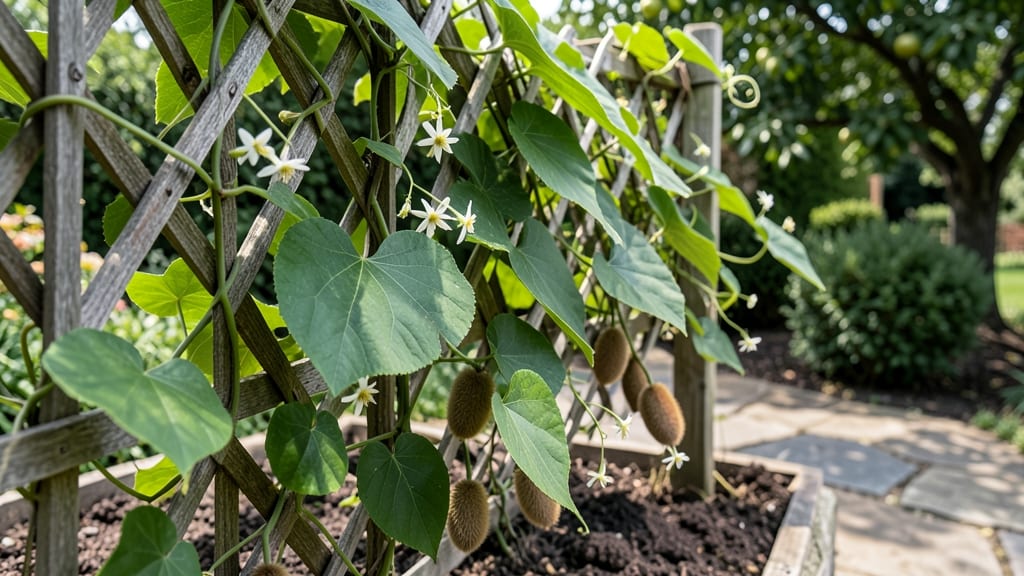
Kiwi grows as a vine, not a tree, climbing trellises or fences with woody stems that can reach 30+ feet long, though it’s often pruned to resemble a shrub for easier fruit harvesting. Its hardy, deciduous nature thrives in temperate climates with support structures.
This vine's climbing habit comes from its strong, woody canes that latch onto structures using tendrils—thin, curly stems that act like natural hooks. 🌿 Unlike trees, kiwi vines spread horizontally rather than growing vertically from a central trunk, which is why they need trellises or fences to reach their full potential.
The misconception about kiwi being a tree likely stems from how gardeners prune them into compact shapes, but botanically, it's a fast-growing perennial vine that can produce fruit for decades with proper care.
What's fascinating is how these vines adapt to their environment. In commercial orchards, they're trained along wires or strings to maximize sunlight exposure for the fruit, while home gardeners often use simple wooden trellises.
The key to successful growth lies in providing sturdy support early—without it, the vines sprawl uncontrollably, leading to poor fruit production and difficult harvesting.
💡 In This Article
- Kiwi Vine Anatomy: How Its Growth Differs From Trees
- Growing Kiwi Vines: Essential Support and Pruning Tips
Kiwi vine anatomy: how its growth differs from trees
The kiwi plant's botanical identity as a vine stems from its unique stem structure called woody canes, which function like branches but grow horizontally rather than vertically. These canes can reach 30+ feet in length when unchecked, developing a diameter of about 1-2 inches over time.
Unlike tree trunks, kiwi canes are flexible yet sturdy, allowing them to bend and climb while still supporting the plant's weight. The canes are covered in bark-like texture that thickens with age, giving them a woody appearance that might fool casual observers into thinking they're dealing with a tree.
What truly identifies kiwi as a vine is its use of tendrils—thin, curly stems that emerge from leaf axils and wrap around support structures like a natural hook-and-loop system.
These tendrils can extend up to 6-8 inches long and exert significant force (up to 10 pounds per square inch of contact), allowing the vine to scale trellises, fences, or even other plants.
The leaves, another key identifier, are oval-shaped with serrated edges and grow alternately along the canes, unlike the whorled or spiral patterns often seen on trees. This leaf arrangement maximizes sunlight exposure for the vine's energy production.
The vine's growth habit creates a stark contrast to trees, which develop a single central trunk that branches outward. Kiwi vines, however, produce multiple canes from the base each year, creating a dense network that spreads outward rather than upward.
This horizontal growth pattern explains why kiwi plants need extensive support systems—without proper trellising, the canes would sprawl across the ground, leading to poor fruit development.
The vine's ability to produce fruit along its entire length (rather than just at the tips of branches) also differs fundamentally from tree growth, where fruiting typically occurs on terminal buds.
Here's where pruning comes into play: gardeners often trim kiwi vines to create a shrub-like appearance by cutting back the canes to about 6-8 feet in height. This practice makes harvesting easier and encourages more compact growth, but it doesn't change the plant's fundamental vine nature.
The pruned form simply masks the vine's natural tendency to sprawl. Without regular pruning, a mature kiwi vine can become a 20-foot-long woody monster that dominates its space, producing fruit along its entire length but making maintenance difficult. 🌱
Another distinguishing feature is the vine's perennial woody stems, which persist year after year and continue growing from the base. These stems develop a corky bark that can become quite thick, similar to some small trees but with a fundamentally different growth pattern.
The bark's texture provides some protection against temperature fluctuations, which is crucial for kiwi's temperate climate requirements. This woody structure allows kiwi vines to survive harsh winters and regrow vigorously each spring, a trait shared with many perennial vines like grapes or wisteria.
The vine's growth mechanism also explains why kiwi plants produce fruit so prolifically when properly supported. Each cane can bear 50-100 fruits per season, with new canes emerging from the base annually. This contrasts with tree growth, where fruiting occurs primarily on established branches.
The vine's ability to generate new canes from the ground level means it can recover from damage or pruning more easily than trees, which rely on a single trunk system.
This resilience is one reason kiwi vines thrive in commercial orchards where they're trained along wires—it creates an efficient fruiting surface while keeping the plant manageable.
Understanding this vine anatomy helps explain why kiwi plants need such extensive support systems. Without proper trellising, the canes would sprawl across the ground, leading to poor fruit quality and difficult harvesting.
The vine's natural climbing habit evolved to maximize sunlight exposure for its leaves, which is why commercial growers use T-bar trellises or kniffin wires to create a three-dimensional growing space. This setup allows the vine to grow upward while still spreading horizontally, creating an optimal environment for fruit production. 🌿