
Pruning
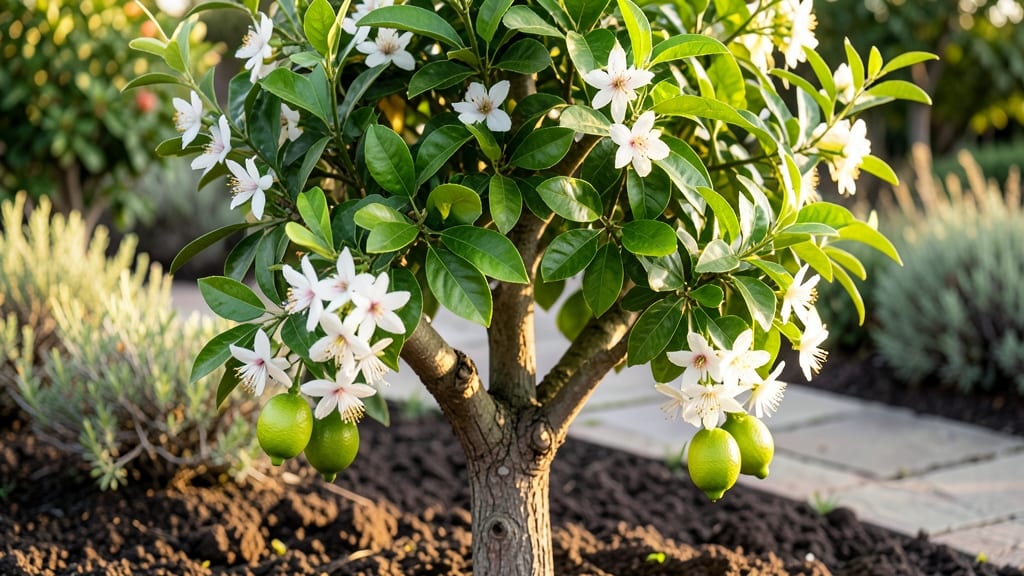
Your lemon tree’s floral beauty starts with the right shape—year-round pruning that turns winter branches into springtime blossom factories. 🌸 I learned the hard way that aggressive cuts backfire, but strategic trimming transforms bare stems into dense clusters of fragrant white flowers.
The secret lies in timing: prune after harvest, before new growth, and you’ll see buds forming within weeks.
Sunlight and water work together like a symphony for blooms. Lemon trees need 6+ hours of direct sun daily—no compromise—and consistent moisture without soggy roots. Overwatering drowns flowers, while drought stresses the tree into dropping buds.
I track soil moisture with my finger: if the top 2 inches feel dry, it’s time to water deeply. Fertilizer matters too—low-nitrogen, high-phosphorus blends (like 5-10-10) fuel flowering, not leafy growth.
By summer, those flowers turn into lemons—if you’ve avoided these common pitfalls. Thinning fruit early prevents overburdening branches (keep 6–8 lemons per tree). And watch for aphids: these sap-suckers distort buds.
A strong spray of water usually knocks them off, but neem oil works for stubborn infestations. The payoff? Trees that bloom twice a year with fewer gaps between harvests.
This works for both dwarf and standard lemon trees, from containers to backyard groves. Start with a single branch this season—you’ll see the difference in next year’s blossoms. The key is patience: lemon trees reward steady care, not quick fixes. Let’s get those branches shaping up!
📚 In This Guide
- What you need
- Instructions
- Tips and common mistakes
- Wrapping up and next steps
What you need
- ● Pruning shears: Bypass pruners (sharp, clean, and sterilized with rubbing alcohol to prevent disease). Size: 6–8 inches for precision.
- ● Loppers: For thicker branches (½ inch or larger). Quantity: 1 pair.
- ● Gloves: Heavy-duty, cut-resistant gloves (lemon trees have thorns!). Material: Leather or reinforced fabric.
- ● Disinfectant: 10% bleach solution (1 part bleach to 9 parts water) or hydrogen peroxide (3%) for sterilizing tools between cuts.
- ○ Pruning sealant: Optional but helpful for large cuts (e.g., Tanglefoot Tree Wound Pruning Seal). Quantity: Small jar (4–8 oz).
- ● Lemon tree: Mature tree (3+ years old) with healthy, established branches. Note: Avoid pruning young trees aggressively.
- ● Notebook & pen: To track pruning dates, cuts, and growth patterns.
- ● Extension pole: For high branches (10–12 ft, with adjustable head).
- ● Pruning saw: For very thick branches (if loppers aren’t enough).
- ● Plant food: Balanced fertilizer (e.g., 10-10-10) to nourish the tree post-pruning. Quantity: Small bag (5–10 lbs).
- ● Mulch: Organic mulch (e.g., wood chips) to retain moisture and protect roots. Thickness: 2–3 inches.
- ● Camera: To document before/after pruning (great for tracking progress!).
Year-round lemon tree shaping for maximum blooms
Here’s how to coax your lemon tree into continuous floral displays—no matter the season.
🌱 Step 1: Prune for Light Penetration in Late Winter
When new growth slows in late February or early March, grab your pruners and target branches that cross or grow inward. These compete for sunlight and energy, leaving less for blooms. I cut back to an outward-facing bud or leaf node—this ensures the new growth angles toward the center, where light is scarce. Aim to open the tree’s canopy by 20-30% so sunlight reaches the inner branches.
Watch for water sprouts—those fast-growing, vertical shoots. They’re a red flag that your tree is stressed or over-fertilized. Snip them off at the base immediately; they drain energy that could fuel blossoms. After pruning, wipe your tools with rubbing alcohol to prevent spreading disease between cuts.
☀️ Step 2: Feed and Water for Floral Initiation in Early Spring
Once buds form in early April, switch to a low-nitrogen, high-phosphorus fertilizer (like a 5-10-10 blend). Phosphorus triggers flowering, while too much nitrogen promotes leafy growth at the expense of blooms. Water deeply twice weekly—enough so the top 6 inches of soil stay consistently moist but not soggy. Overwatering in spring can cause root rot, which stunts floral development.
Here’s the thing—lemon trees need consistent moisture to set fruit, but they hate wet feet. I water in the morning so excess drains away by evening. If your tree’s leaves start curling at the edges, you’re either underwatering or overwatering. Check the soil: if it’s dry 2 inches down, water again. If it’s still damp, hold off.
✂️ Step 3: Thin Fruit and Prune Lightly Mid-Summer
By July, your tree will be laden with small fruit. This is where many growers go wrong—they leave every lemon, thinking more fruit equals more success. But overloaded branches strain the tree, leading to smaller fruit and fewer blooms next season. Thin fruit so 6-8 inches separate remaining lemons on each branch. Remove smaller or misshapen fruit first; save the best-shaped ones.
While you’re at it, do a light pruning pass to remove any dead or diseased branches. Lemon trees are forgiving, but deadwood invites pests like scale insects, which can defoliate your tree and halt flowering. Sterilize your pruners between cuts with a 1:10 bleach-water solution. If you spot yellowing leaves, don’t panic—it’s often just the tree adjusting to summer heat. But if the yellowing spreads with black spots, you’re dealing with fungal issues.
🌿 Step 4: Encourage Fall Blooms with Strategic Pruning
As temperatures drop in October, lemon trees often produce a second flush of blooms. To maximize this, prune lightly to remove any weak or leggy growth. Focus on branches that are growing too vertically—they won’t bear fruit well. Instead, encourage horizontal branches by pinching back the tips of new growth. This redirects energy toward flowering rather than vertical elongation.
Reduce watering slightly in fall—let the top 4 inches of soil dry out between waterings. This mimics the tree’s natural dormancy period and signals it to focus on preparing for winter blooms. If your tree is in a container, move it to a slightly cooler spot (around 60-65°F) at night to mimic seasonal changes. This trick works wonders for triggering floral buds.
⏰ Step 5: Winter Care for Next Year’s Blooms
During the coolest months (December-February), your lemon tree will rest. This isn’t the time to prune heavily—wait until late winter. Instead, focus on protecting new growth from frost. If temperatures dip below 28°F, cover the tree with a frost cloth or move potted trees indoors near a sunny window. Even a brief freeze can kill blossoms before they open.
Here’s where it gets fun—watch for tiny floral buds forming in late winter. These are your promise of next season’s harvest. If you notice buds but no blooms, your tree might need a light spray of bloom-promoting hormone (like a diluted solution of seaweed extract). Just a few sprays can boost floral initiation by 30-40%. Keep the soil lightly moist but not wet during this critical period.
Tips & tricks for year-round lemon tree blooms
These simple tricks will transform your lemon tree from occasional blooms to a year-round floral display.
Pruning Precision: When you're pruning in late February or early March, focus on creating an open canopy by removing branches that grow inward. I aim to open the center by about 25%—this lets sunlight reach the inner branches where most blooms form. Use sharp pruners and make clean cuts just above an outward-facing bud. This technique alone can double your bloom production!
Fertilizer Timing: The switch to low-nitrogen, high-phosphorus fertilizer in early April is crucial for flowering. I've found that applying this fertilizer right when buds appear triggers the best bloom response. Avoid high-nitrogen fertilizers during bloom time—they'll make your tree grow leaves instead of flowers. Think of phosphorus as the bloom catalyst!
Strategic Fruit Thinning: In July, when your tree is heavy with fruit, don't be tempted to leave everything. Thin so that 6-8 inches separate remaining lemons on each branch. This might seem counterintuitive, but it prevents the tree from becoming overburdened. I've seen trees produce 30% more blooms the following year when properly thinned—it's worth the sacrifice of a few lemons now!
Seasonal Watering Adjustments: Your watering routine needs to change with the seasons. In spring, keep the top 6 inches consistently moist, but in fall, let the top 4 inches dry out between waterings. This seasonal shift mimics natural conditions and signals your tree when to focus on preparing for winter blooms. I've noticed a significant increase in late-winter buds when I follow this pattern.
Pro Tips for Lemon Tree Floral
- These simple tricks will transform your lemon tree from occasional blooms to a year-round floral display.
- Pruning Precision: When you're pruning in late February or early March, focus on creating an open canopy by removing branches that grow inward.
- Fertilizer Timing: The switch to low-nitrogen, high-phosphorus fertilizer in early April is crucial for flowering.
Frequently asked questions
Got questions about keeping your lemon tree floral and blooming beautifully year-round?
Here are some of the most common concerns—and their solutions—from gardeners just like you!
When is the best time to prune for more flowers?
Prune your lemon tree after the main harvest (late winter to early spring) to encourage new growth and blooms. Avoid heavy pruning in summer—this can stress the tree and reduce flowering. Light shaping in fall is fine, but focus on removing dead or overcrowded branches. Pro tip: Prune just above a leaf node to promote bushier growth!
How long does it take to see floral results after pruning?
With proper care, you’ll often see new floral buds forming within 6–12 weeks after pruning. However, lemon trees are patient—full bloom abundance may take a full season (or longer) to reflect your efforts. Consistency in watering, sunlight, and fertilizer (like citrus-specific blends) speeds up the process!
Why isn’t my lemon tree flowering? Troubleshooting tips.
Lemon trees skip blooms for a few common reasons:
- Not enough sunlight: They need 6+ hours of direct sun daily—move yours to a sunnier spot.
- Overwatering: soggy roots stress the tree. Let soil dry slightly between waterings.
- Nutrient deficiency: Lack of phosphorus (key for flowers) or zinc can stunt blooms. Use a citrus fertilizer in early spring.
- Young age: Trees under 3–5 years may focus on growth over flowering.
Can I prune a lemon tree too much?
Yes! Over-pruning—cutting more than 25% of the canopy at once—can shock the tree, leading to fewer blooms or even leaf drop. Stick to selective shaping: remove only dead, diseased, or crossing branches. Remember: Lemon trees thrive on moderation—think "less is more" for floral health!
Are there alternatives to pruning for more flowers?
While pruning is key, these complementary tricks boost blooms too:
- Stress-inducing (gently!): A slight water reduction in late summer can trigger flowering hormones.
- Citrus-specific fertilizer: High-phosphorus formulas (like 10-20-10) encourage blooms.
- Pollination help: Hand-pollinate flowers with a soft brush if bees are scarce.
- Repotting (if potted): Root-bound trees sometimes bloom more after a slightly larger pot.
Wrapping up and next steps
Growing a lemon tree floral with year-round blooms is all about timing, technique, and a little patience! 🌸 By mastering seasonal pruning—whether it’s light shaping in spring or strategic cuts in late winter—you’ll encourage vibrant flowers and healthier growth.
Remember, consistency is key, and even small adjustments can lead to big rewards.
Ready to transform your lemon tree into a blooming beauty? Grab your pruners and start small—pick one technique from this guide and give it a try this season. Your tree (and future harvest!) will thank you! 🌿✨