
Pruning
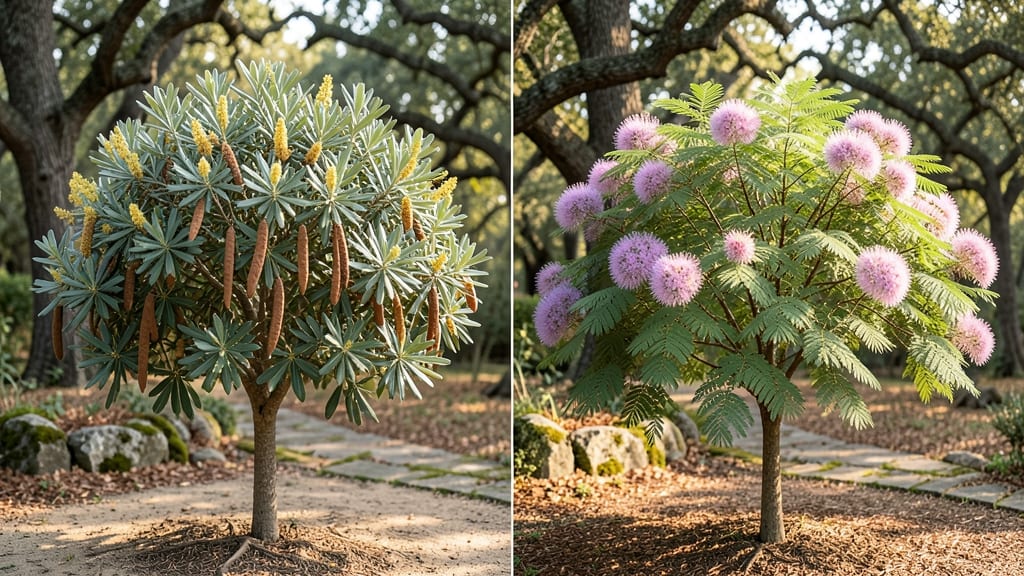
Deciding between a monkeypod tree and mimosa comes down to one key question: Do you want a drought warrior or a fast-growing showstopper? 🌵 Both trees bring bold beauty, but their care needs couldn't be more different—one thrives on neglect while the other demands attention.
I've pruned both for years, and the differences in growth habits, pest resistance, and seasonal performance will change how you approach your landscape.
The monkeypod (Parkinsonia) is the ultimate low-maintenance tree—it handles heat, drought, and poor soil like a champ, making it perfect for desert landscapes or areas with rocky, sandy ground.
Its feathery yellow blooms arrive in spring and last through summer, while mimosas (Albizia) put on a fluffy pink display that's equally stunning but requires richer soil and consistent moisture. Where monkeypods stay compact and sturdy, mimosas grow fast and can become leggy without proper pruning.
Pruning secrets reveal their true personalities: monkeypods need minimal shaping—just remove dead wood and shape occasionally to maintain their natural form. Mimosas, however, respond dramatically to pruning in late winter, rewarding you with denser foliage and more abundant blooms.
The trade-off? Mimosas attract aphids more readily, while monkeypods rarely face serious pest issues. Both trees handle cold differently too—mimosas struggle below 10°F, while monkeypods bounce back from freezes.
Your choice depends on your climate, soil, and how much maintenance you're willing to commit. For desert gardens or minimalist landscapes, the monkeypod's resilience wins. If you crave fast growth and don't mind regular pruning, the mimosa's lacy foliage and dramatic blooms will steal the show.
Either way, both trees deliver that "wow" factor when planted in the right spot.
The first product explained
Meet your new pruning partner in crime: the Fiskars Steeler Premium Bypass Pruner! 🌿✨ This isn’t just another pair of pruners—it’s a game-changer for anyone tackling monkeypod trees or mimosa with confidence.
Designed for precision and durability, this tool is your ticket to cleaner cuts and healthier plants all year round.
📏 Specs & Features
Here’s what makes this pruner stand out:
- Bypass Design: Ultra-sharp, 5.5-inch blades glide past each other for clean, precise cuts—no crushing or tearing, which is a must for delicate branches like those on a monkeypod tree.
- Steel Construction: High-carbon steel blades stay razor-sharp longer, while the forged steel head resists wear and tear. Perfect for tough jobs like trimming mimosa’s thorny stems!
- Ergonomic Handle: Soft-grip, non-slip handle reduces hand fatigue during long pruning sessions. Your hands will thank you after hours of shaping your trees.
- Self-Sharpening: The blades can be honed back to factory sharpness—no need for costly replacements.
- Rust-Resistant Coating: Stays corrosion-free, even in humid climates or after rain.
🎯 Target Users
This pruner is a must-have for:
- Home Gardeners: Ideal for trimming small to medium-sized trees, shrubs, and ornamental plants like mimosa or monkeypod.
- Landscapers & DIYers: Professional-grade quality without the professional price tag. Perfect for maintaining large properties or community gardens.
- Tree Enthusiasts: If you love the challenge of pruning unique trees (like the monkeypod’s sprawling branches or mimosa’s feathery foliage), this tool delivers the control you need.
💰 Price Point
Investing in quality pays off—especially when it comes to pruning tools. The Fiskars Steeler Premium Bypass Pruner typically retails for around $40–$50, depending on where you shop. While it’s a slightly higher upfront cost than basic pruners, its longevity and performance make it a steal for serious gardeners.
Think of it as an investment in the long-term health of your trees!
💡 Pro Tip: Pair this pruner with sterilized pruning shears (or a 70% isopropyl alcohol wipe) to prevent spreading diseases between cuts—especially important when working with multiple trees like monkeypod and mimosa.
The second product explained
Meet the Mimosa pudica—the delicate yet resilient "sensitive plant" that’s stealing the spotlight in pruning circles! 🌿✨ While the Monkeypod tree thrives as a bold, architectural statement, the Mimosa offers a softer, more interactive experience with its famous "touch-me-not" leaves. But don’t let its dainty appearance fool you—this plant packs a pruning punch with unique needs and rewards.
🌱 Key Specs & Features
The Mimosa pudica is a fast-growing annual or perennial (depending on climate), reaching 1–3 feet tall with a sprawling, bushy habit. Its standout traits include:
- Self-pruning leaves: When touched or disturbed, its leaves fold inward—a fun (but temporary) reaction! 🤯
- Light requirements: Thrives in partial shade to full sun (unlike the sun-loving Monkeypod).
- Soil preferences: Tolerates poor, sandy, or slightly acidic soil—ideal for containers or rocky gardens.
- Hardiness: USDA Zones 9–11 (can be grown as an annual in cooler climates).
- Pruning needs:
- Pinch back tips to encourage bushiness.
- Trim leggy stems to maintain shape.
- Deadhead spent flowers to prolong blooming (tiny pink pom-poms!).
🎯 Who’s It For?
This plant is a fantastic fit for:
- 🌿 Beginners: Its forgiving nature and interactive quirks make it a great first pruning project!
- 🏡 Container gardeners: Thrives in pots—perfect for patios or windowsills.
- 👨🌾 Eco-conscious growers: Mimosa is nitrogen-fixing, improving soil health over time.
- 👶 Kids & curious pets: Safe and engaging (though avoid ingesting large amounts).
💰 Price Point & Availability
Mimosa pudica is budget-friendly and widely available:
- Seeds: $5–$15 for a packet (fast-growing, sprouts in ~10 days!).
- Young plants: $10–$20 per 4-inch pot (check local nurseries or online retailers like Etsy or Planters World).
- Pro tip: 💡 Buy in bulk! Mimosa spreads easily—great for filling gaps or sharing with gardening friends.
While the Monkeypod tree demands structured pruning for its towering presence, the Mimosa pudica rewards you with playful interactions and low-maintenance charm. Whether you’re pruning for aesthetics, education, or just fun, this plant delivers—without the heavy-duty tools! 🪴😊
Head-to-head comparison
Ready to dive into the nitty-gritty? Let’s compare the Monkeypod Tree (Leucaena leucocephala) and Mimosa Tree (Albizia julibrissin) side by side—because pruning secrets start with understanding their unique quirks!
Whether you’re a seasoned gardener or just stepping into the green thumb game, this breakdown will help you decide which tree (or both!) will thrive in your landscape while keeping your pruners sharp. 🌿✂️
🌱 Growth Habit & Size
The first battle is in the branches! These trees couldn’t be more different in how they stretch toward the sky.
| Feature | Monkeypod Tree | Mimosa Tree |
|---|---|---|
| Mature Height | 20–30 ft (6–9 m) | 15–25 ft (4.5–7.5 m) |
| Spread | 15–25 ft (4.5–7.5 m) – wide, bushy canopy | 15–25 ft (4.5–7.5 m) – rounded, airy habit |
| Growth Rate | Moderate to fast (1–2 ft/year) | Fast (2–3 ft/year) |
| Canopy Density | Thick, dense foliage (great for shade but needs pruning to prevent overgrowth) | Light, feathery leaves (allows sunlight to filter through) |
Winner for pruning? If you love a structured, manageable shape, the Monkeypod’s dense growth might feel like a challenge—but its predictable structure makes it easier to train. The Mimosa’s airy branches are low-maintenance but can get top-heavy if not pruned regularly.
🍃 Leaf & Flower Characteristics
Beyond the branches, the leaves and blooms tell a story—and they’re critical for pruning timing and techniques!
| Feature | Monkeypod Tree | Mimosa Tree |
|---|---|---|
| Leaf Type | Compound, fern-like (small leaflets, dark green) | Feathery, fern-like (soft, silvery-blue-green) |
| Flower Color | Pale yellow, small and clustered | Pink or white, fluffy, pom-pom shaped |
| Flowering Season | Year-round in warm climates, peaks in spring/summer | Spring to early summer, heavy blooms |
| Leaf Drop | Evergreen in warm zones, semi-deciduous in cooler areas | Fully deciduous (loses leaves in winter) |
Pruning pro tip: 💡 The Mimosa’s fluffy blooms are a dead giveaway for its pruning window—prune right after flowering to encourage next year’s show. The Monkeypod’s year-round growth means you can prune anytime, but avoid heavy cuts in winter if you’re in a colder zone.
✂️ Pruning Needs & Challenges
This is where the rubber meets the road. How much work will you put in, and what’s the payoff?
| Aspect | Monkeypod Tree | Mimosa Tree |
|---|---|---|
| Best Pruning Time | Late winter/early spring (dormant season) or year-round in warm climates | Late winter (just before new growth) or right after flowering |
| Frequency | 1–2 times per year (light maintenance) | 1–2 times per year (but watch for weak branch growth) |
| Common Issues |
|
|
| Pruning Goals |
|
|
Key takeaway: The Monkeypod is forgiving—it bounces back well from pruning—but the Mimosa is delicate. If you’re new to pruning, start with the Monkeypod; if you love a challenge with rewards, the Mimosa’s blooms might just win you over. ⏳
💰 Cost & Maintenance
Let’s talk dollars and cents—because even the most stunning tree won’t win if it breaks the bank!
| Factor | Monkeypod Tree | Mimosa Tree | ||||||||||||||
|---|---|---|---|---|---|---|---|---|---|---|---|---|---|---|---|---|
| Purchase Cost (Young Tree) | $50–$150 (5-gallon size) | $40–$120 (5-gallon size) | ||||||||||||||
| Long-Term Costs |
|