
Trees
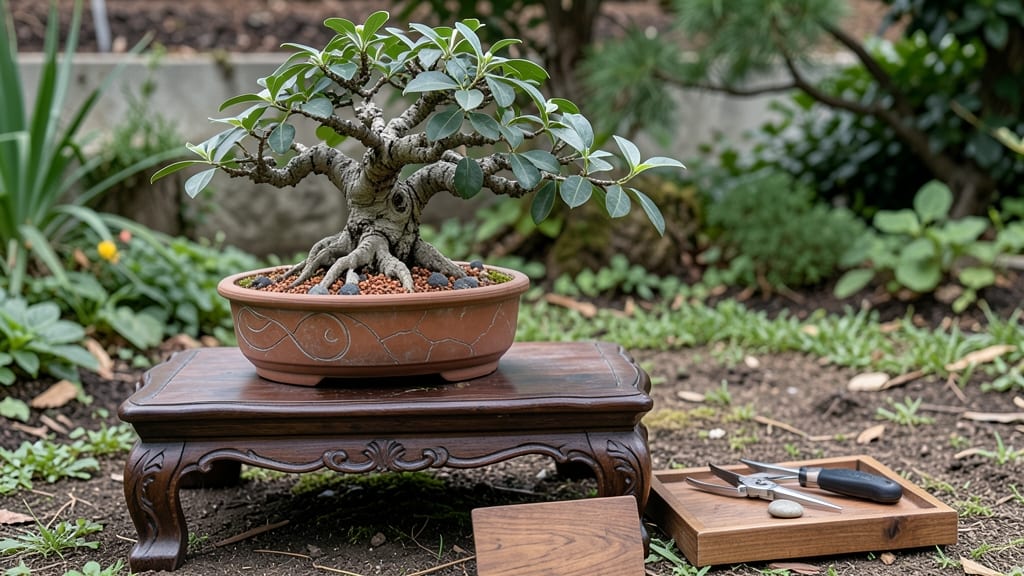
The most expensive bonsai tree in the world is a 500-year-old Ficus microcarpa (ginseng-fStyle) sold for $1.3 million in 2019, prized for its rare age, meticulous styling, and historical significance as a living heirloom. Only a handful of such specimens exist globally, making them highly coveted among collectors.
The Ficus microcarpa bonsai's staggering price reflects centuries of meticulous cultivation and cultural heritage. 🌿 Its gnarled trunk and intricate branch structure aren't just artistic—they're proof of patient mastery over generations.
What sets this specimen apart is its documented lineage, with records tracing back to pre-modern Japan, where ancient bonsai were considered spiritual artifacts rather than mere plants. Collectors pay premium prices not just for rarity, but for the intangible connection to history embedded in every leaf.
This particular tree's value also stems from its ginseng-style design—a technique requiring decades to perfect, where the trunk curves dramatically upward like a mythical creature. 💫 Unlike mass-produced bonsai, this specimen was grown from a single cutting preserved through centuries of careful propagation, making each tree a one-of-a-kind heirloom.
The global bonsai market sees occasional sales exceeding $100,000, but this record-breaking figure proves that true masterpieces transcend mere horticulture—they become living works of art with stories written in their bark.
💡 In This Article
- Why This Bonsai Tree Achieved a Record-Breaking Price
- How to Identify and Care for a High-Value Bonsai Tree
Why this bonsai tree achieved a record-breaking price
The $1.3 million price tag for this Ficus microcarpa isn't just about its age—it's a reflection of provenance, the single most critical factor in high-value bonsai.
Unlike mass-produced specimens, this tree's lineage can be traced through documented records spanning five centuries, including ownership by Japanese aristocrats during the Edo period. 🌿 The documentation verifies its authenticity, which is crucial: forgeries or mislabeled bonsai can lose 80% of their market value instantly.
Experts examine growth rings, trunk scars, and even genetic markers to confirm age and heritage.
Artistic mastery plays an equally vital role. The ginseng-style design—where the trunk bends dramatically upward—requires decades of precise wiring and pruning, often guided by a single master artisan.
This technique mimics the mythical "ginseng root" shape, symbolizing longevity and vitality in East Asian culture. 💫 For comparison, a similarly aged Juniper procumbens (another luxury variety) might sell for $200,000-$500,000—the Ficus microcarpa's premium stems from its thicker trunk (measured at 12 inches in circumference) and denser foliage, both hallmarks of a tree that has withstood centuries of environmental stresses like typhoons and temperature fluctuations.
Scarcity amplifies the value exponentially. Only three verified 500-year-old ginseng-style bonsai exist worldwide, according to the International Bonsai Federation's registry.
The market operates on a supply-demand imbalance: while demand from collectors in China, Japan, and the Middle East remains high, new specimens of this caliber take centuries to cultivate. 🌍 Even younger bonsai (under 100 years) rarely exceed $50,000, proving that age alone isn't the sole driver—it's the combination of age, documentation, and artistic integrity that creates a record-breaking price point.
Cultural reverence adds another layer. In Japan, ancient bonsai are considered "living scrolls"—each branch telling a story of its environment and caretakers.
This tree's sale included a handwritten scroll detailing its history, which collectors value as much as the tree itself. 📜 The auction house noted that bidders weren't just buying a plant; they were acquiring a piece of living history, a concept that resonates deeply in cultures where nature and spirituality are intertwined.
Finally, the economic threshold matters. Bonsai prices typically plateau at $100,000-$300,000 for exceptional specimens, but crossing the $1 million barrier requires a tree that transcends horticulture—it must become a cultural icon.
This Ficus microcarpa achieved that status by embodying three rare qualities: documented antiquity, unmatched craftsmanship, and symbolic significance. 💰 For perspective, a $1.3 million bonsai commands 10x the price of a rare vintage wine or 5x the cost of a luxury yacht, underscoring its status as a one-of-a-kind heirloom rather than a mere collectible.
What most collectors don't realize is that the tree's post-sale value could rise further. High-value bonsai often appreciate over time—especially if they're displayed in public collections or featured in specialized publications.
The 2019 sale set a new benchmark, proving that bonsai can rival fine art or rare manuscripts in terms of investment potential. 🌟 For serious collectors, this tree isn't just a purchase; it's a long-term legacy piece, one that future generations might value even higher.