
Trees
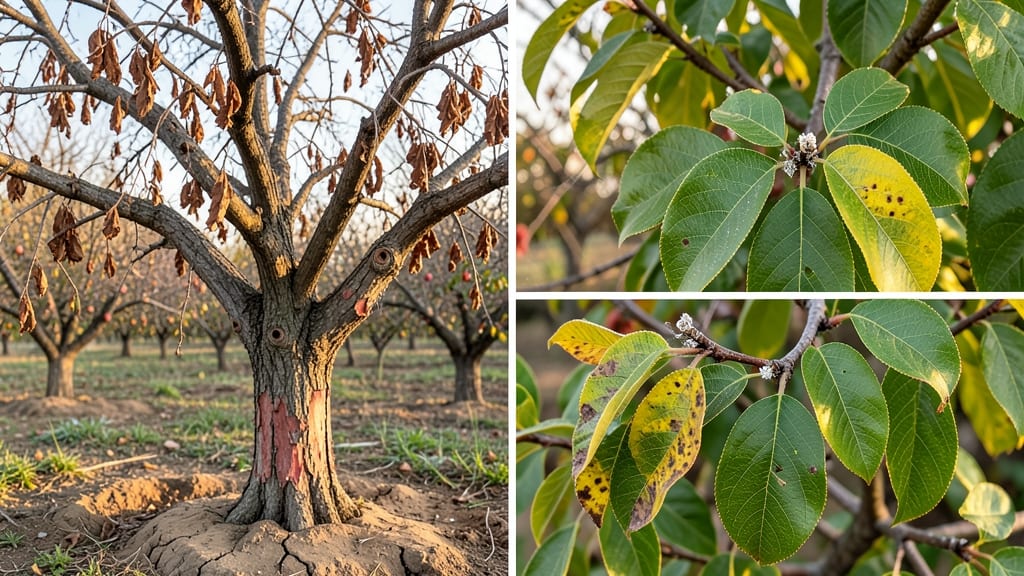
When your peach tree has lost all its leaves, panic isn't the answer—root rot might be the culprit. 🌱 I've seen this happen after heavy rains or overzealous watering, and the good news is recovery is possible with the right steps.
The key is acting fast before the roots give up completely. Most people assume pests or disease are to blame, but root rot often starts silently underground. You'll spot it through yellowing leaves, soft stems, or a foul smell at the base.
The fix involves cutting back dead growth, improving drainage, and giving the roots room to breathe again. By following these 3 simple steps, you'll see fresh green leaves within 4-6 weeks if the roots are still salvageable.
The tree might even produce fruit next season with proper care—don't count it out yet! This method works for backyard peach trees, container-grown ones, and even neglected orchards. Let's get those roots healthy again!
Root Causes Behind Sudden Leaf Loss
When your peach tree sheds all its leaves overnight, it’s often a cry for help from its roots—or its overall health. Understanding the why behind this dramatic change is the first step to saving your tree.
Below, we break down the most common culprits, backed by science, so you can diagnose the issue accurately and act fast.
Peach trees are hardy but not immune to temperature swings. Frost damage in early spring or heat stress during summer can cause leaves to drop suddenly. Here’s how it works:
- Cold Snaps: When temperatures drop below 28°F (-2°C), cell membranes in leaves rupture, leading to desiccation (drying out). The tree sheds leaves to conserve energy. - Heatwaves: Prolonged exposure to 90°F+ (32°C+) can cause physiological drought, even if soil moisture is adequate.
Leaves wilt, turn brown, and fall off as the tree prioritizes root survival. - Rapid Temperature Shifts: A sudden drop of 20°F+ (11°C+) in a day can shock the tree, triggering abscission (the natural leaf-drop process).
💡 Pro Tip: Monitor your local weather forecast. If a hard freeze or heatwave is predicted, cover young trees with frost cloth or provide shade cloth during extreme heat.
One of the most deadly causes of leaf loss in peach trees is root rot, typically caused by overwatering or poor drainage. Here’s the science:
- Fungal Invasion: Excess moisture creates the perfect environment for Phytophthora and Pythium fungi, which thrive in waterlogged soil.
These pathogens clog root cells, cutting off water and nutrient flow. - Oxygen Deprivation: Roots need oxygen to function. Saturated soil displaces oxygen, leading to anaerobic conditions—roots suffocate and die. - Symptoms Beyond Leaves: Look for mushy, brown roots, yellowing leaves before drop, and trunk cankers (sunken, discolored areas).
⚠️ Warning Signs:
- Soil stays soggy for days after watering.
- Leaves turn yellow before dropping (a classic root rot signal).
- Tree leans or falls over (structural weakness from rotting roots).
🔥 Fix It Fast:
- Stop watering immediately and let soil dry out.
- Improve drainage by amending soil with compost or sand.
- Prune affected roots (if caught early) and apply copper fungicide to prevent spread.
Pests don’t just eat leaves—they stress the tree to the point of defoliation. Here’s how they sabotage your peach tree:
| Pest | How It Attacks | Telltale Signs |
|---|---|---|
| Peach Tree Borer 🐛 | Larvae burrow into trunk and branches, disrupting nutrient flow. | Sawdust-like frass, oozing sap, wilting leaves. |
| Aphids 🐜 | Suck sap from leaves, causing curls and black sooty mold. | Sticky residue (honeydew), distorted new growth. |
| Japanese Beetles 🐞 | Devour leaves in massive numbers, leaving skeletons. | Chewed edges, beetle clusters on tree. |
| Spider Mites 🕷️ | Pierce cells, causing yellow stippling before leaves fall. | Fine webbing, bronze-colored leaves. |
🎯 Quick Action Steps:
- Handpick large pests (beetles, borers) and drop them in soapy water.
- Spray neem oil (safe for trees, deadly for soft-bodied pests).
- Introduce beneficial insects (ladybugs for aphids, parasitic wasps for borers).
Peach trees are heavy feeders—when they lack key nutrients, leaves yellow, wilt, and drop as a survival tactic. The most critical deficiencies:
- Nitrogen (N) Deficiency 🟡
- Symptoms: Pale yellow leaves (starting on older leaves), stunted growth.
- Cause: Poor soil or over-pruning without replenishment.
- Fix: Apply balanced fertilizer (10-10-10) in early spring.
- Potassium (K) Deficiency 🟠
- Symptoms: Yellow edges on leaves, weak stems, early leaf drop.
- Cause: Overwatering (leaches potassium) or acidic soil.
- Fix: Add wood ash or potassium sulfate and test soil pH.
- Magnesium (Mg) Deficiency 🟢
- Symptoms: Interveinal yellowing (veins stay green, tissue turns yellow).
- Cause: Compacted or sandy soil (magnesium binds poorly).
- Fix: Apply Epsom salt (magnesium sulfate) every 4-6 weeks.
🌡️ Soil Test First! Before fertilizing, test your soil (kits cost ~$20). Over-fertilizing can burn roots and worsen the problem.
Sometimes, external forces strip leaves faster than the tree can react:
- Strong Winds 🌬️
- How it happens: Physical abrasion or torn leaves from gusts.
- Recovery: Trees often regrow leaves if roots are healthy. Stake young trees to prevent uprooting.
- Hail Damage ⚡
- How it happens: Bruised leaves turn black and drop within days.
- Fix: Prune damaged branches and water deeply to reduce shock.
- Air Pollution or Smog 🏭
- How it happens: Sulfur dioxide or ozone (common near highways) clogs stomata, preventing gas exchange.
- Symptoms: Silver or gray undersides, premature leaf fall.
- Fix: Move tree away from pollution sources or install a windbreak.
Fungal and bacterial infections disrupt photosynthesis, forcing the tree to shed leaves to conserve energy. Top culprits:
- Brown Rot (Monilinia fructigena) 🍑
- How it spreads: Infected fruit or mummified blossoms release spores.
- Symptoms: Brown, mushy leaves, black cankers on branches.
- Prevent: Remove fallen fruit and prune in dry weather.
- Leaf Spot Diseases (Alternaria, Cercospora) 🌿
- How it spreads: Overhead watering splashes spores onto leaves.
- Symptoms: Dark spots with yellow halos, premature defoliation.
- Fix: Apply copper fungicide and water at the base.
- Bacterial Leaf Scorch 🔬
- How it spreads: Xylella bacteria clogs water vessels.
- Symptoms: Leaf edges scorch brown, veins stay green.
- Fix: No cure—remove infected branches and sterilize pruners.
🚨 When to Call an Arborist: If your tree shows multiple symptoms (e.g., rot + pests + disease), professional help may be needed. Act within 2 weeks—delaying treatment can be fatal for young trees.
Revive Your Tree Step by Step
A peach tree that’s shed all its leaves can feel like a lost cause—but don’t panic! With the right diagnosis and action, you can nurse it back to health.
Below, we break down targeted fixes for the most common causes of leaf loss, from overwatering to pests, along with preventive tips to keep your tree thriving. Let’s roll up our sleeves and get to work! 🌱🔧
Signs: Yellowing leaves, mushy stems, foul-smelling soil, or a tree that wobbles when pulled gently.
How to Fix It:
- Stop Watering Immediately 🚰
- Root rot thrives in soggy soil. Pause irrigation and let the soil dry out for at least 3–5 days. Use a moisture meter to check—soil should read "dry" before watering again.
- Improve Drainage 🏗️ - Raise the tree’s base: If planted in a low spot, mound soil or gravel around the trunk to create a slight slope away from the tree. - Amend the soil: Mix in compost, perlite, or coarse sand (1 part amendment to 3 parts soil) to loosen compacted areas.
Avoid heavy clay soils—consider a raised bed if drainage is chronically poor. - Install a French drain: For severe cases, dig a trench around the tree (1–2 feet away from the trunk) and fill it with gravel and a perforated pipe to redirect excess water.
- Prune Damaged Roots ⚔️ (Advanced) - If the rot is localized, carefully dig around the roots (gently!) and trim any black, mushy, or hollow sections with sterilized pruners.
Healthy roots are firm and white or tan. - Pro tip: 💡 Apply hydrogen peroxide (3%) or a copper fungicide to pruned areas to prevent further infection.
- Adjust Watering Habits 💧 - Water deeply but infrequently—aim for 1–1.5 inches per week (including rain).
Use a drip irrigation system or soaker hose to deliver water slowly at the root zone. - Mulch properly: Spread 2–4 inches of organic mulch (wood chips, straw) around the base, but keep it 6 inches away from the trunk to prevent rot.
Prevention Tips: ✅ Test your soil before planting—ideal pH for peach trees is 6.0–7.0. Amend if needed. ✅ Plant in well-draining soil—avoid clay-heavy areas or low-lying spots where water pools. ✅ Monitor after heavy rain—if the ground stays soggy for more than 48 hours, the tree may need temporary shade or a temporary rain cover.
Signs: Crispy, brown edges on leaves, wilting, or leaves dropping suddenly during hot spells.
How to Fix It:
- Water at the Right Time ⏰
- Early morning (before 8 AM) is best—water evaporates less and reaches roots efficiently.
- Deep watering: Use a probe or trowel to check moisture 6 inches down. If dry, water until it’s moist at that depth.
- Provide Temporary Shade 🌳
- If temperatures exceed 90°F (32°C), drape shade cloth (30–50%) over the tree for a few hours daily. Avoid plastic tarps—they trap heat.
- Mulch heavily (4 inches) to retain moisture and cool roots.
- Fertilize Lightly 🌱
- Apply a balanced, slow-release fertilizer (e.g., 10-10-10) in early spring. Too much nitrogen now can stress the tree further.
- Avoid high-potassium fertilizers—they can worsen drought sensitivity.
Prevention Tips: 🌡️ Install a weather station near your tree to track heatwaves—peach trees struggle above 85°F (29°C). 💧 Drip irrigation is a game-changer—it delivers water directly to roots without wetting leaves (reducing fungal risks). 🚫 Avoid pruning during drought—wait until the tree recovers to minimize stress.
Signs: Holes in leaves, sticky residue (aphids), fungal spots, or sawdust-like frass (borers).
How to Fix It:
- Identify the Culprit 🔍
- Aphids/Scale: Sticky leaves, curled new growth.
- Japanese Beetles: Skeletonized leaves (chewed patterns).
- Root Weevils: Wilting despite watering; larvae feed on roots.
- Fungal Issues (e.g., brown rot): Dark spots on leaves/fruit, white mold.
- Apply Targeted Treatments 🛡️
- For Insects:
- Neem oil (1 tbsp per gallon of water) or insecticidal soap—spray early morning or evening to avoid burning leaves.
- Beneficial nematodes (for grubs/weevils)—water into the soil as directed.
- Pheromone traps for beetles—hang near the tree to disrupt mating.
- For Fungal Diseases:
- Copper fungicide (e.g., Bordeaux mixture) or baking soda spray (1 tbsp baking soda + 1 tsp oil + 1 gallon water).
- Remove infected leaves/fruit and destroy them (don’t compost).
- For Insects:
- Strengthen the Tree’s Defenses 💪
- Fertilize with micronutrients (e.g., iron, zinc) to boost immunity.
- Prune for airflow—remove dense branches to reduce humidity (fungi love damp conditions).
Prevention Tips: 🛡️ Inspect trees weekly during peak pest seasons (spring/early summer). 🌿 Encourage natural predators—plant marigolds, lavender, or yarrow nearby to attract ladybugs and lacewings. 🍄 Clean up fallen leaves/debris—this removes hiding spots for pests and fungal spores.
Signs: Blackened branches, peeling bark, or leaves dropping in late winter/early spring.
How to Fix It:
- Prune Dead Wood ✂️
- Cut back all blackened or brittle branches to the healthy green wood (just above a bud or lateral branch).
- Sterilize pruners with rubbing alcohol between cuts to prevent disease spread.
- Apply Wound Dressing (Optional)
- For larger cuts, use pruning sealant to protect against bacterial infections.
- Fertilize Gently 🌱
- Wait until new growth appears (late spring) before fertilizing. Use a low-nitrogen formula (e.g., 5-10-10) to avoid stress.
Prevention Tips: ❄️ Wrap the trunk in burlap or tree guard before winter to prevent sunscald (common in cold climates). 🌡️ Avoid late-season watering—wet bark freezes faster and cracks more easily. 🌳 Plant windbreaks (e.g., evergreens) to shield the tree from harsh winds.
Final Pro Tip: 🎯 Patience is key! A peach tree can take 2–4 weeks to show signs of recovery after treatment. Monitor progress, adjust care as needed, and celebrate small wins—like new buds or leaves! 🌿💚
Frequently asked questions about peach trees losing leaves
Why did my peach tree drop all its leaves suddenly?
Sudden leaf loss is usually a survival response to stress. Common triggers include root rot from overwatering, extreme temperatures (below 28°F or above 90°F), or pest infestations like borers or spider mites. Check for yellowing before leaves fell, mushy stems, or holes in foliage to pinpoint the cause.
Can a peach tree recover after losing all leaves?
Yes! With proper care, most peach trees bounce back within 4-6 weeks if the roots are still healthy. Focus on fixing drainage issues, adjusting watering habits, and treating any pests/diseases. Young trees recover faster than mature ones, but even established trees can regrow if the root system remains intact.
How can I tell if my peach tree has root rot?
Look for these key signs: soil that stays soggy for days, yellow leaves before dropping, mushy brown roots when dug up, or a tree that leans easily. The trunk may also develop cankers (sunken, discolored areas). If you pull gently and the tree moves, that's another red flag.
Should I prune my peach tree when it's leafless?
Wait until spring when new growth appears. Right now, focus on removing only dead or diseased branches. Avoid heavy pruning during dormancy—it stresses the tree further. Sterilize your pruners with rubbing alcohol between cuts to prevent spreading infections.
Will my peach tree still produce fruit next year?
It depends on how quickly you address the issue. If you catch and treat the problem early, many trees rebound enough to produce some fruit next season. However, severe cases (like advanced root rot) may delay fruiting by a year. Focus on recovery first—fruit production comes later!