
Pruning
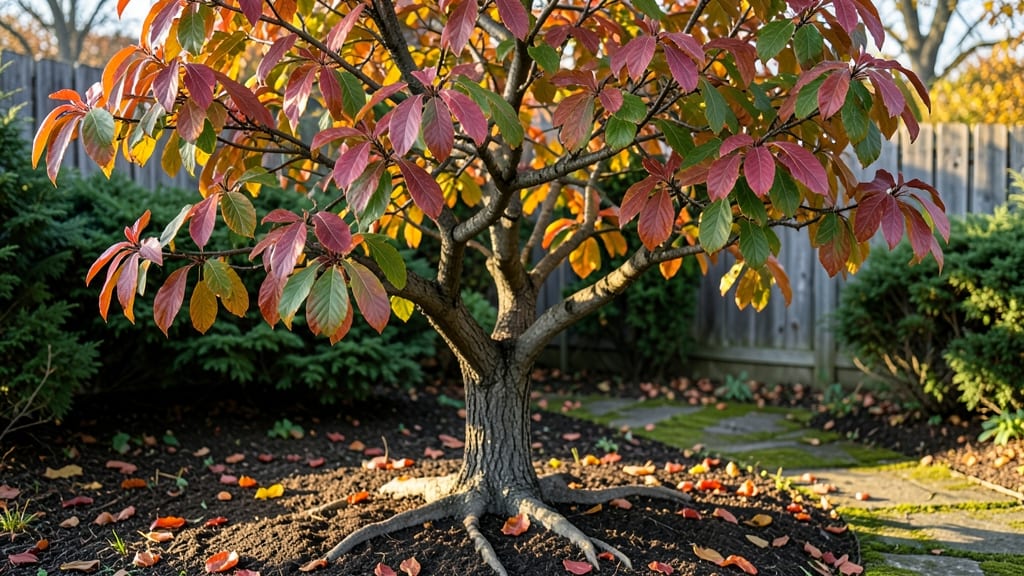
Fall pruning your persimmon tree transforms it from a messy shrub into a showstopping focal point—🍂 its golden-orange fruit and fiery foliage become the garden’s star.
I learned the hard way that waiting until winter means losing next year’s crop, but with the right cuts now, you’ll keep that perfect shape while maximizing fruit production.
The key is timing: prune after leaf drop but before hard frost, focusing on open-center growth to let sunlight reach the center branches. Remove dead wood first—those bare stems invite pests and diseases.
Then thin out crossing branches to prevent future rubbing wounds, and cut back any suckers growing from the base to keep energy flowing upward.
By winter, your tree will stand sturdier and more balanced, with fewer weak limbs to snap in storms. The fruit you leave on the tree will ripen sweeter, and next spring’s blossoms will be more abundant. Just avoid heavy pruning—persimmons are sensitive, and over-cutting stresses them for years.
Bonus: the harvest window opens when fruit turns fully orange and gives slightly when pressed. Leave a few on the tree for wildlife, but pick the rest before frost—ripe persimmons taste like honeyed apples, and they’re worth the wait. Now grab those shears!
📚 In This Guide
- What you need
- Instructions
- Tips and common mistakes
- Wrapping up and next steps
What you need
- ● Bypass Pruners: Sharp, high-quality bypass pruners (e.g., Felco or Fiskars) for clean cuts on small branches (1/4"–1" diameter). Must be sterilized with rubbing alcohol between cuts.
- ● Loppers: Heavy-duty loppers (e.g., Corona or Bahco) for branches 1"–2" in diameter. Look for ratcheting or bypass styles for precision.
- ● Pruning Saw: A curved-tooth pruning saw (e.g., Felco or Fiskars) for thick branches 2"+. Dull blades tear wood—keep it sharp!
- ○ Extension Pole: A 3–6 ft telescoping pole with pruners/loppers attached for high branches (optional but highly recommended for safety).
- ● Work Gloves: Cut-resistant gloves (e.g., Mechanix or Husqvarna) to protect hands from thorns and rough bark.
- ● Disposable Pruning Bags: 5–10 gallon bags (e.g., Fiskars) to collect debris and prevent disease spread.
- ● Rubbing Alcohol (70%+) or Bleach Solution: 1 part bleach to 9 parts water for sterilizing tools between cuts.
- ○ Pruning Sealant (Optional):strong> A tree wound sealant (e.g., Tanglefoot Tree Wound Pruning Seal) for cuts larger than 1/2" (controversial but useful for large persimmons).
- ● Weather Check: Prune on a dry, overcast day (avoid windy or rainy conditions). Ideal temps: 40°F–60°F.
- ● Tree Health Assessment: Inspect the tree for diseased, dead, or crossing branches before pruning. Mark them with flagging tape if needed.
- ● Safety Gear: Safety glasses and closed-toe shoes to protect against falling debris.
- ● Ladder (If Needed):strong> A stable, extendable ladder (e.g., 12–16 ft) with a non-slip base for ground-level access.
- ● Water & Snacks: Hydration breaks are key—pruning is harder work than it looks! 💧
- ● 🔥 Sterilize tools before and after pruning to prevent bacterial/fungal spread (e.g., anthracnose).
- ● ✨ Use a step stool or pole saw to avoid overreaching—safety first!
- ● 🎯 Pack extra pruning bags if your tree is heavily fruited—fall cleanup = less winter work.
Step-by-step instructions for pruning persimmon trees in fall
Fall is the perfect time to shape your persimmon tree—here's how to do it right without risking next year's fruit.
✂️ Step 1: Identify and Remove Dead or Diseased Branches
Start by scanning the tree for branches that are completely brown and brittle or show signs of disease like oozing sap or fungal growth. These branches won’t produce fruit and can spread problems to healthy wood. Use sharp, clean pruning shears to cut just outside the branch collar—the swollen area where the branch meets the trunk.
I always prune these first because they’re the easiest to spot and remove. If you see any branches with cankers (sunken, dead patches), cut back to at least 6 inches below the affected area to ensure you remove the entire infected section. Sterilize your tools with rubbing alcohol between cuts to prevent spreading disease.
✂️ Step 2: Thin Out Crowded or Rubbing Branches
Next, look for branches that are growing too close together or rubbing against each other. These create weak points where bark can tear, inviting pests and diseases. Choose the smaller of the two branches and cut it back to the branch collar. If branches are crossing, remove the one that’s growing at a shallower angle—this encourages a more open canopy.
Persimmons fruit best when sunlight reaches the center of the tree. I aim to remove 20-30% of the tree’s foliage in this step, focusing on branches that block light from penetrating deeper. You’ll know you’re doing well when you can see light filtering through the canopy on a sunny day.
✂️ Step 3: Shape the Tree for Airflow and Fruit Production
Now it’s time to refine the tree’s shape. Persimmons respond well to an open-center form, where the main branches spread outward like a vase. Start by selecting 3-5 strong, well-spaced scaffold branches—these are the primary limbs that will support most of the tree’s weight and fruit. Remove any branches that grow directly upward (called "water sprouts") or compete with the scaffold branches.
Cut back any branches that are growing inward or downward to redirect the tree’s energy toward the scaffold branches. Make your cuts at a 45-degree angle, just outside the branch collar. Avoid leaving stubs—this prevents disease and encourages faster healing. If a branch is too large to cut with hand shears, use a pruning saw and make the cut just outside the branch collar.
⏰ Step 4: Clean Up and Prepare for Winter
After pruning, gather all the debris and remove it from the area around the tree. Leaving branches on the ground can harbor pests and diseases over winter. I like to chip the larger branches for mulch or compost, but if they’re diseased, dispose of them in the trash.
Finally, apply a 2-3 inch layer of mulch around the base of the tree, keeping it 6 inches away from the trunk. This helps retain moisture and protect the roots during winter. Water the tree deeply before the first hard frost to ensure it’s hydrated going into dormancy. Avoid heavy pruning in late fall—stick to light shaping to give the tree time to heal before winter sets in.
Tips & tricks for pruning persimmon trees in fall
Fall pruning sets the stage for a healthier, more productive persimmon tree—here's how to avoid common mistakes and get it right the first time.
Tool Prep is Non-Negotiable: Before you even touch the tree, sharpen your pruning shears and sterilize them with rubbing alcohol. Dull tools crush wood instead of making clean cuts, which slows healing and invites disease. I always test my shears on a scrap piece of wood first—if it doesn't slice cleanly, it's not ready. For larger branches, use a pruning saw with a fine-tooth blade to avoid tearing the bark.
Branch Collar Matters More Than You Think: When making any cut, always aim for just outside the branch collar—the swollen area where the branch meets the trunk. This is where the tree's natural healing begins. Never leave stubs, as they collect moisture and rot. If you're unsure where the collar is, look for the slight ridge where the branch attaches—this is your target spot for every cut, whether you're removing dead wood or shaping the tree.
Light Penetration Test: After thinning branches in Step 2, do this quick check: stand under the tree on a sunny day and look up. You should see light filtering through the canopy—not just dappled patches, but actual sunlight reaching the center. If you can't see light through the middle, keep removing branches that block it. This open canopy prevents fungal diseases by improving airflow and helps fruit ripen evenly.
Winter Prep Tip: That 2-3 inch layer of mulch in Step 4 isn't just decoration—it's insulation. Spread it in a donut shape, keeping it 6 inches away from the trunk to prevent rot. For extra protection in cold climates, add a 2-3 inch layer of straw or leaves on top of the mulch before the first hard frost. This helps regulate soil temperature and keeps roots from freezing.
Pro Tips for Persimmon Tree In Fall
- Fall pruning sets the stage for a healthier, more productive persimmon tree—here's how to avoid common mistakes and get it right the first time.
- Tool Prep is Non-Negotiable: Before you even touch the tree, sharpen your pruning shears and sterilize them with rubbing alcohol.
- Branch Collar Matters More Than You Think: When making any cut, always aim for just outside the branch collar—the swollen area where the branch meets the trunk.
Frequently asked questions
Got questions about pruning your persimmon tree in fall? You’re not alone! Here are some of the most common queries—and their answers—to help you keep your tree thriving and fruitful.
When is the exact best time to prune a persimmon tree in fall?
Prune your persimmon tree after the leaves drop but before hard frost sets in—typically late October to early November in most U.S. zones. This timing balances fruit preservation (since persimmons ripen in fall) with winter prep. Avoid pruning too early, as late-summer cuts can stress the tree and delay fruit maturation.
Will pruning in fall reduce next year’s persimmon harvest?
Not if done correctly! Focus on light, strategic cuts—remove only dead, diseased, or crossing branches. Avoid heavy pruning, which can divert energy away from fruit production. Persimmon trees are resilient; with proper technique, you’ll maintain (or even improve!) yields while shaping the tree for long-term health.
What’s the difference between pruning a persimmon tree vs. other fruit trees?
Persimmon trees (especially Asian varieties like Diospyros kaki) are less responsive to aggressive pruning than apples or peaches. They produce fruit on old wood, so avoid cutting back main branches. Instead, prioritize airflow and sunlight by thinning dense growth. Over-pruning can lead to sparse fruiting—go slow!
How do I tell if my persimmon tree has pests or disease after pruning?
Watch for yellowing leaves, sawdust-like frass (insect droppings), or oozing sap on cuts. Common issues include persimmon borers (tunnels in bark) or powdery mildew (white fungal coating). Sterilize tools with rubbing alcohol before/after cuts, and seal larger wounds with pruning sealant to prevent infections.
Can I prune a young persimmon tree the same way as a mature one?
No—young trees (under 5 years) need structural shaping to establish a strong framework. Focus on removing water sprouts and weak branches to encourage a single trunk or open vase shape. Mature trees, however, benefit from renewal pruning to rejuvenate older wood while preserving fruit-bearing branches.
Wrapping up and next steps
Fall is the perfect time to shape your persimmon tree while ensuring a bountiful harvest next season!
By mastering the art of strategic pruning—like thinning dense branches, removing dead wood, and encouraging airflow—you’ll set your tree up for health, beauty, and productivity. 🌿✨ Whether you’re a seasoned gardener or just starting, every careful cut brings you closer to a thriving orchard.
Ready to take action? Grab your pruners, review your notes, and schedule a pruning session before winter dormancy sets in. Your future harvest—and the stunning fall foliage—will thank you!