
Pruning
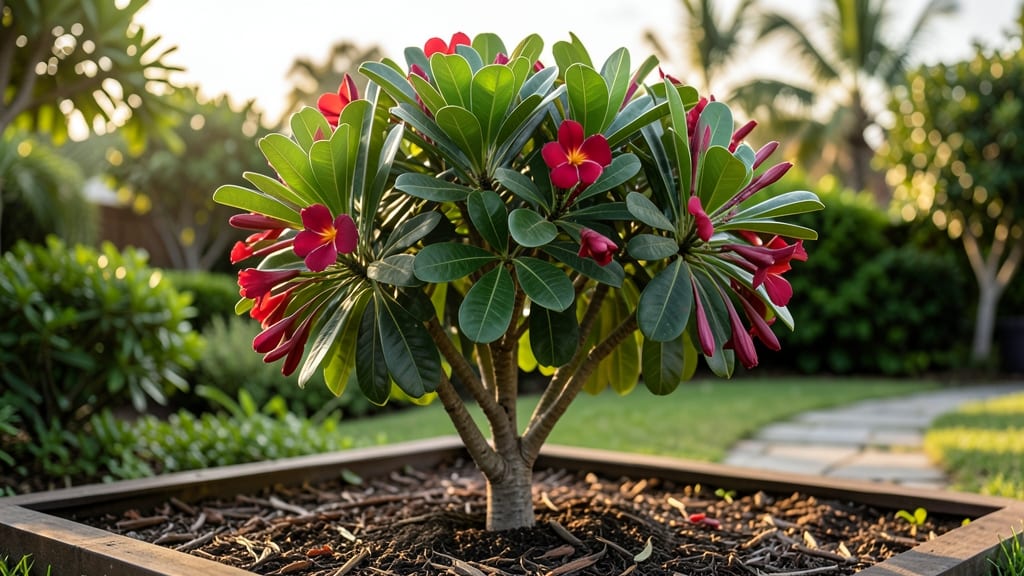
Growing a plumeria tree in Arizona means turning your desert yard into a fragrant tropical oasis. 🌵 The key is matching its tropical roots to Arizona’s brutal sun and dry winds—something I learned after my first plumeria nearly died from overwatering in 110°F heat.
These trees thrive in full sun but need well-draining soil—mix in sand or gravel to prevent root rot. Water deeply once a week (twice in extreme heat), then let the soil dry completely. Mulch helps retain moisture without smothering roots, and a light fertilizer in spring kickstarts blooms.
By winter, you’ll prune back dead growth to shape the tree and encourage new blooms in spring. Arizona’s mild winters let you keep plumerias outside year-round, though a light frost cloth in unexpected cold snaps saves the day.
Container growing works beautifully—just use a pot with drainage holes and move it to shade during heatwaves. The result? A fragrant, drought-tolerant tree that outperforms most desert plants. Let’s get yours thriving!
📚 In This Guide
- What you need
- Instructions
- Tips and common mistakes
- Wrapping up and next steps
What you need
- ● Plumeria Tree: Choose a healthy, disease-free plant (either a young sapling or a mature tree, depending on your space). Varieties like Plumeria rubra or Plumeria obtusa do well in Arizona’s heat.
- ● Well-Draining Soil: 3-5 cubic yards of cactus/succulent mix or a blend of 50% potting soil + 50% coarse sand/perlite (for containers). For in-ground planting, amend native soil with 50% compost.
- ○ Container (Optional but Recommended): For young trees: 15-20 gallon pot with drainage holes.
- ● For mature trees: 30+ gallon pot or in-ground planting.
- ● Fertilizer: Balanced 10-10-10 or 8-3-9 slow-release fertilizer (avoid high-nitrogen blends). Use 1-2 tbsp per sq ft every 4-6 weeks during growing season (spring-fall).
- ● Mulch: 2-3 inches of gravel or bark mulch (keeps roots cool and reduces moisture loss).
- ● Pruning Shears: Bypass pruners (for clean cuts on small branches).
- ● Loppers: 10-14 inch bypass loppers (for thicker branches, up to 1.5 inches in diameter).
- ● Hand Saw: Pruning saw with a fine-tooth blade (for larger branches).
- ● Gloves: Heavy-duty gardening gloves (to protect from thorns and sap).
- ● Disinfectant: 70% isopropyl alcohol or bleach solution (1 part bleach to 9 parts water) (to sterilize tools between cuts).
- ● Rake or Hoe: For clearing debris around the base.
- ● Drip Irrigation System: For consistent moisture without overwatering (Arizona’s heat demands efficiency!).
- ● Shade Cloth (30-50% coverage): Protects young trees from intense afternoon sun during extreme heatwaves.
- ● Epsom Salt: 1 tbsp per gallon of water (monthly spray for magnesium boost, especially in alkaline Arizona soil).
- ● Root Stimulator: Mycorrhizal fungi or seaweed extract (helps establish roots faster).
Step-by-step guide to pruning Plumeria trees in Arizona’s desert climate
Here’s how I keep my Plumerias thriving year-round with strategic pruning—no matter how brutal the Arizona heat gets.
✂️ Step 1: Time Your Pruning for Peak Desert Growth
Prune your Plumeria after the last frost (typically mid-March in Arizona) but before the summer monsoons—usually by late May. This timing avoids stressing the tree during dormancy or overwhelming it with new growth during the wet season. I always check the forecast first: if heavy rains are predicted, delay pruning by a week to prevent fungal issues.
Look for new growth buds along the branches—these signal the tree’s readiness to regrow. If your Plumeria hasn’t budded yet, hold off. Pruning too early can leave it vulnerable to cold snaps, while waiting too long risks stunted blooms. In Arizona’s 100°F+ heat, pruning in the early morning (before 9 AM) minimizes stress on the plant.
✂️ Step 2: Cut Back for Shape and Airflow
Use clean, sharp pruning shears to make 45-degree cuts just above a leaf node or bud. Avoid leaving stubs—these invite disease. I prune one-third of the tree’s height at a time, focusing on dead, crossing, or overcrowded branches first. This opens up the canopy for better airflow, which is critical in Arizona’s dry heat to prevent fungal infections.
Step back and visualize the tree’s natural shape. Plumerias bloom on new wood, so you’ll want to encourage outward growth rather than a dense center. If a branch is too leggy, cut it back to a strong lateral branch. Never remove more than one-third of the foliage in a single session—this can shock the tree, especially in the desert’s intense sun.
☀️ Step 3: Encourage Blooms with Strategic Trimming
After the initial shape-up, lightly trim the tips of remaining branches to promote bushier growth. This is where Plumerias really shine: new growth = more blooms. I make small pinches (just above a set of leaves) to encourage lateral shoots. Avoid heavy pruning in summer—the tree needs energy to establish roots before another round of cuts.
Watch for yellowing leaves or stunted growth after pruning—this means you’ve cut too much. If it happens, reduce water slightly and give the tree a few weeks to recover. In Arizona’s low humidity, over-pruning can lead to transpiration stress, so monitor closely. A lightly pruned Plumeria will reward you with heavier blooms in the following season.
💧 Step 4: Post-Pruning Care for Desert Resilience
Water deeply (about 1-2 gallons per tree) immediately after pruning to help the tree recover. In Arizona’s heat, mulch the base with 2-3 inches of organic mulch (like bark or straw) to retain moisture and regulate soil temperature. Avoid wetting the leaves—this can cause sunburn when combined with the desert’s intense UV rays.
Fertilize 4-6 weeks after pruning with a balanced, slow-release fertilizer (like 8-8-8) to support new growth. I skip heavy fertilizers in summer—Plumerias in Arizona already get enough nutrients from the monsoon rains. Instead, focus on consistent watering (every 7-10 days in summer, less in winter) and protection from afternoon sun for the first few weeks post-prune.
⏰ Step 5: Year-Round Maintenance for Desert Blooms
In winter (December-February), prune lightly to remove dead wood and crossing branches—this keeps the tree healthy without stressing it during dormancy. Avoid heavy cuts in winter, as Plumerias bloom on new wood formed in spring. In summer, prune only if necessary (like removing storm-damaged branches) and never more than 10% of the tree’s foliage.
Here’s the thing—Plumerias in Arizona love the heat, but they hate neglect. I check my trees weekly for signs of stress (like drooping leaves or brown tips) and adjust watering accordingly. With the right pruning schedule, your Plumeria will bloom year-round, even in the desert’s harshest conditions. That’s the magic of strategic cuts and desert-smart care.
Tips & tricks for pruning Plumerias in Arizona's extreme heat
These desert-specific strategies will help you avoid common pruning mistakes that can stress your Plumeria in Arizona's punishing climate.
Timing is Everything: The mid-March to late May window is non-negotiable for Arizona Plumerias. I've learned this the hard way—pruning too early risks cold damage, while waiting too late can lead to stunted blooms. Check your local frost dates annually, as they can shift slightly. For extra safety, I always prune after confirming three consecutive days above 60°F at night—this ensures the tree can recover without shock. The early morning timing (before 9 AM) is crucial to prevent heat stress during the pruning process itself.
Tool Precision Matters: Never use dull shears—they crush stems instead of making clean cuts. I invest in bypass pruners with a comfortable grip for extended sessions. When making those 45-degree cuts, visualize the branch's natural growth pattern. The angle allows rainwater to run off easily, preventing rot. For thicker branches, I use a fine-toothed saw for clean cuts without tearing. Always disinfect tools with rubbing alcohol between cuts to prevent disease transmission in Arizona's dry but fungal-prone conditions.
Desert-Specific Pruning Cues: In Arizona's low humidity, watch for these signs of over-pruning: yellowing leaves that don't recover after 2 weeks, or branches that fail to produce new growth within 6 weeks. I've seen trees lose 30% of their foliage from overzealous pruning—don't make my mistake! The one-third rule applies to both height reduction and foliage removal. For bushier growth, I make small pinches just above leaf nodes, which encourages lateral branching without overwhelming the tree's water reserves in the desert heat.
Post-Prune Recovery Strategy: That immediate 1-2 gallon watering after pruning is your tree's lifeline in Arizona's heat. I've found that adding a handful of Epsom salt to the water (about 1 tablespoon per gallon) helps replenish magnesium lost during pruning. The 2-3 inch mulch layer acts like a desert blanket—it keeps roots cool and conserves moisture. For the first two weeks post-prune, I water at dawn to prevent evaporation and fungal growth from excess moisture on leaves. This recovery period is when most pruning mistakes become apparent, so don't skip it.
Pro Tips for Plumeria Tree Arizona
- These desert-specific strategies will help you avoid common pruning mistakes that can stress your Plumeria in Arizona...
- Timing is Everything: The mid-March to late May window is non-negotiable for Arizona Plumerias. I've learned this the...
- Tool Precision Matters: Never use dull shears—they crush stems instead of making clean cuts. I invest in bypass prune...
Frequently asked questions
Got questions about growing and pruning plumeria trees in Arizona? You’re not alone! Here are some of the most common concerns—and expert answers to keep your fragrant blooms thriving year-round.
Can plumeria trees survive Arizona’s extreme heat and cold?
Arizona’s plumeria trees are tough but need balance! While they thrive in desert heat (up to 110°F with shade), they’re not frost-hardy. Protect them from temps below 32°F by moving potted trees indoors or wrapping container roots in frost cloth. Established trees in well-draining soil often recover after light freezes, but young plants are vulnerable. Pro tip: Plant in spring after last frost for a head start!
When is the best time to prune plumeria trees in Arizona?
Prune your plumeria twice a year for optimal blooms: late winter/early spring (before new growth) to shape the tree and remove dead wood, and summer after flowering (June–July) to encourage fall/winter blooms. Avoid heavy pruning in fall—it stresses the plant before winter. Warning: Sterilize tools with rubbing alcohol to prevent fungal infections!
How do I encourage more flowers on my Arizona plumeria?
More flowers = more pruning + sunlight! Prune aggressively (but not too late in the season) to stimulate new growth, and place your tree in full sun (6+ hours/day). Feed with a balanced fertilizer (10-10-10) every 4–6 weeks during growing season (spring–fall), and avoid overwatering—plumerias hate soggy roots. Bonus: Deadhead spent blooms to redirect energy to new flowers!
Why are my plumeria leaves yellowing or dropping?
Yellow leaves usually signal overwatering, underwatering, or nutrient deficiency. Check soil moisture—plumerias prefer dry conditions between waterings. If leaves are crispy, it’s underwatering; if mushy, you’re overdoing it. Yellowing edges? Fertilize lightly with iron or magnesium. Pests (like spider mites) can also cause stress—spray with neem oil if you spot webbing. Fix it fast: Adjust watering and inspect for pests weekly!
Are there drought-resistant plumeria varieties for Arizona?
Yes! Opt for ‘Hawaiian Snow’ (creamy white, heat-tolerant) or ‘Ice Cream’ (pink/white, low-maintenance) for desert climates. Single-bloom varieties (like ‘Maui King’) often handle heat better than double-blooming types. Pro tip: Grafted plumerias (like ‘Red Butterflies’) are also more resilient—just ensure they’re well-draining to avoid root rot. Remember: All plumerias benefit from mulch to retain moisture!
Wrapping up and next steps
Growing a plumeria tree in Arizona is a rewarding journey that brings fragrant blooms and desert charm to your landscape! With the right year-round pruning techniques, you’ll enjoy lush foliage and stunning flowers for seasons to come.
Remember, consistency is key—whether you’re shaping for aesthetics or encouraging growth, a little effort goes a long way.
Ready to transform your outdoor space? Start small: pick one task from this guide—like deadheading or shaping—and build from there. Before you know it, your plumeria will be the star of your Arizona garden! 🌵✨