
Container Gardens
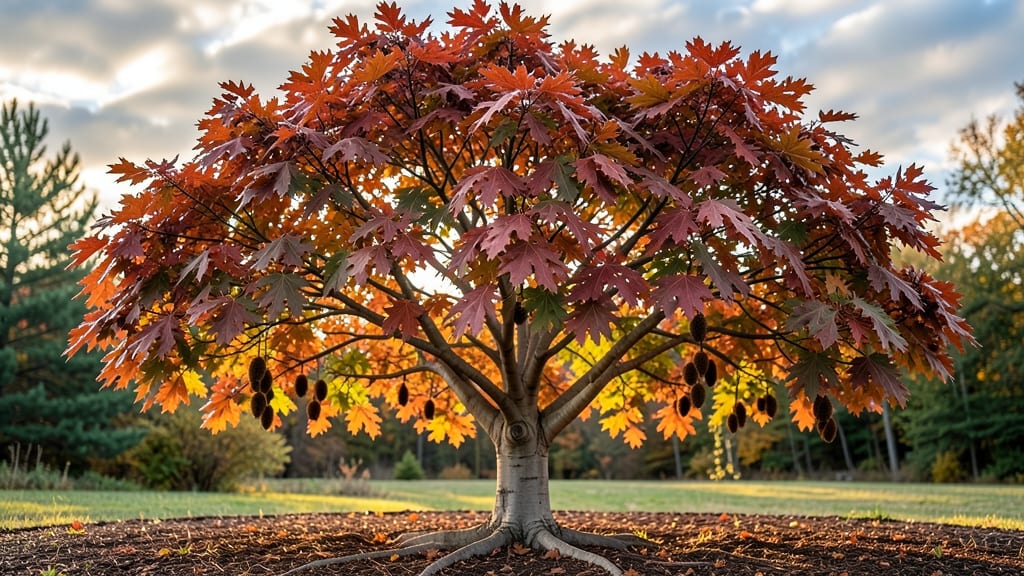
Sweet gum trees grow best in USDA hardiness zones 6 through 9, where they handle winter chills and summer heat while adapting to most soil types. Their native southeastern U.S. range proves their versatility, but success depends on proper sunlight and moisture management.
Sweet gums aren't picky about soil—sandy, clay, or loamy all work as long as drainage is decent. 🌳 The key is matching their native conditions: partial sun to full sun exposure and consistent moisture during their first growing season.
I’ve seen them thrive in urban landscapes with mulch retaining moisture, even in zone 6’s colder winters or zone 9’s intense heat. Just avoid waterlogged spots, as their roots dislike soggy conditions.
For edge zones like 5b or 10a, microclimates matter. A sheltered spot with afternoon shade can help in cooler areas, while windbreaks protect young trees from drying winds in hotter zones. Planting in spring (after last frost) gives roots time to establish before winter stress hits.
💡 In This Article
- Sweet Gum Tree Hardiness and Climate Adaptations
- Optimal Planting Zones and Regional Success Tips
Sweet gum tree hardiness and climate adaptations
The sweet gum tree (Liquidambar styraciflua) earned its reputation for resilience through evolutionary adaptations to the southeastern U.S.'s extreme climate swings. Its native range—stretching from Texas to Florida—exposes it to winter lows of -10°F to -15°F (zones 6-7) and summer highs exceeding 100°F (zones 8-9).
The tree's bark contains thick, corky layers that act as natural insulation, protecting against temperature fluctuations. 🌡️ This bark also develops deep fissures as the tree matures, creating microenvironments that regulate moisture loss during droughts.
What makes sweet gums uniquely adaptable is their root system. Unlike many trees, they develop both deep taproots (for stability) and extensive lateral roots (for water absorption). This dual system allows them to access groundwater during droughts while still thriving in urban environments where soil compaction limits deep root penetration.
Their leaves also play a role—star-shaped with serrated edges—maximizing surface area for photosynthesis while minimizing water loss through transpiration. In zone 6, where winters can drop below -10°F, young trees benefit from mulching to insulate roots, while mature specimens often survive unprotected.
The tree's drought tolerance doesn't mean it's completely carefree. While established trees can handle dry spells, their first 2-3 years require consistent moisture to establish root systems. In zone 9's intense heat, afternoon shade can prevent leaf scorch, while in zone 6, windbreaks protect against cold winds that dehydrate foliage.
The key is mimicking their native conditions: 6-8 hours of sunlight daily and soil that drains well but retains moisture during dry periods. 🌿 Their adaptability to urban pollution and soil variations (including clay) makes them ideal for city landscapes.
One often-overlooked adaptation is the tree's ability to "sense" seasonal changes. Sweet gums exhibit early leaf drop in autumn to conserve energy, and their buds remain dormant until soil temperatures reach 55°F—a survival tactic that prevents frost damage.
This seasonal intelligence explains why they often outperform less hardy species in edge zones like 5b or 10a, where microclimates can create ideal pockets for growth. For example, a tree planted near a south-facing wall in zone 5b might thrive where an open-field planting would fail.
Comparing sweet gums to other hardwoods reveals their unique balance. While oaks (also native to the Southeast) require more acidic soil, sweet gums tolerate pH ranges from 4.5 to 8.0.
Their growth rate—3-5 feet per year—is faster than many native alternatives, making them practical for quick landscape establishment.
However, their spiky seed pods (called "gumballs") can become a nuisance in lawns, a trade-off for their low-maintenance nature. 🌳 This combination of hardiness and adaptability explains why they're found in everything from suburban yards to highway medians across zones 6-9.
For gardeners pushing the limits in zone 5b or 10a, the secret lies in microclimate management. In cooler zones, plant on south-facing slopes where heat accumulates, while in hotter zones, provide afternoon shade to prevent moisture loss.
The tree's ability to handle both extremes makes it one of the most versatile native species for landscape design. 💫