
Trees
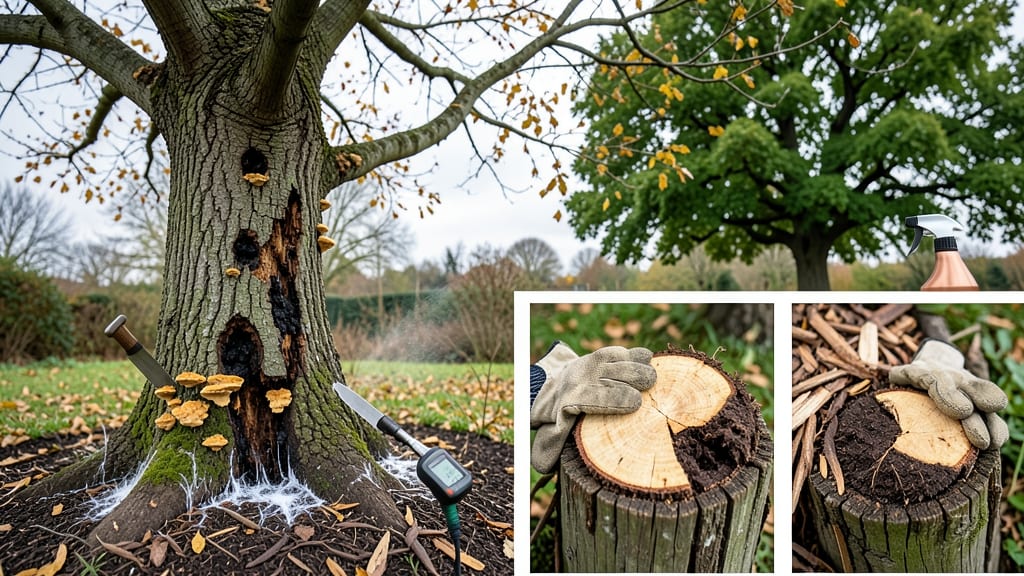
Tree rot fungus turns your healthy shade tree into a hollow shell before you know it. 🌳 The moment you spot mushrooms growing at the base or see oozing sap on the trunk, you’re already playing catch-up—this is a silent killer that spreads through roots and cracks in the bark.
Most gardeners miss the early signs: slight wilting even when the soil’s wet, bark that peels off like sunburnt skin, or a trunk that feels soft when you tap it.
I learned this the hard way with my 20-year-old oak—by the time I noticed the mushrooms, half the root system was already rotting. The good news? You can still save the tree if you act fast with the right cuts and soil fixes.
Pruning out infected branches (and sterilizing your tools between cuts) stops the spread, while soil amendments like compost and mycorrhizal fungi help rebuild the roots’ defenses. For severe cases, an arborist can inject fungicides deep into the trunk—but even then, prevention is the real game-changer.
This works for oak, maple, pine, or any tree in your yard. The key is catching it before the fungus turns your tree into a safety hazard. Let’s get your tree back to healthy.
Root Causes Of Wood Decay
Tree rot fungus doesn’t strike at random—it thrives when specific conditions align, turning your once-healthy trees into weakened, hollowed-out structures. Understanding why this happens is the first step to prevention.
Below, we break down the key triggers, from environmental factors to human mistakes, so you can spot the red flags before it’s too late.
Fungi love dampness, and waterlogged soil is their ideal breeding ground.
When trees sit in soggy conditions—whether from heavy rainfall, poor drainage, or irrigation oversaturation—their bark softens, creating easy entry points for spores. Root rot (often caused by Phytophthora or Armillaria) thrives in these conditions, while heart rot (like Fomes fomentarius) spreads when excess moisture seeps into wounds or cracks in the trunk.
Actionable signs:
- Mushrooms sprouting at the tree’s base (a sure sign of Armillaria or "shelf fungus").
- Soil that stays muddy or puddles for days after rain.
- Leaning or "drowning" trees in low-lying areas.
💡 Pro Tip: Improve drainage by amending soil with compost, installing French drains, or avoiding overwatering. If your yard floods frequently, consider mulching with gravel or wood chips (not thick organic mulch) to create airflow.
Trees are resilient, but any break in the bark—whether from storms, improper pruning, or animal damage—gives fungi a foothold. Wound rot (e.g., Heterobasidion) exploits these openings, while canker diseases (like Nectria) target stressed or injured branches.
Even old pruning cuts that weren’t sealed properly can become infection sites.
Common culprits:
- 🌪️ Storm damage (splits, broken limbs).
- ✂️ Poor pruning techniques (tearing bark, leaving stubs).
- 🐿️ Rodent or insect burrows (e.g., carpenter ants).
- 🔨 Construction or lawn equipment trauma.
🔥 Prevention: Seal fresh wounds with pruning sealant (for cuts > ½ inch), and prune during dry weather to minimize infection risk. Avoid topping trees—this creates massive entry points for rot.
Stressed trees have weaker defenses, making them prime targets for fungal invaders. Drought stress, nutrient deficiencies, compacted soil, or even competition from nearby plants weaken a tree’s immune system.
Once compromised, fungi like Polyporus (sulfur shelf fungus) or Ganoderma (reishi mushroom) move in to colonize the wood.
Stress signals to watch for:
- Yellowing or wilting leaves (early drought or nutrient signs).
- Thin, sparse canopy (indicates poor health).
- Cracks in the bark or oozing sap (a stress response).
- Soil that’s hard or lacks organic matter (root suffocation).
🌡️ Recovery Steps:
- 💧 Water deeply but infrequently (encourage deep root growth).
- 🌿 Add mulch (2–4 inches) to retain moisture and regulate soil temp.
- 🌱 Test soil pH and amend with compost or mycorrhizal fungi to boost immunity.
- 🚫 Avoid over-fertilizing—too much nitrogen stresses trees.
Trees in tight clusters or shaded by buildings/other vegetation struggle with poor airflow, trapping humidity and fungal spores. Basal rot (common in conifers) spreads rapidly in these conditions, while leaf litter (like fallen needles or leaves) can harbor spores that reinfect the tree.
Risky scenarios:
- 🏡 Trees planted too close to foundations or sidewalks.
- 🌳 Dense plantings with no spacing (e.g., hedges or forest-like groupings).
- 🍂 Leaf debris piled against the trunk (blocks airflow).
✨ Solution: Prune to open the canopy and thin out overcrowded areas. Remove leaf litter within 3 feet of the trunk, and space new plantings 1.5–2 times their mature width apart.
🎯 Key Takeaway: Tree rot fungus exploits weakness—whether from water, wounds, stress, or poor growing conditions. By addressing these root causes proactively, you can starve the problem before it starts. Next, we’ll cover how to spot early warning signs so you can act fast.
How to Treat and Prevent Tree Rot
Tree rot fungus doesn’t have to mean the end of your tree—early action can save it! Below are practical, step-by-step solutions tailored to the most common causes of rot, plus prevention tips to keep your trees healthy long-term.
Root rot is often silent until it’s severe, but catching it early makes all the difference.
🌱 Step 1: Improve Soil Drainage Poor drainage is the #1 culprit for root rot.
If your tree sits in soggy soil, act fast: - 🔪 Dig a shallow trench (6–12 inches deep) around the tree’s drip line to encourage water runoff. - 💡 Pro Tip: Mix sand or perlite into compacted soil to loosen it—this helps roots breathe. - ⚠️ Avoid: Over-mulching near the trunk (keep mulch 3–4 inches deep and 6+ inches away from the base).
🚰 Step 2: Adjust Watering Habits Too much water = rot paradise.
Follow these rules: - 🌧️ Water deeply but less often—trees prefer 1–2 inches of water per week (including rain). - 📅 Schedule checkups: If your tree is in a pot or container, ensure it has drainage holes and never sits in standing water. - 🌡️ Test soil moisture: Stick your finger 2–3 inches deep—if it’s damp, wait before watering again.
🌿 Step 3: Fungal Treatment (If Needed)
If rot is already spreading:
- 💊 Apply a fungicide like copper-based or phosphite treatments (follow label instructions).
- 🌳 Prune infected roots (if accessible) with sterilized tools to prevent spread.
- 🔄 Monitor for 6–12 months—healthy regrowth means success!
Heart rot weakens a tree from the inside out. While you can’t reverse it, you can slow its progress and prevent further damage.
🪓 Step 1: Remove Severely Infected Trees
If the tree is leaning, oozing sap, or hollow, it’s often safer to remove it to protect nearby plants.
- 👨🍳 Hire a pro for large trees—improper removal can cause stump rot to spread.
- 🌳 Replace with resistant species like oak, maple, or black walnut if heart rot is common in your area.
🛡️ Step 2: Protect the Tree’s Health
A strong tree fights rot better:
- 🍽️ Prune properly: Remove dead, diseased, or crossing branches (use sterilized shears).
- 💪 Boost immunity: Apply a balanced fertilizer (high in potassium and phosphorus) in early spring.
- 🌡️ Watch for pests: Beetles and termites worsen rot—treat with insecticidal soap if needed.
🌧️ Step 3: Prevent Future Entry Points
- 🔧 Fill wounds with tree sealant (like Tanglefoot or wound dressing).
- ✂️ Avoid over-pruning—only remove <25% of the canopy at once.
Stem rot often starts at wounds or the base—here’s how to cut it off at the pass.
🔪 Step 1: Clean and Sterilize Wounds
- 🧼 Scrub infected areas with a 10% bleach solution (1 part bleach to 9 parts water).
- 🪒 Remove infected bark down to healthy wood (use a pruning saw or chisel).
- 💡 Pro Tip: Do not paint wounds—let them heal naturally (sealants can trap moisture).
🌿 Step 2: Boost Tree Vitality
- 💧 Water consistently (but don’t overdo it).
- 🍃 Mulch correctly: Use wood chips or bark, but never pile against the trunk.
- 🌱 Consider mycorrhizal fungi—these beneficial fungi help trees absorb nutrients and fight pathogens.
🚫 Step 3: Quarantine the Area
- 🧹 Remove fallen leaves/debris (burn or bag them—do not compost).
- 🚫 Avoid planting susceptible species (like willows or elms) nearby.
The best cure? Stopping it before it starts!
| Prevention Tip | How to Do It | Why It Works |
|---|---|---|
| 🌧️ Improve drainage | Sloped beds, French drains | Prevents waterlogging |
| 🪓 Prune smartly | Remove deadwood in dry weather | Reduces entry points for fungus |
| 🍄 Choose resistant trees | Opt for oak, hickory, or sycamore | Some species naturally resist rot |
| 🧼 Sterilize tools | Wipe with rubbing alcohol between cuts | Stops fungal spread |
| 🌱 Test soil health | Get a soil pH test (ideal: 6.0–7.0) | Balanced soil = stronger trees |
Final Thought: Tree rot fungus is manageable—but the key is speed and prevention. Check your trees seasonally, especially after storms or heavy rains, and act at the first sign of trouble. A little effort now can save your tree—and your landscape—for years to come! 🌳💪
Frequently asked questions about tree rot fungus
How can I tell if my tree has fungus vs. natural decay?
Look for mushrooms or shelf-like growths at the base or trunk—these are clear signs of active fungus. Natural decay may show cracks or hollow areas, but without fungal growth. Tap the trunk: if it sounds hollow or feels soft, rot is likely present. Check for oozing sap or discolored bark, which often accompany fungal infections.
Is it safe to remove mushrooms growing at my tree’s base?
Yes, but don’t just pull them—they’re a symptom of deeper rot. Cut them at the base with sterilized shears and remove all visible fungi. The key is addressing the root cause: improve drainage, prune infected branches, and treat with a copper-based fungicide if needed. Without fixing the environment, new mushrooms will grow.
Can I save a tree with advanced heart rot?
It depends on the tree’s size and species. For small trees, removal is often safest to prevent spread. For larger trees, an arborist can assess structural integrity—if the rot hasn’t compromised 50% of the trunk’s diameter, pruning dead branches and boosting the tree’s health may buy time. Focus on preventing further damage rather than reversing rot.
Will pruning help stop the spread of tree rot?
Prune only during dry weather with sterilized tools to remove infected branches 6–12 inches below the rot. Seal large wounds with pruning sealant (for cuts > ½ inch) to block entry points. Avoid topping trees—this creates massive wounds that accelerate rot. Sterilize tools between cuts with rubbing alcohol to prevent cross-contamination.
How often should I inspect my trees for rot?
Check your trees seasonally (spring, summer, and fall), with extra attention after storms or heavy rains. Look for new mushrooms, oozing sap, or wilting leaves—these are early warning signs. For high-value trees, conduct a quarterly check, especially if your area has high humidity or poor drainage. Early detection is the best defense!