
Pruning
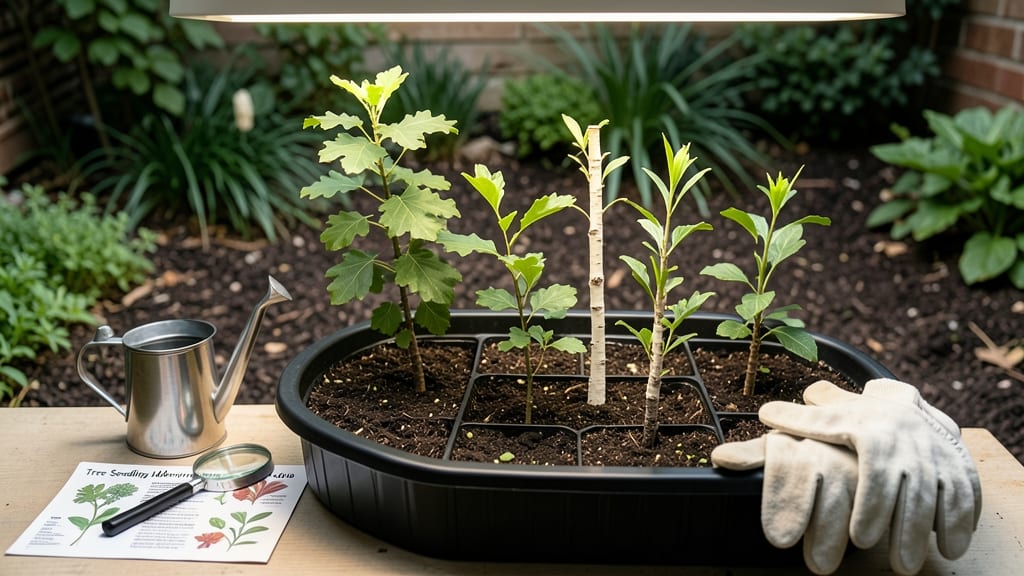
Tree seedling identification by their leaves and bark saves you from planting the wrong species—and years of regret. 🌱 I’ve spent more hours than I’d like admitting staring at tiny leaves, trying to match them to a field guide, only to realize I’d mixed up oak and maple. The difference between a $5 seedling and a mature tree worth thousands starts here: knowing the subtle clues in shape, texture, and growth pattern.
Most mistakes come from focusing on just one feature—like leaf shape—while ignoring bark texture or branching habits. A sugar maple’s lobed leaves might look like red oak’s, but the bark tells the story: smooth and silvery on young maples, while oaks develop rough ridges early.
Grab a magnifying glass and a notebook; you’ll spot the differences in minutes once you know what to look for.
By the end of this guide, you’ll confidently match seedlings to species, choose the right spot for planting, and avoid common look-alikes like birch vs. beech or pine vs. spruce.
The payoff? Trees that thrive in your climate, grow to their full potential, and become the centerpiece of your landscape—without the heartbreak of uprooting a misidentified sapling.
We’ll cover regional variations (yes, a "sycamore" in Texas isn’t the same as one in Tennessee), free apps that double as your field guide, and how to troubleshoot when two species seem identical. No more guessing—just science-backed identification that works for beginners and seasoned gardeners alike.
What Triggers Misidentification
Identifying tree seedlings correctly can be tricky, even for experienced gardeners. Missteps often stem from a mix of biological quirks, environmental factors, and human observation errors. Below, we break down the key reasons why seedlings confuse even the sharpest eyes—and how to spot them before they grow into full-sized trees.
Seedlings don’t look like their mature counterparts. Their leaves, bark, and growth habits can mimic other species entirely.
- Leaf shape shifts: Young leaves often appear simpler (e.g., lobed oak seedlings start with smooth-edged leaves before developing classic lobes). Example: A sugar maple’s first leaves may resemble those of a boxelder, but the vein pattern (palmate vs. pinnate) gives it away.
- Bark confusion: Smooth bark on seedlings (like birch or beech) can look identical across species until they mature. Pro tip: Scratch the bark—some species (e.g., sycamore) reveal unique textures early.
- Growth form tricks: Some seedlings grow in dense clusters (e.g., dogwood) or sprawl (e.g., willow), mimicking weeds or vines until their true branching pattern emerges.
Light, temperature, and moisture levels drastically reshape seedlings’ features, making them unrecognizable at different times of year.
| Season | What Changes | How It Affects ID |
|---|---|---|
| Spring | New leaves emerge larger and softer than mature leaves (e.g., hickory’s compound leaves may look like walnut’s). | Overestimates leaf size; ignores key details like serration or aroma. |
| Summer | Stress from heat/drought causes leaf curling or stunted growth, masking species traits. | Misidentifies stressed seedlings as a different species entirely (e.g., a curled red maple might resemble a poison ivy vine). |
| Fall | Color shifts (e.g., yellow birch vs. goldenrod) or early leaf drop can erase distinguishing marks. | Ignores bark or bud patterns, which remain reliable year-round. |
Even with a guide, our brains fill in gaps—or overlook critical details—when identifying seedlings.
- Focusing on one trait: Zeroing in on leaf shape alone (e.g., oak vs. chestnut) ignores bud arrangement or stem hairiness, which are often decisive.
- Ignoring the whole plant: Seedlings grow in colonies (e.g., aspen groves) or shade of others (e.g., under mature trees), altering their natural form.
- Relying on color: Seedling leaves can turn purple, bronze, or yellow due to stress, not species. Example: A red-tinged sycamore seedling might be mistaken for a dogwood.
Soil, climate, and competition force seedlings to adapt, blurring their "true" appearance.
- Poor soil nutrients: Seedlings in rocky or acidic soil may develop stunted roots or unusual leaf patterns (e.g., a white pine in clay might look like a spruce).
- Cross-pollination hybrids: Some seedlings (e.g., Quercus × hybrids) are genetic chimeras with no clear species match until DNA testing.
- Urban vs. wild growth: Seedlings in cities (e.g., ginkgo or London plane) may lack natural predators, growing larger or faster than their rural cousins.
To outsmart these pitfalls, combine 3 key strategies:
- Compare with mature trees: Note the seedling’s bud scale texture, terminal bud shape, and branch angle—traits that persist even when leaves change.
- Use a "trait checklist": For each candidate species, verify 2–3 non-leaf features (e.g., bark ridges, twig color, seed pod shape).
- Track changes over time: Take photos monthly to document leaf evolution, bark development, and growth habits.
Fixing Common Seedling ID Mistakes
Accurate tree seedling identification can feel like solving a puzzle—especially when similar species share overlapping traits. But with the right approach, you can turn confusion into clarity. Below are practical solutions to the most common challenges, paired with prevention tips to keep your identification process smooth.
Problem: Two species (e.g., oak vs. maple, pine vs. spruce) have nearly identical leaves or bark at early stages, making them hard to distinguish.
How to Fix It:
- 📏 Compare Leaf Arrangement & Structure
- Alternate vs. Opposite Leaves: Hold the seedling at a 90-degree angle to the ground. Leaves growing alternately (one per node) often signal oaks, willows, or birches, while opposite leaves (pairs at each node) are common in maples, dogwoods, or buckeyes.
- Simple vs. Compound Leaves: A single leaf blade (simple) is easier to ID than multiple leaflets (compound). For example, hickory seedlings have pinnate compound leaves, while sweetgum has star-shaped simple leaves.
- 🌱 Examine the Stem & Buds
- Bud Shape: Maple buds are pointed and sticky; oak buds are rounded and scaly. Use a magnifying glass if needed.
- Stem Hairiness: Birch seedlings often have fine hairs along the stem, while sycamore stems are smooth and mottled.
- 🌲 Check for Secondary Traits
- Scent: Crush a leaf—some, like sassafras, release a spicy aroma.
- Texture: Rub leaves between fingers; rough textures (e.g., hickory) differ from smooth ones (e.g., beech).
💡 Prevention Tip: Keep a seedling trait chart handy with key differences (e.g., leaf shape, bud type, stem hair). Snap photos of ambiguous seedlings for later comparison.
Problem: Bark patterns (like fissures or ridges) aren’t visible in seedlings, leaving you guessing the mature tree’s identity.
How to Fix It:
- 🔍 Focus on Leaf Scars & Twigs
- Leaf Scar Shape: The pattern where leaves detach can reveal species. Maple scars are U-shaped; oak scars are more rounded with bundle scars.
- Twig Color & Lenticles: Reddish twigs might indicate cherry or dogwood, while gray, scaly twigs suggest pine or fir.
- 📸 Take Long-Term Notes
- Record observations in a seedling journal, noting:
- Leaf arrangement (alternate/opposite).
- Twig color and thickness.
- Any unique features (e.g., thorns on hawthorn).
- Revisit seedlings seasonally—bark and growth habits become clearer as they mature.
- Record observations in a seedling journal, noting:
- 🌳 Use a Field Guide App
- Apps like LeafSnap or iNaturalist let you upload photos for AI-assisted ID. Upload a close-up of leaves and twigs for better accuracy.
💡 Prevention Tip: Plant a few known reference seedlings (e.g., labeled nursery stock) nearby. Compare your mystery seedlings to these "controls" to spot differences.
Problem: Leaves change color, drop, or grow back differently, making it hard to match a seedling to a mature tree’s traits.
How to Fix It:
- 🍁 Track Seasonal Leaf Patterns
- Spring: New leaves emerge in distinct shapes (e.g., lobed for oaks, serrated for cherries).
- Fall: Color changes can hint at species—red maples turn fiery, while ginkgos stay golden.
- Winter: Evergreens (pines, spruces) retain needles, while deciduous trees have bare stems. Look for bud scales or dormant leaf scars.
- 📅 Create a Timeline
- Note when leaves unfurl, change color, or drop. For example:
- Early bloomers: Dogwoods flower before leaves appear.
- Late bloomers: Oaks leaf out after spring frosts.
- Note when leaves unfurl, change color, or drop. For example:
- 🌲 Compare to Mature Trees
- If possible, match seedlings to nearby adult trees. Use a spotting scope or binoculars to study bark, branch patterns, and leaf clusters.
💡 Prevention Tip: Take monthly photos of seedlings labeled with dates. Over time, you’ll spot patterns (e.g., "This seedling’s leaves always turn yellow in October").
Problem: Tiny seedlings may lack leaves, buds, or bark texture, leaving you with little to go on.
How to Fix It:
- 🔬 Use a Hand Lens for Microscopic Clues
- Examine:
- Needle Arrangement: Pines have needles in bundles (fascicles), while spruces have single needles radiating from the stem.
- Seed Pods or Cones: Even miniature cones (e.g., pine or hemlock) can reveal species.
- Examine:
- 🌱 Grow Them Out
- Transplant ambiguous seedlings into pots with well-draining soil and observe their growth for 1–2 seasons. Note:
- How fast they grow.
- Any unusual leaf shapes or smells.
- Root structure (taproot vs. fibrous).
- Transplant ambiguous seedlings into pots with well-draining soil and observe their growth for 1–2 seasons. Note:
- 📊 Cross-Reference with Local Flora
- Check regional tree databases (e.g., USDA Plants or local arboretum guides) to narrow down possibilities based on your climate zone.
💡 Prevention Tip: Collect seed samples from known trees in your area. Plant them alongside mystery seedlings to compare growth habits.
If all else fails, lab testing can confirm species. Services like Herbarium or local university extension programs often offer affordable kits. Simply mail in a leaf sample for analysis—ideal for rare or hybrid seedlings.
Remember: Patience is key. Seedlings reveal their secrets over time—stay curious, and your ID skills will sharpen with every observation! 🌱🔍
Frequently asked questions
What’s the best tool for identifying tree seedlings without a field guide?
Start with a magnifying glass (for buds and bark details) and a notebook to track leaf arrangement, twig color, and scent. For instant ID, use free apps like LeafSnap or iNaturalist, which analyze uploaded photos against a database of 10,000+ species. Pro tip: Snap close-ups of both leaves and twigs for accuracy.
Can I trust a seedling’s leaf shape if it’s only its first set?
No—first leaves often look completely different from mature ones! For example, a sugar maple’s initial leaves may resemble a boxelder’s, but check the vein pattern (palmate vs. pinnate) or bud shape instead. Always verify with 2–3 traits (e.g., leaf arrangement + twig hairiness) before committing to an ID.
How do I tell the difference between pine and spruce seedlings?
Look at the needles: Pines have needles in bundles (fascicles) of 2–5, while spruces have single needles radiating from the stem. Also, pine needles are softer and often curved, whereas spruce needles are sharp and four-sided. Check the cones too—pine cones are woody and hang down.
What should I do if my seedling looks like two different species?
It might be a hybrid! Cross-pollination is common in oaks, willows, and poplars. To confirm, observe its growth over 1–2 seasons—hybrids often show intermediate traits (e.g., leaf shape between two parents). If unsure, consult a local arboretum or submit a sample to a university herbarium for DNA testing.
Are there any red flags that mean I shouldn’t plant a seedling?
Yes! Watch for yellowing leaves (nutrient deficiency), curls or spots (disease), or gnarled growth (pests). Also, avoid seedlings with no taproot (sign of poor health) or those growing in compacted soil (roots may struggle later). If the seedling smells rotten or has blackened stems, it’s likely dead—don’t plant it.