
Flowers
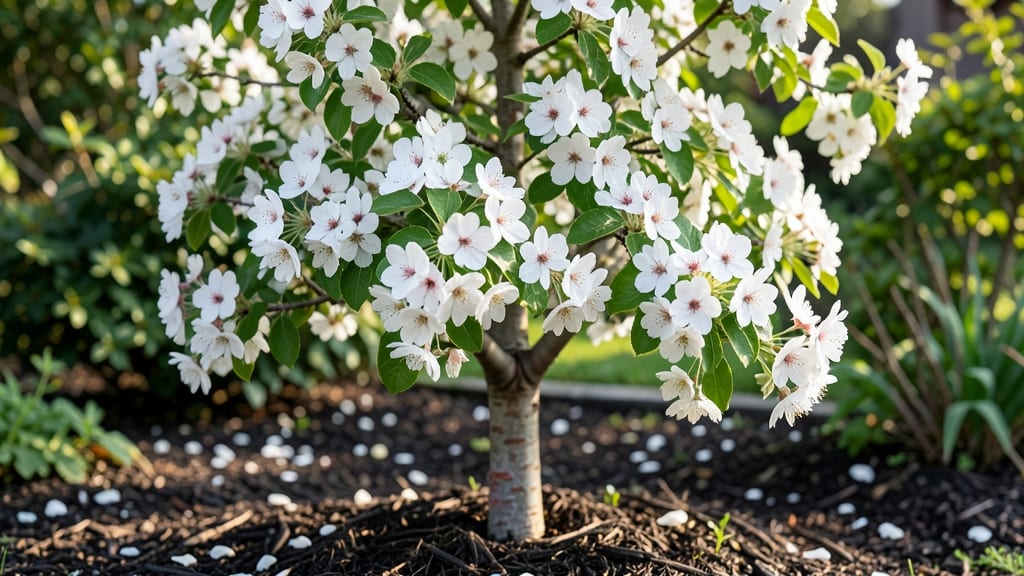
Five-petaled white blooms transform any garden into a pollinator paradise. 🌸 These trees—like flowering crabapple (Malus), dogwood (Cornus), and magnolia (Magnolia)—bring delicate beauty and year-round interest, from spring blossoms to fall color.
Their simple, elegant flowers attract bees, butterflies, and hummingbirds while creating soft borders or stunning focal points.
The best varieties for borders include the 'Royal Purple' crabapple (deep pink buds opening to white) and 'Cherokee Brave' dogwood (large, fragrant blooms). Plant them in full sun to partial shade with well-drained soil, and they’ll thrive for decades.
Pair with salvia or coneflowers for a layered, pollinator-friendly display that blooms from early spring through summer.
Imagine your garden in late spring, when these trees burst into clouds of white, their petals catching the light just right. The scent of magnolia or dogwood on a warm morning is unforgettable—like a whisper of spring that lingers all season.
These trees aren’t just pretty; they’re the backbone of a thriving, low-maintenance garden.
Whether you’re designing a cottage-style border or a modern pollinator haven, these five-petaled beauties deliver effortless elegance. Start with one or two for instant impact—your garden (and the bees) will thank you.
Behind The Blooms Natural Triggers
If you’ve ever marveled at a tree adorned with delicate white, five-petaled flowers—like the iconic Crabapple or Dogwood—you might wonder why nature crafts such beauty.
The answer lies in a mix of evolutionary biology, environmental cues, and the tree’s own survival strategies. Let’s break down the science behind these stunning displays.
Every tree’s flowering cycle starts with its genetic code. Trees with five-petaled white blooms, such as Magnolia stellata or Saucer Magnolia, inherit traits that trigger flower production at specific times. These genes regulate:
- Florigen production: A hormone-like protein that signals when it’s time to bloom. Think of it as the tree’s internal countdown timer.
- Petal count and color: While five petals are common in many flowering trees (thanks to ancestral plant DNA), white pigmentation often results from a lack of anthocyanins (the compounds that create red/purple hues).
- Dormancy periods: Some species, like Eastern Redbud, need a cold snap (called vernalization) to "wake up" their flowering genes.
Pro Tip: 💡 If your tree isn’t blooming as expected, check its cultivar (specific variety). Some grafted trees may produce fewer flowers if the rootstock isn’t compatible with the scion (the grafted top).
Trees don’t bloom on a whim—they respond to seasonal light and temperature shifts. Here’s how it works:
| Factor | Effect on Flowering | Example Trees |
|---|---|---|
| Long daylight hours (spring) | Triggers florigen in long-day plants like Japanese Snowbell. | Styrax japonicus |
| Chill hours (winter) | Breaks dormancy in chill-requiring trees like Crabapple. | Malus spp. |
| Warm spells in late winter | Can fool trees into blooming early (risking frost damage). | Dogwood (Cornus florida) |
Watch Out: ⚠️ Global warming is causing false springs, where trees bloom too early and risk frost killing their flowers. This is especially critical for five-petaled white bloomers, which are often showy but delicate.
Even the most genetically perfect tree won’t bloom if it’s stressed by poor soil or drought. Here’s how hydration and nutrients play a role:
- Moisture balance: Trees like Saucer Magnolia need consistently moist (but not soggy) soil to produce energy for flowers. Drought stress redirects resources to root growth, delaying blooms.
- Nutrient availability:
- Phosphorus (P) fuels flower development.
- Potassium (K) helps transport nutrients to blooms.
- Too much nitrogen (N) can lead to leafy growth instead of flowers.
- pH levels: Most flowering trees prefer slightly acidic soil (pH 6.0–7.0). A pH below 5.0 or above 8.0 can lock out essential nutrients, stunting blooms.
Actionable Fix: 🌡️ Test your soil and amend with compost or bone meal (for phosphorus) if blooms are sparse. Mulch with wood chips to retain moisture.
Some trees bloom white, five-petaled flowers as a pollinator magnet. These blooms often:
- Emit scent compounds (like benzaldehyde in Magnolias) to attract bees, butterflies, and moths.
- Produce nectar as a reward, ensuring cross-pollination for fruit/seed production.
- Time blooms to avoid competition—early spring bloomers (e.g., Redbud) emerge before leaf-out to catch pollinators before other trees leaf out.
Fun Fact: ✨ Some white-flowered trees, like Fringe Tree (Chionanthus), are self-sterile, meaning they need pollinators to produce seeds. Without them, the tree’s energy goes to wasted flowers instead of fruit.
Understanding these triggers helps you encourage—or troubleshoot— blooming in your own garden. Whether it’s adjusting soil, protecting against frost, or inviting more pollinators, science gives you the tools to nurture nature’s most elegant displays.
Reviving Your Five-Petal Blooms
If your elegant white five-petal flowers are struggling—whether from pests, disease, or environmental stress—don’t despair! With the right care, you can restore their beauty and keep them thriving in your garden. Below, we’ve mapped out practical solutions tailored to common issues, along with prevention tips to keep your pollinator-friendly plants healthy for years to come.
If tiny invaders are munching on your blooms or leaves, act fast with these targeted fixes:
🔥 Identify the Culprit First
- Aphids or Spider Mites? Look for sticky residue (honeydew) or fine webbing on leaves.
- Caterpillars? Check for chewed leaves or frass (tiny black droppings).
- Japanese Beetles? Spot skeletonized leaves with crescent-shaped notches.
🍳 Natural Remedies to Try
- Neem Oil Spray 🌿: Mix 1 tbsp neem oil + 1 tsp mild soap in 1 quart of water.
Spray leaves thoroughly (especially undersides) every 5–7 days until pests vanish. - Insecticidal Soap 🧼: Use a pre-made spray (like Safer® Brand) for soft-bodied pests like aphids. Reapply after rain. - Handpick Large Pests 👨🍳: Drop Japanese beetles into soapy water or crush caterpillars early in the morning.
💡 Prevention Tips
- Encourage Beneficial Insects: Plant dill, marigolds, or yarrow nearby to attract ladybugs and lacewings, which devour pests.
- Prune Regularly: Remove heavily infested branches to stop the spread.
- Water in the Morning: Wet foliage dries faster, making it less hospitable for slugs and snails.
Yellowing leaves, black spots, or oozing stems? Fungal or bacterial infections might be to blame. Here’s how to treat and prevent them:
🥘 Fungal Issues (Powdery Mildew, Leaf Spot)
- Prune and Dispose ⏰: Cut off infected leaves/stems and sterilize pruners with rubbing alcohol.
- Fungicide Spray 🍄: Use a copper-based fungicide (like Bonide®) or a baking soda mix (1 tsp baking soda + 1 quart water + a drop of soap).
- Improve Airflow 🌬️: Space plants 3–4 feet apart and avoid overhead watering.
🔪 Bacterial Problems (Oozing Stems, Wilting)
- Remove Infected Parts Immediately 🚨: Snip off diseased stems below the infection and dispose of them in the trash (not compost).
- Copper Fungicide 🛡️: Apply as a preventative spray every 2–3 weeks during wet seasons.
- Sterilize Tools 🧴: Clean pruners with bleach (1 part bleach to 9 parts water) between cuts.
✨ Prevention Tips
- Water at the Base 💦: Avoid wetting leaves to reduce fungal spores.
- Mulch Properly 🌱: Use 2–3 inches of organic mulch to improve soil drainage and prevent splashing.
- Rotate Plants 🔄: Avoid planting the same species in the same spot year after year.
If your flowers are wilting, dropping buds, or growing sparsely, environmental factors like soil, light, or water might be the issue.
🌞 Light and Soil Solutions
- Check Sun Exposure ☀️: Most five-petal white flowers (like spirea, viburnum, or elderberry) thrive in partial shade to full sun. If leaves are scorched, provide afternoon shade.
- Test Soil pH 📊: Aim for 6.0–7.0.
Amend with lime (to raise pH) or sulfur (to lower it) if needed. - Improve Drainage 💧: Amend heavy clay soil with compost or sand to prevent root rot.
🚰 Watering Fixes
- Deep Watering 🌊: Water 1–1.5 inches per week (including rain).
Use a moisture meter to check soil depth. - Avoid Overhead Watering 🌧️: Water at the base to keep foliage dry and prevent fungal growth. - Mulch Thickly 🍂: Apply 3 inches of mulch to retain moisture and regulate soil temperature.
💡 Pro Tips for Quick Recovery
- Fertilize Lightly 🌿: Use a balanced 10-10-10 fertilizer in early spring and after flowering.
Avoid high-nitrogen fertilizers, which promote leafy growth at the expense of blooms. - Transplant if Needed 🌱: If the location is consistently poor (too shady, soggy, or windy), relocate the plant to a sunnier, well-drained spot.
With these targeted solutions, your five-petal white blooms should bounce back stronger than ever—attracting pollinators and adding elegance to your garden borders. Act quickly for pests and diseases, but take your time with soil and light adjustments to ensure long-term health.
Frequently asked questions
Which trees with white, five-petaled flowers bloom the longest?
For extended blooms, prioritize magnolias (like Magnolia stellata) and crabapples (e.g., Malus 'Royal Purple'). These varieties often flower for 3-4 weeks in spring, while dogwoods (Cornus florida) typically bloom for 2 weeks. Pair them with spirea or viburnum for sequential color.
Can I grow these trees in containers?
Yes, but choose dwarf varieties like 'Little Gem' magnolia or 'Centennial' crabapple. Use a 15-gallon container minimum with well-draining soil and repot every 2-3 years. Ensure they get 6+ hours of sunlight daily and water when the top 2 inches of soil dry out. Containers dry faster than ground soil!
Why do some white five-petal flowers turn pink?
This natural variation occurs due to anthocyanin production as flowers age or in response to temperature shifts. For example, 'Royal Purple' crabapple starts deep pink but opens to white. Some varieties like 'Pink Perfection' dogwood are bred to maintain pink hues. Cold nights can also intensify pink tones in white-flowered trees.
How do I attract more pollinators to these trees?
Plant companion flowers that bloom at the same time, like lavender or bee balm. Avoid pesticides and provide water sources (shallow dishes with pebbles). Trees like magnolia and dogwood already produce nectar, but adding native milkweed creates a pollinator buffet. Time plantings so blooms overlap from early spring through summer.
Are any of these trees deer-resistant?
While no tree is completely deer-proof, magnolias and serviceberry (Amelanchier) are less appealing than crabapples or dogwoods. For extra protection, use deer repellent sprays (like Liquid Fence) or plant them near deer-deterrent shrubs like boxwood or holly. Young trees may need physical barriers until established.