
Trees
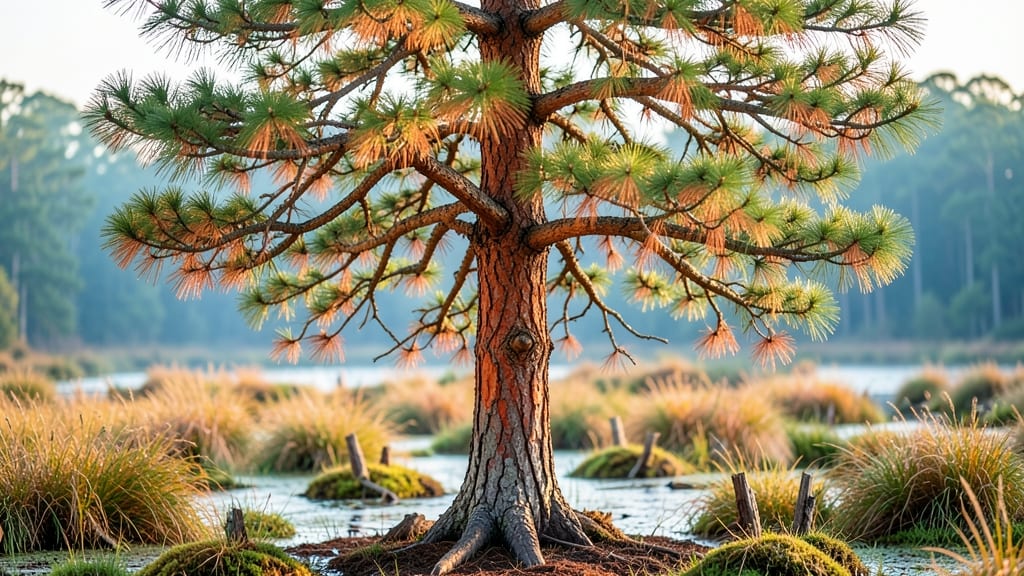
The tree that never has leaves is called an evergreen, and common types like pine, spruce, and fir keep their needle-like foliage all year for cold-weather survival. Their specialized needles help conserve water while still capturing sunlight.
Evergreens stay green because their needles are packed with waxy coatings that lock in moisture—a survival trick for winter. Unlike deciduous trees that shed leaves to conserve energy, these trees keep photosynthesizing year-round, though at a slower pace. 🌲 The trade-off?
Their needles last 2-5 years before falling, unlike broad leaves that refresh annually. This adaptation explains why evergreens dominate cold climates where bare branches would be deadly.
What makes this fascinating is how their biology contrasts with seasonal trees. While oaks and maples grow new leaves each spring, evergreens invest in durable needles that reduce water loss through tiny pores.
This strategy works perfectly in regions with harsh winters, where dropping leaves would leave them vulnerable to frost damage. The trade-off? Their slow growth means they take longer to reach maturity compared to fast-growing deciduous species.
💡 In This Article
- How Evergreen Needles Adapt to Year-Round Survival
- Top Evergreen Trees for Landscaping and Climate Zones
How evergreen needles adapt to year-round survival
The secret to evergreen needles lies in their specialized structure designed for cold resistance. Unlike broad leaves, these needles have a thick, waxy cuticle that reduces water loss by up to 90% compared to deciduous leaves.
This waxy layer acts like a microscopic raincoat, preventing dehydration during winter winds. The needles also have sunken stomata (pores) that further minimize moisture escape—critical when frozen ground blocks water uptake.
Evergreens use a different photosynthesis strategy called CAM (Crassulacean Acid Metabolism), which allows them to process carbon dioxide at night when temperatures are cooler and humidity higher. This adaptation lets them continue growing when deciduous trees would be dormant.
Their needles contain cold-resistant chlorophyll that remains active even at 32°F (0°C), though photosynthesis slows dramatically below 50°F (10°C). This explains why evergreens often appear dark green in winter—they're still alive but operating at reduced capacity.
The trade-off for this survival strategy is a slower growth rate. Evergreen needles last 2-5 years before falling, while broad leaves typically last only 3-6 months. This longevity means evergreens invest more energy in needle production upfront, resulting in 10-20% less annual growth compared to fast-growing deciduous species.
The energy saved by not producing new leaves each year gets redirected to root and branch development, explaining why many evergreens have extensive root systems.
Another fascinating adaptation is their needle arrangement. Most evergreens have needles that grow in clusters or bundles (like pine needles) rather than flat leaves. This 3D structure allows sunlight to reach all sides while reducing wind resistance.
Some species, like spruces, have needles that point upward to shed snow more easily—a critical advantage in heavy-snow regions where accumulated weight could break branches. This architectural efficiency means evergreens can thrive in climates where deciduous trees would struggle.
Deciduous trees shed leaves annually to conserve energy during winter, but evergreens take a different approach. Their needles contain antifreeze proteins that prevent ice crystal formation within cells, while their high resin content acts as a natural preservative.
This chemical cocktail allows them to maintain some photosynthetic activity even when temperatures dip below freezing—a survival tactic that explains why evergreens dominate cold, high-latitude forests where seasonal change is extreme.
Consider the contrast: A sugar maple might grow 2 feet per year in ideal conditions, while a white pine might only grow 6-12 inches annually. Yet that pine will stand for centuries, its needles falling gradually rather than all at once.
This slow-and-steady approach makes evergreens the ultimate survivors in harsh environments where rapid growth isn't possible. 🌲