
Pests and Diseases
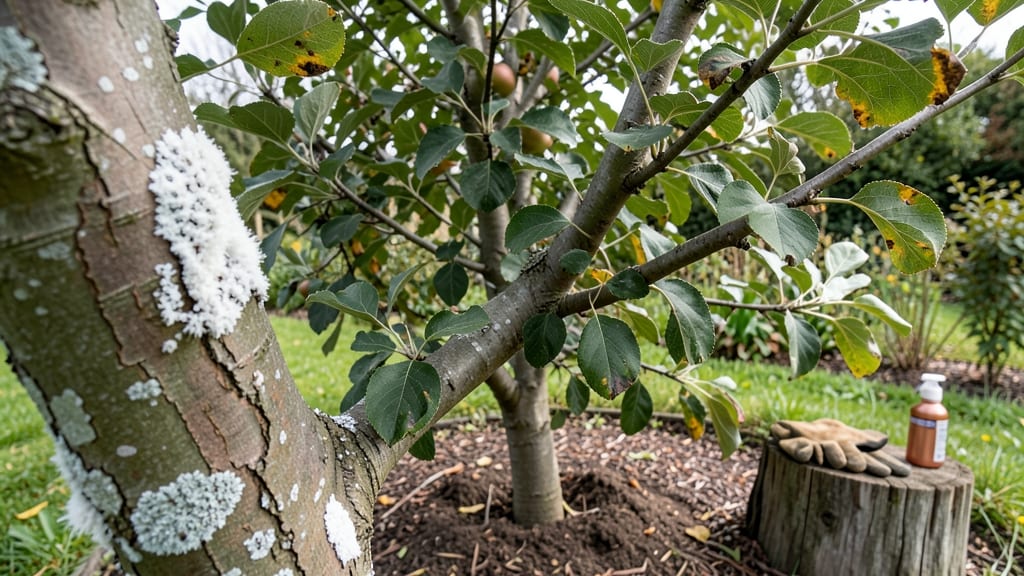
That silvery white fungus creeping up your apple tree isn’t hurting your tree—it’s lichen, and it’s actually harmless. 🌿 The real question is how to remove it without damaging the bark or stressing your tree, because scraping it off too aggressively can leave scars that invite pests or disease.
Lichen thrives where moisture meets bark, so it’s often a sign of high humidity or poor air circulation. It’s not contagious, won’t spread to other trees, and won’t harm your apple’s health—but if it’s spreading fast or looks slimy (not dry and crusty), you might have something else to investigate.
The solution is gentle: soft-bristle brushes, vinegar sprays, or even just leaving it alone. I’ve removed lichen from my own trees with a damp cloth and a little elbow grease, and the bark healed perfectly within weeks. The key is patience and a light touch.
If your tree looks stressed beyond the lichen—yellowing leaves, dieback, or oozing sap—it’s time to call an arborist. Otherwise, this is one problem you can solve with a weekend afternoon and a few simple tools.
Root Causes of Bark Fungus
That mysterious white fungus creeping up your apple tree’s bark isn’t just an eyesore—it’s often a symptom of underlying environmental or biological stress. Understanding why it appears is the first step to treating it safely and effectively.
Below, we break down the most common triggers, from natural weather patterns to hidden pests, so you can tackle the problem at its source.
Fungi thrive in damp conditions, and apple trees are no exception. When bark stays consistently wet—whether from heavy rain, overhead irrigation, or poor soil drainage—it creates the perfect breeding ground for lichen (the white, crusty growth) or mold. Here’s how moisture fuels the problem:
- Prolonged wetness: Lichen and some fungal species need moisture to spread. If your tree’s bark rarely dries between rainfalls, spores germinate and colonize.
- Compacted soil: Poor drainage traps water at the roots, stressing the tree and weakening its defenses. Weak trees are more susceptible to fungal invasions.
- Overhead watering: Sprinklers that soak the bark (instead of watering the base) mimic a rain shower, encouraging fungal growth.
Pro tip: 💡 If your tree sits in a low-lying area or has clay-heavy soil, amend the soil with compost or install a French drain to improve airflow and reduce moisture buildup.
Before you see the white fungus, tiny invaders might already be feasting on your apple tree. Pests like aphids, scale insects, or borers create wounds and excrete sticky honeydew—a sugary substance that attracts sooty mold (a black or grayish fungus).
While sooty mold isn’t the white growth you’re seeing, it often coexists with lichen and signals a stressed tree.
- Sap-sucking insects: Aphids and scale leave behind honeydew, which can foster secondary fungal infections or alter bark pH, making it easier for lichen to latch on.
- Bark-boring pests: Insects like the apple bark beetle create entry points for fungi to invade deeper tissues.
- Root damage: Grubs or nematodes attacking roots reduce the tree’s ability to transport nutrients, leaving it vulnerable to opportunistic fungi.
Watch for: 🔍 Sticky residue on leaves, sawdust-like frass (insect droppings) near the trunk, or wilting branches—all signs pests are undermining your tree’s health.
A healthy apple tree repels most fungal invaders, but stress—whether from drought, nutrient deficiencies, or physical damage—lowers its resistance. When a tree is struggling, lichen and mold seize the opportunity to take hold.
- Nitrogen deficiency: Yellowing leaves or stunted growth can weaken the bark’s natural protective layers, making it easier for fungi to colonize.
- Potassium or calcium shortages: These minerals strengthen cell walls. Without them, the tree’s bark becomes more permeable to fungal spores.
- Physical damage: Scrapes from tools, animal rubs, or even frost cracks create entry points for spores to invade.
- Competition for resources: Overcrowded roots from nearby plants or grass compete with your apple tree for water and nutrients, exacerbating stress.
Test your soil: 📊 A simple soil test kit (available at garden centers) can reveal deficiencies. Amend with compost or a balanced fertilizer (like 10-10-10) to restore vigor.
Not all white fungus is harmful! Lichen is a symbiotic organism made of fungi and algae (or cyanobacteria) that chooses to grow on bark, rocks, or wood. Unlike pathogenic fungi, lichen doesn’t harm the tree—it’s more of a passenger than a parasite. However, its presence can indicate:
- Clean air: Lichen is a bioindicator of low pollution levels. If it’s thriving, your tree is likely in a healthy environment (though this doesn’t excuse neglect!).
- Stable, undisturbed bark: Lichen prefers rough, textured surfaces where it can anchor. Smooth or frequently pruned bark resists colonization.
- Moisture-loving species: Some lichen types (like Usnea) need high humidity to survive, which is why they’re common in shaded or damp areas.
Key difference: 🎯 Lichen grows on top of bark (like a crust or beard) and doesn’t penetrate tissues, while pathogenic fungi can cause bark rot or lesions. If you’re unsure, gently scrape a small patch—lichen will lift away easily; fungal growth may leave a dark stain or decay.
By identifying the root cause—whether it’s excess moisture, pest activity, tree stress, or simply lichen’s natural lifecycle—you can choose the right (and safest) removal method. Next, we’ll explore how to address each scenario without damaging your apple tree.
Quick Fixes for Tree Bark Fungus
If you’ve spotted that silvery or white fungus creeping up your apple tree’s bark, don’t panic—it’s usually harmless lichen or mold, but it’s still worth addressing for your tree’s health.
Below are targeted solutions based on the most common causes, from simple cleaning to preventive care. Follow these steps to restore your tree’s bark without causing damage.
For light cases of lichen or mold, a thorough cleaning is often enough to restore your tree’s bark.
- 🔥 Scrub with a Soft Brush: Use a stiff-bristled brush (like a toothbrush or nylon scrubber) to gently remove the white growth. Avoid metal tools—they can scratch the bark.
- 🍳 Vinegar or Water Spray: Mix equal parts water and white vinegar in a spray bottle. Lightly mist the affected areas (test a small spot first to avoid discoloration). The acidity helps dissolve the fungus without harming the tree.
- 👨🍳 Avoid Harsh Chemicals: Skip bleach or fungicides unless the fungus is severe (like powdery mildew). These can damage the tree’s natural defenses.
If the fungus keeps returning, excess moisture in the bark’s crevices is likely the culprit. Adjust care to reduce humidity around the trunk.
- 💡 Improve Airflow: Prune nearby branches or shrubs shading the tree. Aim for at least 3–4 feet of clearance around the trunk.
- ✨ Mulch Properly: Use organic mulch (like wood chips) but keep it 3–4 inches away from the trunk to prevent moisture buildup.
- 🎯 Water at the Base: Avoid overhead watering, which can soak the bark. Water the soil around the tree’s drip line instead.
If the white fungus is actually a serious pathogen (like Nectria canker or Phytophthora), take immediate action to prevent spread.
| Problem | Solution |
|---|---|
| Cankers or Dark Spots (signs of Nectria) |
|
| Soft, Oozing Bark (signs of Phytophthora) |
|
Keep your apple tree fungus-free with these proactive steps:
- 🌿 Inspect Regularly: Check the bark every 2–3 months, especially after rain.
- 🍎 Boost Tree Health: Fertilize with balanced, organic fertilizer (like 10-10-10) in early spring to strengthen defenses.
- 🌡️ Avoid Overwatering: Apple trees prefer deep but infrequent watering—aim for 1–1.5 inches per week.
- 🎯 Protect from Splashes: Use a tree guard (metal or plastic) to shield the trunk from lawnmower debris or rain splash.
With the right care, your apple tree’s bark will stay clean and healthy, ensuring those sweet, juicy fruits keep coming year after year! 🍏🌳
Frequently asked questions
Is white fungus on my apple tree always harmless?
Not always! Most white growth is harmless lichen, but if it looks slimy, darkens, or causes bark to ooze, it could be a serious fungal infection like Nectria canker. Lichen grows on top of bark and won't harm your tree, while pathogenic fungi can cause rot or dieback. Always test a small area—lichen lifts away easily, while fungal growth may leave a stain.
How do I tell if it's lichen or something more dangerous?
Lichen appears as dry, crusty patches that don't penetrate the bark, while harmful fungi often create dark spots, cankers, or oozing sores. Check for these signs: soft, wet-looking growth, bark cracks, or leaves wilting nearby. If you see any of these, treat it as a potential infection and consult a local arborist for confirmation.
Can I use bleach or fungicides to remove white fungus?
Bleach is too harsh for tree bark and can damage the underlying tissue. For lichen, stick to gentle methods like a soft brush or diluted vinegar solution (1:1 water ratio). If you suspect a fungal infection, use a copper-based fungicide (like Bordeaux mixture) instead of bleach—it's safer for the tree and more effective against pathogens.
Will removing the white fungus hurt my apple tree?
Only if you're too aggressive! Use a soft-bristle brush or damp cloth to gently clean the bark—never scrape with metal tools. The key is patience: lichen removal should never damage the underlying bark. If you notice any scratches or exposed wood after cleaning, apply a thin layer of pruning sealant to protect the wound.
How can I prevent white fungus from coming back?
Focus on improving airflow and reducing moisture around the trunk. Prune nearby branches, water at the base (not overhead), and keep mulch 3-4 inches away from the bark. Regular inspections (every 2-3 months) help catch issues early, and a balanced organic fertilizer in spring strengthens your tree's natural defenses against fungal growth.