
How To
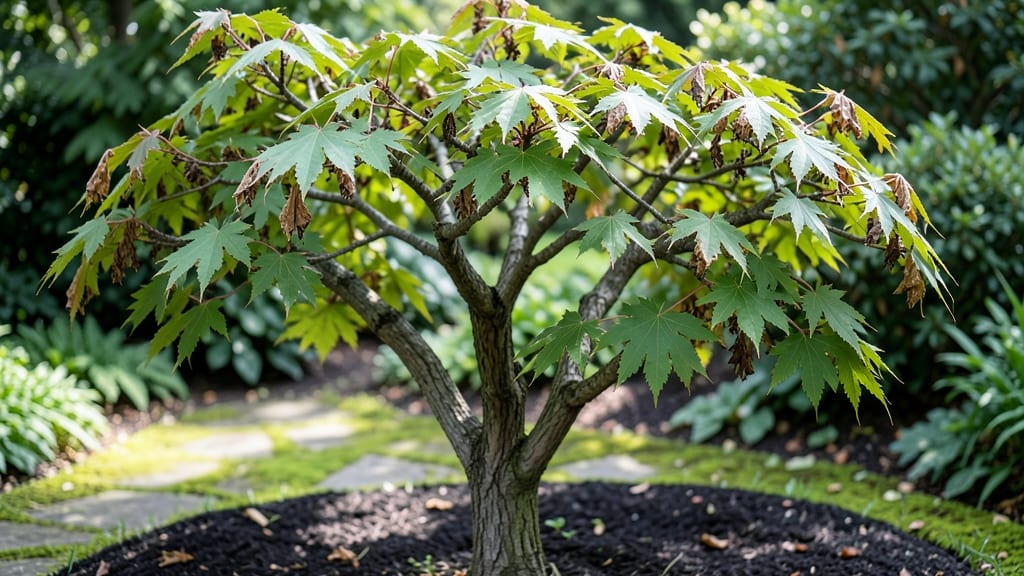
Acer tree brown tips on leaves usually mean one thing: overwatering—or at least, watering that’s too much for your tree’s roots to handle. 🌳 I’ve nursed back more than a few maples with crispy leaf edges, and the fix isn’t as complicated as it seems.
The key is understanding how much moisture your acer’s roots can actually tolerate before they start screaming for help.
Most people assume brown tips mean thirsty soil, but acers—especially Japanese maples—are far more sensitive to soggy roots than dry ones. Too much water blocks oxygen, causing those telltale crispy edges. Check the soil: if it’s still damp 2-3 inches down after a week, you’re overdoing it.
And yes, even rain counts—mulch helps, but it’s not a magic fix for heavy clay or poor drainage.
Here’s the game-changer: prune the damaged tips (they won’t recover) and adjust your watering to deep, infrequent soaks—think once a week in summer, less in winter. Add compost to improve drainage, and watch those new leaves unfurl smooth and green by next season.
The best part? You’ll spot the difference within 4-6 weeks of proper care.
If the problem spreads beyond tips—yellowing, wilting, or peeling bark—it’s time to call an arborist. But for most cases, this simple routine works like a charm. Trust me, your tree’s got more drama than it can handle without your help.
Root Causes Behind Leaf Damage
When your acer tree starts showing brown tips on its leaves, it’s often a cry for help—your tree is struggling, and understanding the why is the first step to fixing it.
Below, we break down the most common culprits, backed by science, so you can diagnose the issue like a pro. 🌳🔍
💧 Overwatering: The Silent Killer
Overwatering is the #1 reason for brown leaf tips in acer trees, especially in species like the Norway maple or Japanese maple. Here’s why:
- Root suffocation: When soil stays soggy, roots can’t breathe. Oxygen deprivation forces them to shut down, cutting off nutrients and water to the leaves. The tips, being the youngest and most sensitive, turn brown first.
- Salt buildup: Tap water contains minerals (like chlorine and sodium) that accumulate in the soil. Over time, this creates a salty crust around roots, blocking water uptake. The leaf edges—where salt concentration is highest—brown as a result.
- Fungal infections: Excess moisture creates the perfect breeding ground for Phytophthora or Pythium, fungi that rot roots and clog xylem vessels. The tree’s response? Brown, crispy leaf tips as it conserves water.
Pro tip: Stick your finger 2–3 inches into the soil. If it’s damp, wait before watering. Acer trees prefer slightly dry soil—think of a wrung-out sponge, not a swamp. 💡
🌡️ Extreme Heat or Cold Stress
Acer trees are hardy, but they have limits. Brown tips often appear when leaves are scorched by heat or frostbitten:
- Heat stress: Temperatures above 90°F (32°C) cause transpiration (water loss) to outpace absorption. Leaf edges dry out first because they have fewer protective cells. Japanese maples are especially sensitive.
- Cold damage: Sudden freezes (<32°F/0°C) can rupture leaf cell membranes. The tips, being thinner, brown as the tree “sacrifices” them to protect the core. Evergreen acers (like Acer palmatum) are more vulnerable.
- Sunburn: Young trees or those suddenly moved to full sun develop chlorosis (yellowing) followed by browning at leaf edges. This is common in variegated acers with light-colored foliage.
Actionable fix: Mulch with 2–3 inches of organic matter (wood chips, straw) to regulate soil temperature. In summer, provide afternoon shade with a shade cloth (30–50% coverage). For winter, wrap the trunk with burlap if your region has harsh freezes. ❄️☀️
🍄 Nutrient Deficiencies: What’s Missing?
Brown tips can signal a lack of key nutrients. Here’s how to decode the clues:
| Symptom | Likely Deficiency | Why It Happens |
|---|---|---|
| Brown tips with yellowing between veins | Nitrogen (N) | Nitrogen fuels chlorophyll production. Without it, leaves can’t photosynthesize efficiently, leading to edge browning as the tree prioritizes core leaf health. |
| Brown tips with purple undersides | Phosphorus (P) | Phosphorus helps roots absorb water. A deficiency weakens roots, causing poor nutrient transport and brown edges. |
| Brown tips with brittle, dead spots | Potassium (K) | Potassium regulates water balance. Low levels cause cells to lose moisture rapidly, turning tips crispy. |
| Brown tips with stunted growth | Magnesium (Mg) | Magnesium is central to chlorophyll. A deficiency (often in acidic soils) leads to necrotic edges. |
Fix it: Test your soil (pH 6.0–7.0 is ideal for acers). Amend with compost or a balanced fertilizer (10-10-10 ratio). For magnesium, apply Epsom salt (1 tbsp per gallon of water, sprayed on leaves). 🌱📊
🐛 Pests and Pathogens: Hidden Attackers
Not all brown tips are environmental. Pests and diseases can silently drain your acer’s vitality:
- Aphids/Scale Insects: These sap-suckers inject toxins that cause leaf edges to brown and curl. Heavy infestations weaken the tree’s ability to transport water.
- Spider Mites: Their feeding creates stippling (tiny brown dots) that expand into larger brown patches, especially in dry conditions.
- Verticillium Wilt: A soil-borne fungus that clogs xylem vessels, leading to vascular browning. Infected leaves develop brown, wilted tips.
- Leaf Spot Fungi: Diseases like Anthracnose create dark brown spots with yellow halos, often starting at the edges.
Combat them:
- 🔥 Inspect leaves: Flip them over to spot pests. Blast off aphids with a strong water spray.
- 🌡️ Monitor humidity: Keep soil moist (not soggy) to deter fungal spores.
- ✨ Prune infected branches: Remove and destroy (don’t compost) leaves with fungal spots.
- 🎯 Use neem oil: Spray on both leaf surfaces to deter mites and fungi (repeat every 7–10 days).
Quick Fixes for Acer Tree Health
Brown tips on your acer tree’s leaves don’t have to mean the end of its vibrant green glory. With the right approach, you can nurse your tree back to full health—and even prevent future issues.
Below, we break down the most common causes of brown leaf tips and the practical, step-by-step solutions to revive your acer tree. Let’s get those leaves lush and green again!
If your acer tree’s brown tips are due to soggy roots, the first step is to stop the water stress immediately.
🔥 Step 1: Check the Soil Moisture
- 👨🍳 Dig a small hole (about 2–3 inches deep) near the tree’s base.
- 🥘 Stick your finger in—if the soil feels damp or muddy, you’re overwatering.
- ⏰ Wait before watering again: Acer trees prefer well-draining soil.
Let the top 1–2 inches dry out before watering.
🔪 Fix the Drainage
- 🌱 Amend heavy clay soil with compost or sand to improve aeration.
- 💡 Pro Tip: If your tree is in a pot, ensure it has drainage holes and avoid saucers that trap water.
🌡️ Adjust Your Watering Routine
- 🎯 Deep but infrequent watering is key—water slowly and deeply (1–2 times per week, depending on climate) rather than frequent shallow sprinkles.
- ✨ Avoid evening watering to prevent fungal growth from prolonged moisture.
Brown tips can also signal thirsty roots, especially in hot, dry weather.
💧 Step 1: Water Deeply and Slowly
- 👨🍳 Use a soaker hose or drip irrigation to deliver water directly to the root zone.
- 🥘 Water until the soil is moist 6–8 inches deep (test with a moisture meter or your finger).
🌡️ Mulch to Retain Moisture
- 🎯 Spread 2–3 inches of organic mulch (wood chips, bark) around the base, keeping it 6 inches away from the trunk.
- ✨ Bonus: Mulch also regulates soil temperature and reduces evaporation.
🌱 Monitor Leaf Stress
- If new growth still shows brown tips, increase watering slightly but avoid drowning the roots.
Brown tips can signal lack of essential nutrients, especially nitrogen, iron, or magnesium.
📊 Step 1: Test Your Soil
- 💡 Pro Tip: A soil test kit (available at garden centers) reveals deficiencies. Common issues:
- Yellowing between veins → Iron deficiency (chlorosis).
- Purple undersides → Phosphorus or potassium lack.
🥗 Step 2: Fertilize Correctly
- 🌱 For nitrogen deficiency: Use a balanced fertilizer (10-10-10) in early spring.
- 💪 For iron/chlorosis: Apply chelated iron or use Epsom salt (1 tbsp per gallon of water, sprayed on leaves).
- 🎯 Avoid over-fertilizing—this can burn roots and worsen the problem.
🌡️ Organic Boost
- 🥘 Compost tea or fish emulsion can gently replenish nutrients without harsh chemicals.
If brown tips are due to spider mites, scale, or fungal issues, targeted treatment is crucial.
🔪 Step 1: Identify the Culprit
- 👨🍳 Check leaves for:
- Tiny webs → Spider mites.
- Sticky residue → Aphids or scale.
- Black spots → Fungal disease (like anthracnose).
💡 Step 2: Treat Accordingly
- 🌱 For pests:
- 🥘 Spray with neem oil (mix 1 tbsp neem oil + 1 tsp mild soap per quart of water).
- ✨ Repeat every 5–7 days until pests vanish.
- 🌡️ For fungal issues:
- 🎯 Prune infected branches and dispose of them.
- 💪 Apply fungicide (copper-based or sulfur) as directed.
🌱 Prevention Tips
- 🎯 Keep the area around the tree clean (remove fallen leaves/debris).
- 💡 Water in the morning to allow foliage to dry quickly.
Extreme heat, wind, or salt buildup (from deicing) can scorch leaves.
🌡️ Step 1: Protect from Elements
- 👨🍳 In winter: 🥘 Wrap the trunk with burlap if your area has harsh winds.
- 🌱 In summer: 🎯 Provide afternoon shade with a shade cloth if possible.
💧 Step 2: Flush Salt Buildup
- If your tree is near a road (salt spray) or you’ve used deicing salt:
- 🌡️ Water thoroughly to leach out salt.
- 💡 Apply gypsum (calcium sulfate) to improve soil structure.
🌱 Step 3: Adjust Care for Young Trees
- 🥗 Young acers are more sensitive—ensure they’re not planted too deep (root flare should be visible).
Final Thought: Most brown-tipped acer leaves recover within 2–4 weeks of proper care. Stay consistent with watering, soil checks, and treatments, and your tree will bounce back stronger than ever! 🌳💚
Frequently asked questions
Why do my acer tree leaves only show brown tips instead of turning completely brown?
Brown tips on acer leaves usually indicate stress at the leaf edges—often from overwatering, salt buildup, or environmental factors like wind. The tree prioritizes keeping the core of the leaf alive while sacrificing the edges. This is different from full browning, which usually signals more severe issues like root rot or disease.
Can I prune the brown tips off my acer tree?
Yes! Pruning brown tips is actually helpful—it removes damaged tissue and allows the tree to focus energy on new growth. Use clean, sharp pruners to trim just above healthy green tissue. Avoid cutting into live wood, and sterilize your tools between cuts to prevent spreading disease.
How long does it take for acer leaves to recover from brown tips?
With proper care, new leaves should emerge green within 4-6 weeks. The recovery time depends on the cause: overwatering fixes often show improvement in 2-3 weeks, while nutrient deficiencies may take longer. Be patient—consistent adjustments to watering and soil conditions are key.
Are Japanese maples more prone to brown tips than other acer varieties?
Yes, Japanese maples (Acer palmatum) are particularly sensitive to brown tips due to their thin leaves and delicate nature. They're more vulnerable to overwatering, salt damage, and heat stress than hardier varieties like Norway maples. Their shallow root systems also make them prone to soil moisture fluctuations.
What's the difference between brown tips from overwatering vs. underwatering?
Overwatering causes crispy, brown tips with potentially yellowing between veins, while underwatering leads to dry, brittle edges that may curl upward. Check the soil: if it's soggy (overwatering), if it's bone-dry (underwatering). Both issues need different fixes—adjust your watering routine accordingly.