
How To
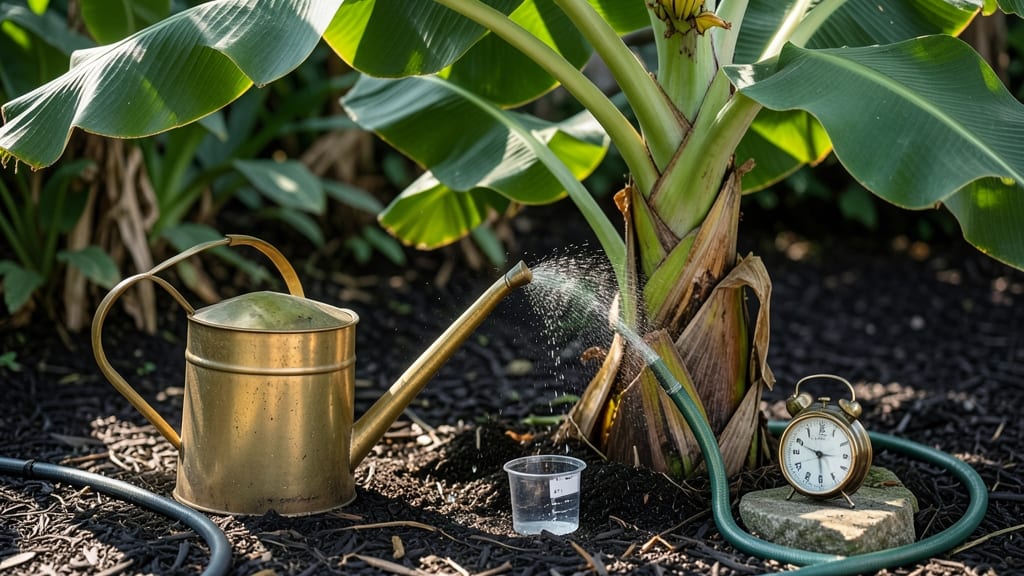
A banana tree needs how much water does a banana tree need per day—specifically 1 to 2 gallons—to keep the soil consistently moist but never soggy, especially in its tropical roots.
Picture this: your 🍌 thrives when its soil feels like a wrung-out sponge, not a swamp. Too little water, and the leaves yellow; too much, and the roots rot. The trick is balancing that daily dose while watching for clues like drooping fronds or crispy leaf edges.
In General (Tropical/Subtropical) climates, morning watering is your best friend—it mimics natural rainfall and prevents fungal diseases. But if you’re in USDA Zone 9-11 with protection, adjust for cooler nights or rainier seasons to avoid overdoing it.
Below, I’ll break down how to measure soil moisture, tweak watering for containers vs. ground planting, and spot the early signs of thirst or drowning before they become irreversible. No guesswork—just science-backed hydration for your giant leafy friend.


Daily water requirements for banana trees by growth stage
Banana trees are tropical divas—they demand consistent moisture but despise soggy roots. Their water needs shift dramatically from seedling to maturity, making a one-size-fits-all approach a recipe for failure.
In my USDA Zone 10 garden, I’ve learned that daily watering for young plants can turn into every-other-day soaks for giants, but only if you account for soil type, heat, and humidity. Let’s break it down by stage so you never guess again.
First, understand that banana trees have shallow but extensive root systems that spread horizontally. This means they need deep, infrequent waterings (1-2 gallons per watering for mature trees) rather than light daily sprinkles.
In tropical climates, this translates to daily watering in summer, while temperate zones may require adjustments in winter. The key? Check soil moisture 2-3 inches down—if it’s dry, it’s time to water.
| Growth Stage | Daily Water Needs | Soil Moisture Target | Environmental Adjustments |
|---|---|---|---|
| Seedling (0-6 months) | 1-2 gallons daily (keep soil evenly moist) | Top 2 inches always damp | Mist leaves 2x/day in dry heat |
| Juvenile (6-24 months) | 2-3 gallons every 2-3 days (deep soak) | Top 4 inches moist | Reduce watering in rainy seasons |
| Mature (2+ years, fruiting) | 3-5 gallons every 3-5 days (adjust for heat) | Top 6 inches consistently moist | Increase watering during flowering/fruiting |
| Temperate Zones (Winter) | 1 gallon every 7-10 days (minimal) | Top 2 inches slightly dry | Mulch heavily to retain moisture |
For seedlings, I swear by the "finger test": Stick your finger 2 inches into the soil. If it feels dry, water thoroughly until it drains from the bottom. In my first year growing dwarf Cavendish, I lost two plants to overwatering because I assumed "more is better."
Pro tip: Use a moisture meter—it’s a game-changer for precision. Mulch with straw or wood chips to lock in moisture and regulate soil temperature.
When your banana tree hits the juvenile stage (6-24 months), cut back to every 2-3 days but increase volume to 2-3 gallons per watering. This is when roots spread aggressively, and shallow watering leads to weak stems.
In Zone 11’s summer heat, I’ve seen banana trees double in height in 3 months with proper hydration. The trick? Water deeply in the morning to avoid fungal diseases like sigatoka leaf spot, which thrives in damp leaves.
Mature banana trees (2+ years) are the most efficient water users—they’ve developed deep taproots to access moisture. However, during flowering and fruiting, they demand 3-5 gallons every 3-5 days.
I once grew a Grand Nain that produced 200 pounds of bananas in a season, and its secret was increased watering during fruit set. In temperate climates, winter care shifts to minimal watering—just enough to keep the roots from drying out completely.
Climate plays a huge role. In tropical zones (10-12), banana trees often need daily watering in summer, while temperate zones (9-11) can stretch waterings to every 5-7 days in winter.
My Zone 10 garden in Southern California sees 90°F days, so I water every morning at 6 AM to prevent leaf scorch. If you’re in a humid climate, reduce watering slightly—banana trees absorb moisture from the air too!
One critical mistake I see often? Ignoring soil drainage. Banana trees hate waterlogged roots, which leads to root rot and yellowing leaves. Amend your soil with perlite or coarse sand to improve drainage, and always plant in slightly elevated beds.
In containers, ensure pots have drainage holes and use a well-draining potting mix like 60% peat, 30% perlite, 10% compost. This combo keeps roots happy without drowning them.
Your banana tree may look dramatic with its broad leaves, but those same leaves are sensitive indicators of water stress. Yellowing foliage or drooping stems often signal overwatering or underwatering, but the fixes differ completely. Let’s decode the clues your tree is silently screaming—and how to rescue it before it’s too late. First, check the soil moisture by sticking your finger 2-3 inches deep. If it feels soggy, you’re likely drowning your roots. If dry, your tree is begging for hydration. Both extremes stunt growth and invite pests. The key is consistent moisture without waterlogging, especially in containers where drainage is critical. Daily needs: 1-2 gallons for mature trees (deep soak), ½ gallon for seedlings. Adjust based on: Red flags: Yellow leaves + mushy stems = overwatering. Crispy edges + wilting = underwatering. Act fast—root rot or dehydration can kill a banana tree in weeks. If your banana tree’s leaves turn yellow and feel mushy, your tree is overwatered. The roots suffocate from poor drainage, leading to root rot. Stop watering immediately and let the soil dry out. Repot in well-draining soil mixed with perlite or sand, and ensure the container has drainage holes. For ground-planted trees, create a raised mound around the base to improve airflow. On the flip side, brown leaf tips or crispy edges scream underwatering. Your tree’s roots may be struggling to reach moisture, especially in sandy soil. Water deeply until it drains from the bottom, then mulch with organic matter (like straw) to retain moisture. In extreme heat, water twice daily—once in the morning and again in the late afternoon—to prevent stress. Adjust your watering schedule by season: In summer, water daily (or every other day in cooler climates). In winter, reduce to bi-weekly unless your tree is in a container. Always water at the base of the plant, not the leaves, to avoid fungal diseases like sigatoka leaf spot, which thrives in wet foliage. Pro tip: Use a moisture meter to track soil conditions. Aim for 60% moisture in the top 6 inches of soil—never soggy or bone-dry. With the right balance, your banana tree will reward you with vibrant leaves and eventually, sweet fruit.Signs your banana tree is overwatered or underwatered (with fixes)
⚠️ How Much Water Does a Banana Tree Need Per Day?