
Propagation
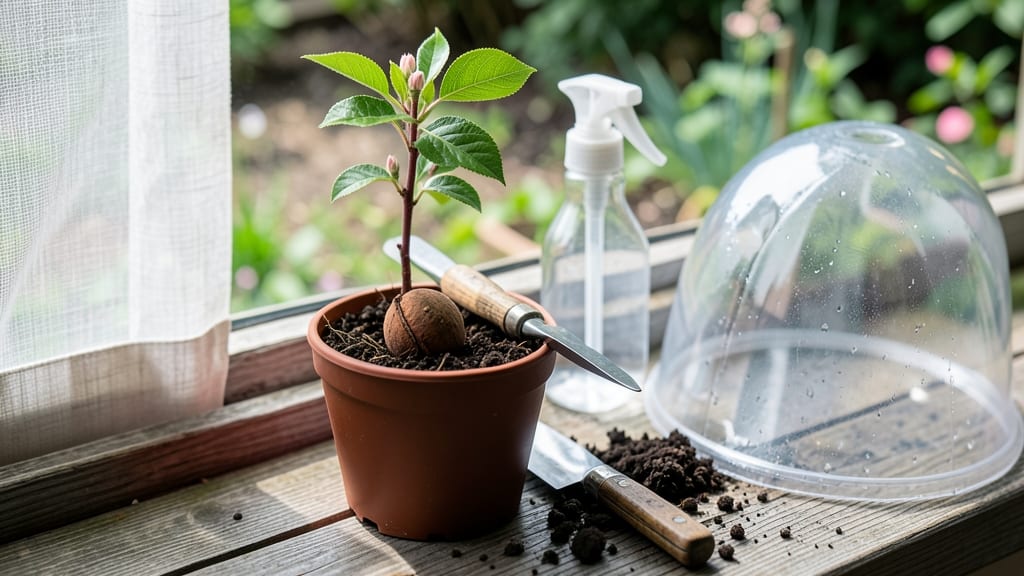
You can start a peach tree from a peach pit, but success depends on proper cold stratification for 6-12 months and patience—germination rates typically range between 1-10%.
Growing a peach tree from a pit is more about persistence than luck. The key is breaking the seed's natural dormancy through cold stratification, which mimics winter conditions. 🌱 Most pits won't sprout without this step, and even then, only a fraction will survive.
I've found that using fresh pits from ripe, organic peaches gives the best results, as older seeds lose viability faster. Once sprouted, these seedlings may take years to bear fruit—and even then, the quality won't match grafted varieties.
This method appeals to gardeners who enjoy the challenge of nurturing something from scratch. The slow process teaches valuable lessons about plant biology and seasonal cycles. For those eager to see fruit sooner, grafting proven cultivars onto these homegrown seedlings is a common next step.
Just remember: what you gain in satisfaction, you'll lose in time and predictability.
💡 In This Article
- Peach Pit Germination Science and Cold Stratification Process
- Step-by-Step Guide to Growing a Peach Tree from Seed
Peach pit germination science and cold stratification process
The peach pit's hard outer shell isn't just protective—it's a biological puzzle. Inside, the embryo remains dormant due to two key factors: the seed coat's physical barrier and internal chemical inhibitors that prevent premature growth. These inhibitors, called abscisic acid and other growth retardants, suppress germination until conditions are perfect.
Without intervention, most peach pits would simply rot in the soil, never sprouting. 🌱 The cold stratification process mimics nature's timing by breaking this dormancy through controlled temperature exposure.
Cold stratification works by gradually lowering temperatures to 32-40°F over 6-12 months, which triggers physiological changes in the seed. At these temperatures, the inhibitors break down while the seed absorbs moisture through its micropyle (a tiny pore).
The moisture activates enzymes that convert stored starches into sugars, fueling embryonic growth. Most gardeners use a mix of moist peat moss or vermiculite at 40-50% humidity—too dry and the seed won't activate, too wet and it rots before sprouting.
This process is why your grocery store peach pit won't sprout in spring planting—it needs that winter's chill cycle first.
The science gets even more precise when considering the seed's internal water content. During stratification, the pit absorbs about 30-40% of its dry weight in moisture, swelling slightly as the embryo prepares to grow.
This hydration triggers cell division in the radicle (the embryonic root), but only after the seed has experienced consistent cold for at least 3 months.
What most people don't realize is that even after stratification, some pits require light exposure to germinate—this is why planting them just below the soil surface (about ½ inch deep) gives them the best chance at breaking through.
Temperature fluctuations during stratification are crucial too. The ideal cycle involves 2-3 weeks at 40°F followed by 1 week at 50°F, repeating until germination. This mimics natural winter-spring transitions. Without these temperature variations, the seed may either fail to germinate or produce weak, leggy seedlings that struggle to survive.
The stratification period also helps eliminate any fungal contaminants that might have been present on the pit's surface, giving the seed a cleaner start. 🌿
Here's where things get interesting: peach pits contain a chemical called amygdalin, which breaks down into hydrogen cyanide—a natural defense mechanism against predators. While this doesn't directly affect germination, it explains why some gardeners prefer to soak pits in water for 24-48 hours before stratification to reduce potential toxicity.
The cyanide levels are typically low enough to be harmless once the seed germinates, but this extra step can give your seed a head start by removing some of these natural inhibitors.
What separates successful peach pit germination from failure often comes down to these three factors: proper moisture levels during stratification, consistent cold temperatures, and patience.
The seed's internal clock is ticking—it knows exactly when winter has passed and spring is coming, but we have to replicate that environment perfectly in our controlled settings.
That's why even with ideal conditions, you might only see 1-10% germination rates—the seed is playing by nature's rules, not ours. 🌱