
Pruning
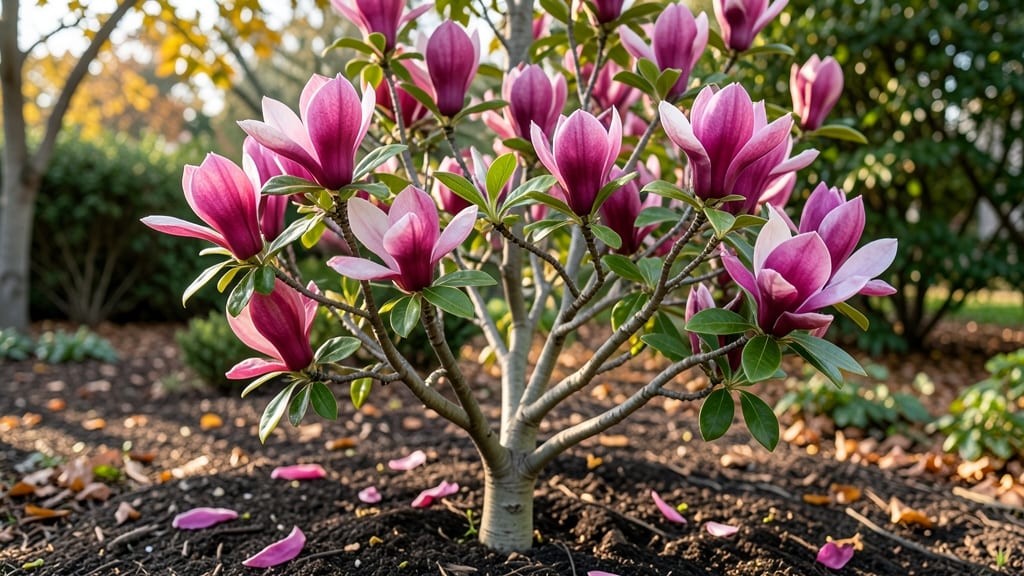
Magnolia trees can thrive in Seattle's climate when you choose the right varieties and provide proper winter care, with cold-hardy options like Magnolia stellata (star magnolia) or Magnolia × soulangeana (saucer magnolia) that bloom early and survive down to 0°F with winter protection.
Seattle's USDA Zone 8-9 climate creates ideal conditions for magnolias, but winter winds and occasional frost demand smart planning. 🌿 The key is selecting varieties that bloom before late frosts—star magnolias often open their delicate flowers in late winter, while saucer magnolias light up spring gardens.
I've found that adding 3-4 inches of organic mulch around the base in late fall dramatically improves survival rates, especially for young trees still establishing roots.
For established trees, focus on protecting the bark from winter sunburn by wrapping trunks with burlap or using anti-desiccant sprays. Pruning should wait until late winter after blooms fade, as magnolias set next year's flower buds during the current growing season.
The sweetbay magnolia (Magnolia virginiana) is another excellent choice for Seattle's damp climate, thriving in partial shade and tolerating wet soils better than many other varieties.
💡 In This Article
- Cold-Resistant Magnolia Varieties for Seattle Gardens
- Winterizing Magnolia Trees in Seattle’s Rainy Climate
Cold-resistant magnolia varieties for Seattle gardens
Seattle's USDA Zone 8-9 climate creates a unique challenge for magnolias: mild but unpredictable winters with occasional frost down to 15-20°F.
The key to success lies in selecting varieties that combine early blooming with cold tolerance. Star magnolia (Magnolia stellata) stands out because its 6-inch-wide flowers open in late winter (February-March), often before late frosts hit.
These blooms are hardy to 0°F when established, thanks to their thick, leathery petals that protect delicate reproductive structures.
The saucer magnolia (Magnolia × soulangeana) is another top performer, with 8-inch-wide flowers in shades of pink, purple, and white that bloom in early spring (March-April). Its hybrid vigor gives it better cold resistance than its parent species, Magnolia denudata, which struggles below 10°F.
For wetter areas, sweetbay magnolia (Magnolia virginiana) thrives in Seattle's acidic, moist soils and handles temperatures down to -10°F, though its flowers are less showy. 🌸
What most gardeners don't realize is that dwarf varieties like 'Royal Star' (a M. stellata cultivar) grow only 10-15 feet tall but produce proportionally larger flowers relative to their size. This makes them ideal for urban Seattle gardens where space is limited.
The trade-off? Their smaller root systems require more consistent winter protection. For larger landscapes, Loebner magnolias (Magnolia loebneri) offer a balance—reaching 20-25 feet with 4-inch flowers and 20°F tolerance.
Bloom timing is critical in Seattle's climate. Early bloomers like star magnolia risk frost damage, but their woody flower buds form the previous summer and can withstand short cold snaps. Late bloomers like saucer magnolia avoid frost entirely but may miss Seattle's March-April rain showers that help pollination.
The sweetbay's smaller, greenish flowers aren't showy, but they bloom in May-June, ensuring perfect timing with Seattle's drier spring weather.
Soil moisture also plays a hidden role. Sweetbay magnolias thrive in Seattle's 60-70 inches of annual rainfall because their roots naturally handle saturated conditions. In contrast, star and saucer magnolias prefer well-draining soils—a critical consideration for Seattle's clay-heavy soils.
Amending with compost and sand creates the ideal 6.0-7.0 pH balance these varieties need.
For maximum winter survival, choose varieties with thick, pubescent (hairy) leaves like 'Jane' magnolia (*M. × soulangeana 'Jane'), which naturally reduces water loss. These fuzzy leaves act like a built-in insulation system during Seattle's 30-40% humidity winters, helping trees conserve moisture when evaporation rates spike.